
Moving to a new place as a cook is always a challenge. Uprooting a kitchen team and beginning again on unfamiliar soil, discovering new ingredients to use in order to prepare a 12-15 course tasting menu, each dish layered with flavours and textures, some with 10 or 12 elements, others simple with three or four. In total around 60-80 finished elements using potentially hundreds of ingredients prepared every single day, served to 24 guests at lunch and again at dinner.
Well that’s what my team of cooks, our bar manager and I signed up for when we relocated and immersed ourselves in Guernsey’s food culture. I think that honestly our timing could not have been better. The island is in the midst of a genuine food movement, with farmers and residents caring more deeply about where their food comes from than they have in decades. Before arriving, we knew very little about Guernsey’s produce. After only a short time exploring what the island grows, farms and forages, we’ve been blown away by the produce and producers. More on that later.
‘After only a short time exploring what the island grows, farms and forages, we’ve been blown away by the produce and producers.’
As a professional chef, you can just draw up a ‘dream menu’ loaded with the wonders of the world’s larder and order what you want from all four corners of the globe, with the approach that if it’s not in season here it will be somewhere else. There is nothing wrong with that approach, many chefs work this way, and diners often expect it.
But it is the opposite of what I want to do and about as far from my food style as you could possibly get.
I’ve spent the last decade trying to reduce the distance my ingredients travel, not only to cut air miles or to be able to label dishes as ‘local’, though those are very important to me personally, but because as a chef there is something I long for more than being the best sustainable restaurant, the most local restaurant; it is to try and create a dining experience that feels like you have eaten in a restaurant that truly belongs to its location. When guests leave, I want them to feel they have tasted something rooted in the land and sea beneath their feet.
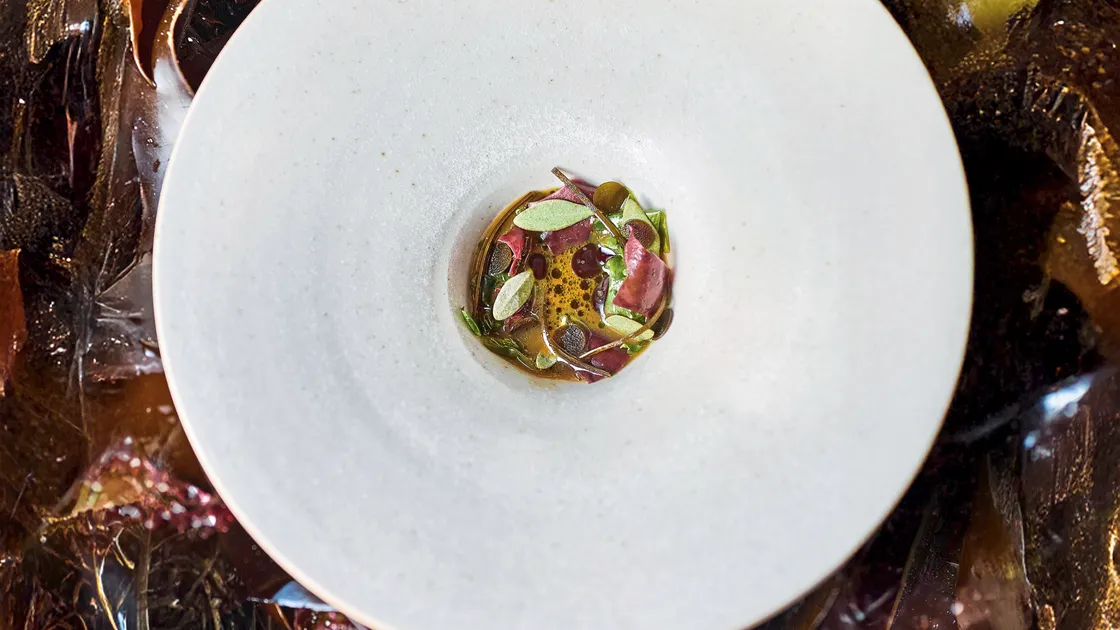
That may sound idealistic, but it’s our guiding principle. Let’s take one dish as an example: our seaweed broth. It’s a small soup that we serve right at the beginning of the menu, just after a snack of Guernsey crab and lobster. The soup we make is made up of lots of the island’s seaweed, sometimes up to 10 or 12 different varieties, roasted and dried to go into the stock, forming the base of the soup. For texture, we use lots of raw, fresh and dried seaweeds prepared as one might treat vegetables: pickled, raw, powdered. We make a gel from dried kelp that becomes a smoky relish at the bottom of the bowl, and we finish the soup with an oil made from spring onions. Even the chillies we use to add a peppery quality are grown on the island.
Apart from a few basic seasonings, every element has been grown or gathered here. So when guests visit, many travelling specifically for the food, we can serve them a true taste of Guernsey. Where we not only know the people who grew the produce, but the people who foraged the seaweed for us and how it arrived at our kitchen. Would this dish feel the same in central London? I doubt it.
To reach this point, we’ve had to make new friends in the supply chain, suppliers working as hard as we are to put Guernsey on the culinary map. I thought it would be really hard and take years but I was wrong.
Meeting the people behind the produce
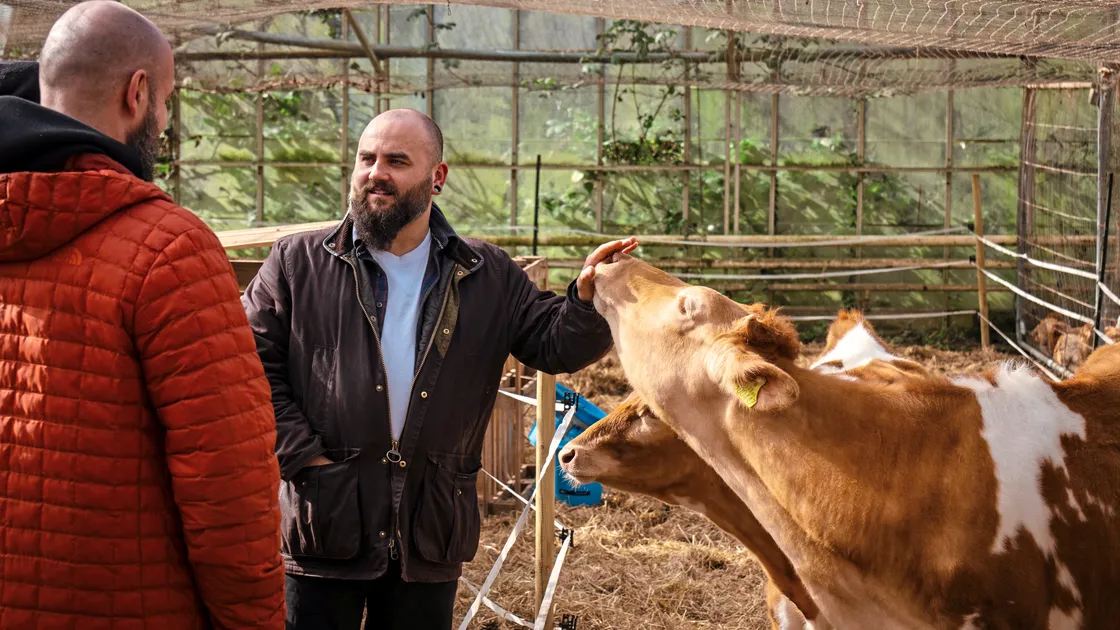
A few months before we arrived in Guernsey, my head chef, Kuba, and I visited Sasha and Jock, who run The Soil Farm, as well as having opened The Farm Shop around the same time as Vraic opened its doors.
Kuba has cooked beside me for more than six years and was my right-hand man in my previous restaurant, where we earned a Michelin star among some other brilliant accolades together. He is someone who I enjoy cooking with on a daily basis and who shares my drive and determination to utilise the best local produce to craft a very local dining experience.
We met Sasha and Jock at their home and spoke for hours about food: how much is grown on the island, how farming is changing and what the future might look like. It was fascinating, we loved their enthusiasm to produce world-class food, in the right way, for islanders on the island. Compared with the enormous farms I once worked with in Wales, operations feeding markets and supermarkets with little direct connection to customers, Guernsey’s growers feel almost like micro-farms. Their produce can go from soil to the shelves of their Vale farm shop within hours of harvesting. That freshness impacts flavour and gives us the chance to design dishes around ingredients at their peak.
Once we’ve completed our first year we will have a better understanding of the seasons and the produce farmers grow here, but after only a couple of hours inside one of Sasha and Jock’s glasshouses, we were already blown away with the variety of vegetables and produce being grown. We also got to meet some amazing pigs, chicken and cattle that they are raising too. All of this went into our notebook of ideas for the menu development.
Discovering Guernsey’s seaweed treasure
Just after I arrived on the island, I went round to Ben and Naomi from Guernsey Seaweed company’s studio, to enjoy a lemon and kelp tea (my first tea with seaweed but now one of my absolute favourites) and got to know the amazing work they’re doing with seaweeds from the island. They have become a key supplier to us for fresh and dried seaweed, and we are also working on a new project making seaweed sheets for the kitchen. As I write this, the kitchen team is in their studio testing ideas.
The boys from the restaurant have joined them on trips to Herm, collecting seaweeds that grow better there on particular tides. Ben and Naomi have taken us out to the beaches, teaching us about seaweed.
Their passion and generosity has been limitless, and we couldn’t have wished for a nicer pair of seaweed obsessives, like ourselves.
Their teas now feature on our drinks menu, as well as having their seaweed-based soaps and lotions in our bathrooms, all products grown and made right here in Guernsey.
We have been inspired not only by the farming side of the island community and what was coming out of the ground, but also by this supplier who helps us with produce from the sea. Guernsey waters are among the best in the world for seaweed, with more than 700 varieties along the shoreline.
We have not even scratched the surface with what we can do with that many new ingredients. Take for example vegetables – most of us use the same 10 or 12 vegetables in different ways, but they are essentially the same key ingredients; imagine as a cook you now had access to hundreds of new vegetables to play around with, and lots of them have very very different flavours and textures to what you’ve been cooking with for the last 20 years.
To discover a pantry this vast feels like opening a door into an entirely new world.





You need to be logged in to comment.