

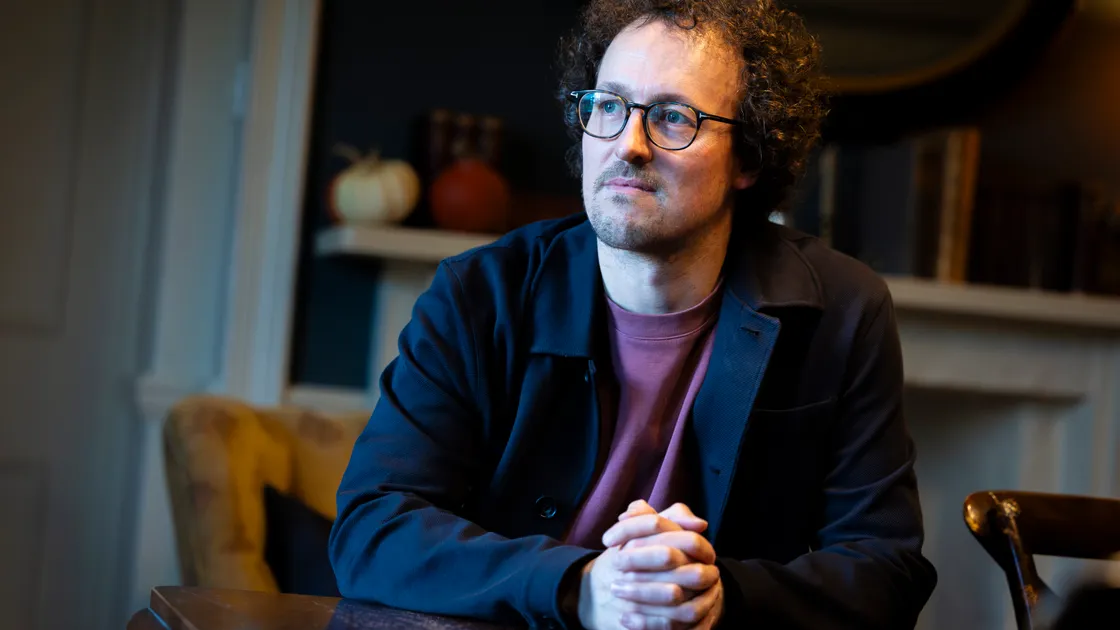
With a diffident smile, Angus MacRae – who has been beckoned onto the 40-year-old stage of the 207-year-old church of St James-the-Less – takes a bow to acknowledge enthusiastic applause and then, as quickly as is seemly, makes his way back to his seat in row B.
Angus eschews the spotlight, preferring to ‘sit in a corner, listening’ whenever his music is performed. But this is a special occasion.
For the second time, he has been commissioned to provide a new musical arrangement of Guernsey’s anthem, Domenico Santangelo’s Sarnia Cherie. The first time was 10 years ago for the 70th anniversary of the Liberation – an arrangement for the Berlin Philharmonic Octet, also at St James. This time, the Coull Quartet have just performed his new take on the old tune as part of a celebration of the life and artistic achievements of Rodney Collenette – the man who instigated the campaign to overturn a States decision to knock down St James and replace it with a police station.
For a lad who grew up in Guernsey as the son of a piano teacher (Bridget, nee Adams), who ‘did all the grades’ on the piano and who performed in several eisteddfods, the intervening decade has been something of a whirlwind of musical, theatrical and screen creativity, which has taken him from his London base across the Atlantic to Broadway and back.
A few hours before his brief appearance on the local stage, I'm able to catch up with Angus in a quiet dining room at his hotel. I begin by asking whether he feels any trepidation about arranging a piece of music that holds such cultural resonance for islanders.
‘No pressure then,’ he says, before pointing out that he, like the audience, hasn’t heard it played yet.
‘When I came back to Sarnia Cherie, I felt like I wanted to approach it afresh and I had a lot of ideas about how to bring a little bit of my own creativity to it. I wanted to be respectful to the original song but hopefully it’s got a bit of life and playfulness – which is much more reflective of where I am now with my compositional style after 10 years. It was nice to have another crack at it.’
Listen to Angus MacRae’s 2025 arrangement of Sarnia Cherie, performed in rehearsal at St James by the Coull Quartet and recorded by John Surcombe
This commission was something of a departure, even in a varied career which has seen Angus compose for TV, advertising, his own recorded music and for theatrical productions. It’s this last type of work that appears to have opened the most intriguing doors for him. But how does it work? At what point in a theatrical production does he become involved?
‘Ideally, as early as possible, but sometimes it can be just before rehearsals begin,’ he tells me.
‘I’m always most interested in doing projects where the music is really woven through the fabric of it. A lot of theatre music can be just a few seconds between scenes and then it’s gone. I’ve been fortunate to work on a lot of pieces where it’s really intrinsic to the drama.’
This integrated approach has been the hallmark of Angus’s work with director Rebecca Frecknall ever since a revival of Tennessee Williams’ Summer And Smoke took to the Almeida Theatre stage in 2018.
‘There was an idea that the set would essentially be a ring of nine upright pianos around the stage,’ Angus tells me, ‘and there would be a score throughout the show that would be played by the cast. I had, coincidentally, written a piece for seven grand pianos the previous year, so I think that helped me get that job. Her career just sort of exploded and I’ve been hanging on to her coat tails ever since.’
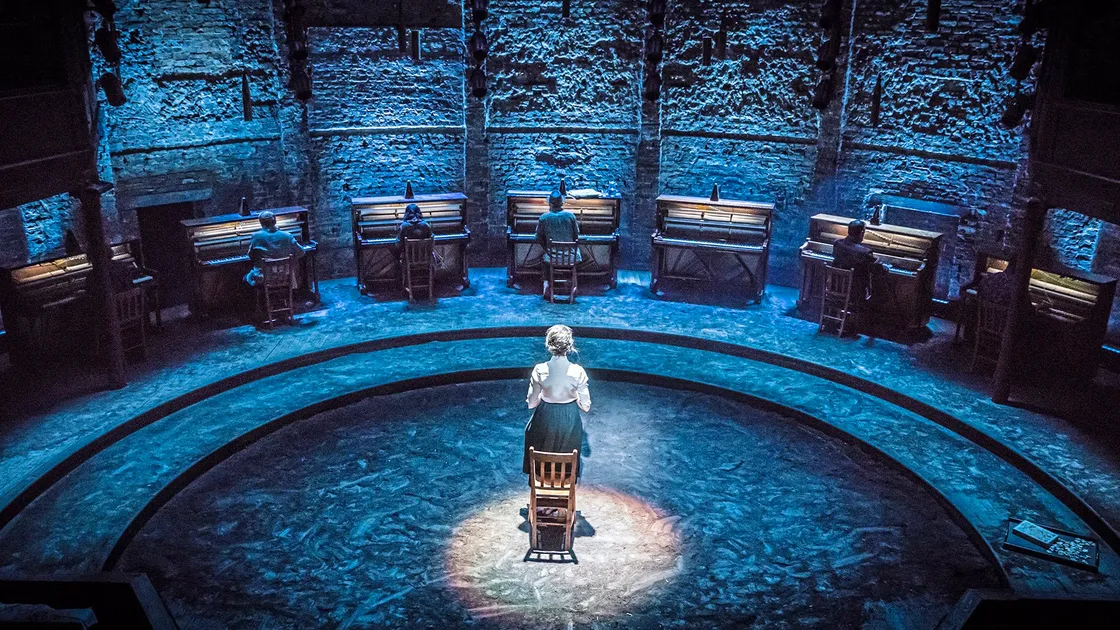
That ‘explosion’ saw the production receive five nominations at the 2019 Laurence Olivier Awards, of which it won two. Dominic Cavendish in The Telegraph was particularly enamoured of the prominent musical component.
‘The ensemble are often required to hunch down and tickle the ivories – sometimes the odd note, insistently and sadly hammered, at other points a collective onrush of undulating sounds. It’s as if everything musical about the writing, and everything that’s wordless, ineffable, too, about the story – gradually blurring black-and-white opposites – has found its ideal companion.’
Summer And Smoke was taken to the West End at the Duke of York’s Theatre and further productions of Williams’ work followed with A Streetcar Named Desire in 2023 and Cat On A Hot Tin Roof last year.
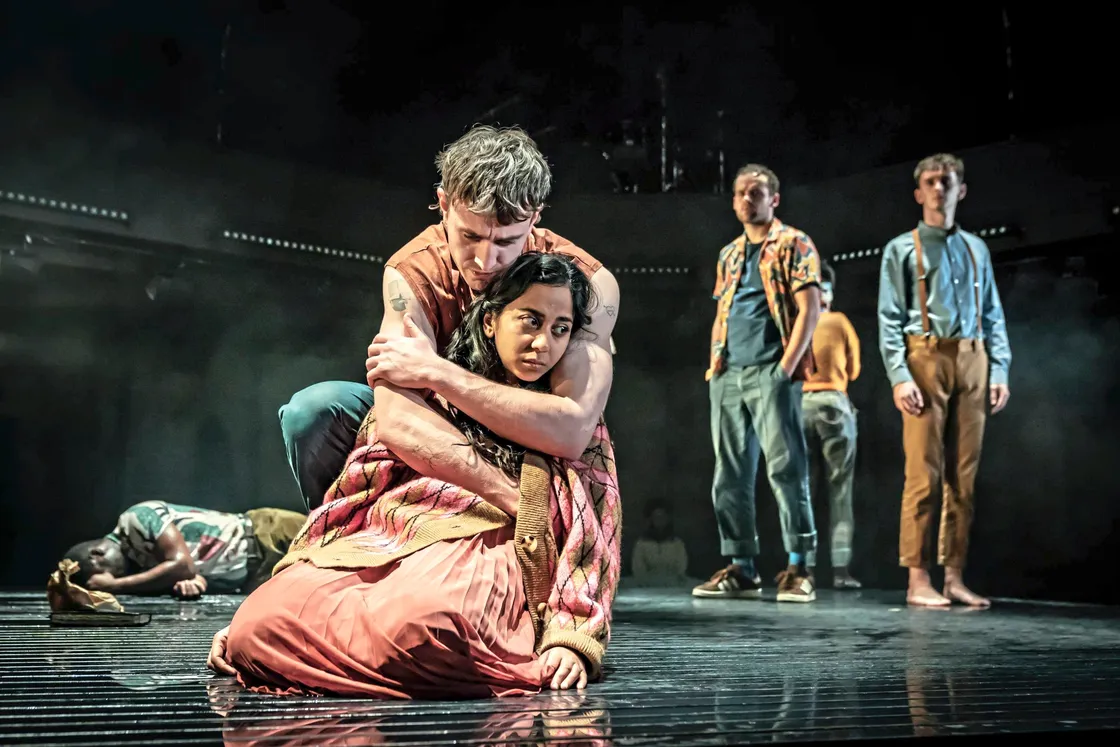
‘In Streetcar, we had an amazing company led by Paul Mescal,’ says Angus, referring to the Oscar-nominated and Bafta-winning Irish actor.
‘We had a drummer literally on stage underscoring everything he was saying in the second act. It was daunting and terrifying. I had to feel really confident in what I was doing and also understand what he wanted to be able to do and then make sure those two were closely aligned at all times.’
At this point I become deeply suspicious of Angus’s ‘coat tails’ portrayal.
So, since our interview, I’ve approached Rebecca Frecknall – via her agent – for her take on their working relationship. She had a slightly different perspective.
‘Angus has become such an important collaborator of mine over the years,’ she said, describing him as ‘so inspiring to work with’.
‘He has a real skill for understanding and holding the rhythm of a production with music and he’s always loved by the actors and musicians we work with. Angus’s voice has been a huge part of the development of my work as an artist and his compositions have become the backbone of so much of my own aesthetic. I’ve been very fortunate to find him.’
Coat tails, indeed.
Frecknall has been feted as one of the most influential figures in theatre following her widespread and repeated critical acclaim and Angus has now worked with her as a composer on five productions, with another to come.
‘They’ve all followed a similar premise of having an on-stage musician who’s also in the acting company, who’s very much underscoring the drama,’ Angus says.
Earlier this year, they took A Streetcar Named Desire to the Brooklyn Academy of Music in New York.
‘It was definitely a little bit daunting taking Streetcar to America because it’s so in the cultural fabric,’ Angus says.
‘People are familiar with it here but there everyone studies it at high school and they all have their opinion on what it should be.’
Ahead of our interview, I’ve been checking out Angus’s recorded work on Bandcamp, including an 18-minute piece in three movements called Bell Jar, which features leading US Klezmer musician Michael Winograd on clarinet.
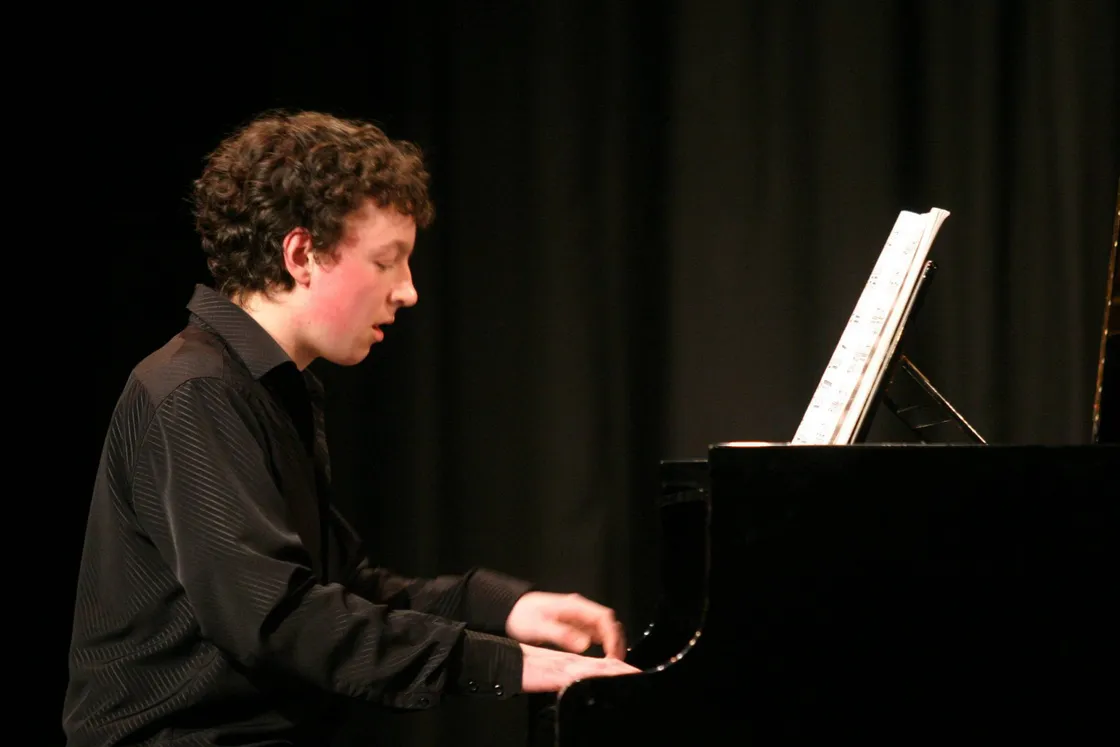
Angus tells me that even as he was working his way through the grades and appearing at eisteddfods at Beau Sejour, he always gravitated towards improvising and ‘discovering my own music’.
He embarked on a music degree in Nottingham but very quickly diverted his skills towards involvement in the thriving theatre scene there, propelling him towards his current work. But even as he enjoyed the success of his various collaborations, he realised he was ‘always at the whim of whatever the project was that I was engaged in’.
‘I wanted to have more of a stake in what I thought of as my own artistic voice,’ he says.
So he kept going with his own recordings and then in 2020, when Covid ‘stopped all the work’, he finally gave himself permission to take to his garden studio and develop that voice by ‘noodling away’ and ‘creating something out of absolutely nothing’.
‘It was a real wake-up call to me that it was a really important part of what I do,’ he says.
Vivarium, described as ‘a journey through the lost worlds of childhood imagination’, was released in September 2022 and Angus remains ‘really proud of it’, regarding it as equal in value to his stage successes, even if it doesn’t carry the same remunerative advantages. The spice of life ‘n’ all that.
‘I always say I’d love to be doing one theatre show a year, one film a year and an album a year, and if I can make it work between those three, anything else is a bonus,’ he tells me.
His collaboration with Winograd came out of their involvement in Cabaret at the Kit Kat Club – another Frecknall-directed production, which starred Eddie Redmayne and Jessie Buckley and was the most successful revival of all time, in Olivier Award terms, winning seven awards from 11 nominations before heading to New York and garnering nine Tony awards.
‘They had this idea that they would renovate the entire Playhouse Theatre and make it into a 1930s Berlin nightclub, and as part of that they would have a roaming band of four musicians and five dancers for a 90-minute pre-show every night,’ Angus recalls. He composed the music – some recorded and some to be played live – not to mimic the musical but to set the ‘trippy opium den’ vibe as a bridge between the outside world and the show to come.
One of the legacies of that production for Angus – due to its heavily improvised nature, is that he feels all the more relaxed about the process of producing appropriate music for theatrical performance.
His next project is a production of Terence Rattigan’s Man And Boy at the National Theatre, to be directed by one of his old friends from Nottingham, Anthony Lau. The first night is 30 January, yet as we speak, he only has a vague notion that the music will ‘build up from a jazz trio’.
‘I may be getting a bit more brazen,’ he says, ‘there isn’t a single note written but there are some recording sessions booked. There was a time when I would be frantically writing lots of music really early but I’ve discovered that the people I like to work with make the show in the room. You can do all the prep in the world but really, the thing I love about theatre is that you get in the room with these actors and everybody just wrestles with it.’
The show runs until 14 March but at the time of writing, 44 of the 48 shows were already sold out.
The way things are going, Angus may be forced to consider that all this success might have something to do with him.


You need to be logged in to comment.