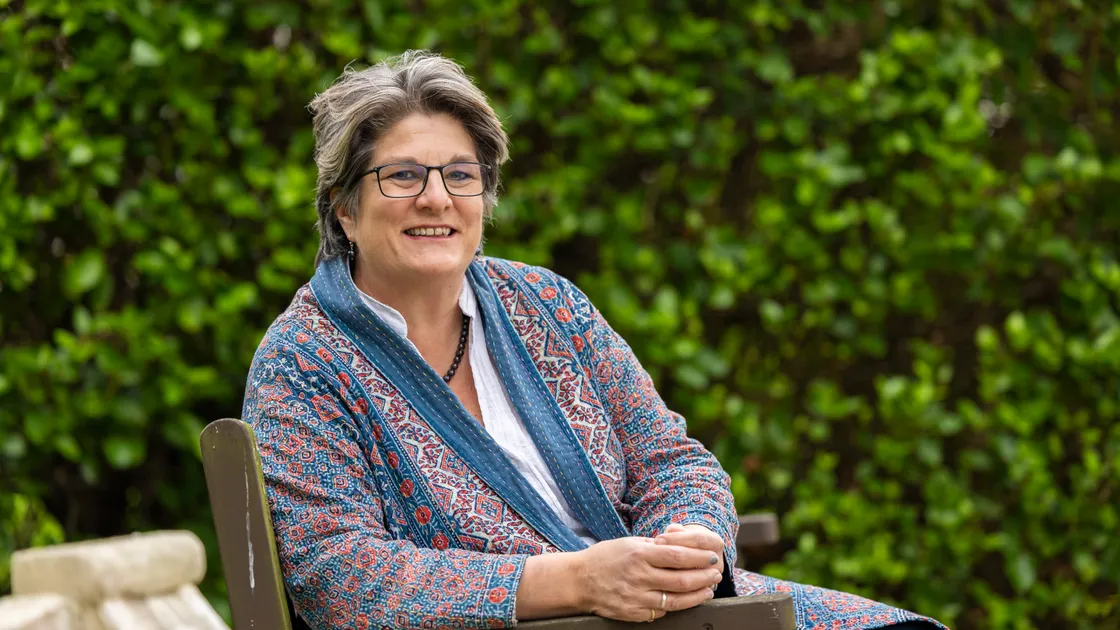
After many years living and working away, Jayne had returned to Guernsey, her childhood home, primarily to be with her ailing mum, to whom she was very close, and they spent her mum’s final months together prior to her death just six weeks before Jayne learned of her OBE.
‘My immediate reaction was that I just wish I could have told Mum,’ says Jayne. ‘I went from being absolutely ecstatic to floods of tears within a few seconds. I knew that Mum, and my father, would have been very proud, and I just wanted to tell her about it. Then the enormity of it took a little while to sink in because it is a recognition of one’s life work.’
Jayne was honoured, on the recommendation of Prime Minister Sir Keir Starmer, for services to religion and equality based on sexuality and gender. She was previously an adviser to the UK government, a member of the Archbishops’ Council, and founder of her own eponymous foundation which worked with religious organisations around the world to address prejudice and discrimination against the LGBTQ+ community. She was particularly active in the movement for an international ban on pseudo-scientific conversion practices and founded the Ban Conversion Therapy Coalition in 2020.
Her commitment to these causes has been deeply personal. Long before her work helping others, the conflict, as she then saw it, between her evangelical Christian faith and her sexuality had cost her a successful career in marketing and pushed her into celibacy, a deliverance ministry, an exorcism and, when they only made things worse, into depression and close to suicide. Jayne was 40 before she felt able to tell her friends and family that she was gay and several more years passed before, in 2015, she came out publicly.
Three years later, she published a memoir entitled Just Love: A Journey Of Self-Acceptance. A former bishop of Liverpool, a friend of Jayne’s, was right to say that she ‘bares her soul’ in the memoir and that it is ‘not a comfortable book’. The broadcaster Caroline Wyatt described it as ‘a heartfelt plea for love in all its glory, from a brave woman on her journey from despair to hope’. In the prologue, Jayne recalls waking up one autumn morning in 1997 dismayed that she was still alive. ‘I had gone to bed the previous night begging God to take me in my sleep... I’d had enough,’ she writes. Years of pain and confusion are poured unremittingly across many of the following 200 pages. Not until the later chapters of the book, including an uplifting postscript set in 2014, does the Jayne of today – settled, reconciled, campaigning – emerge more clearly.
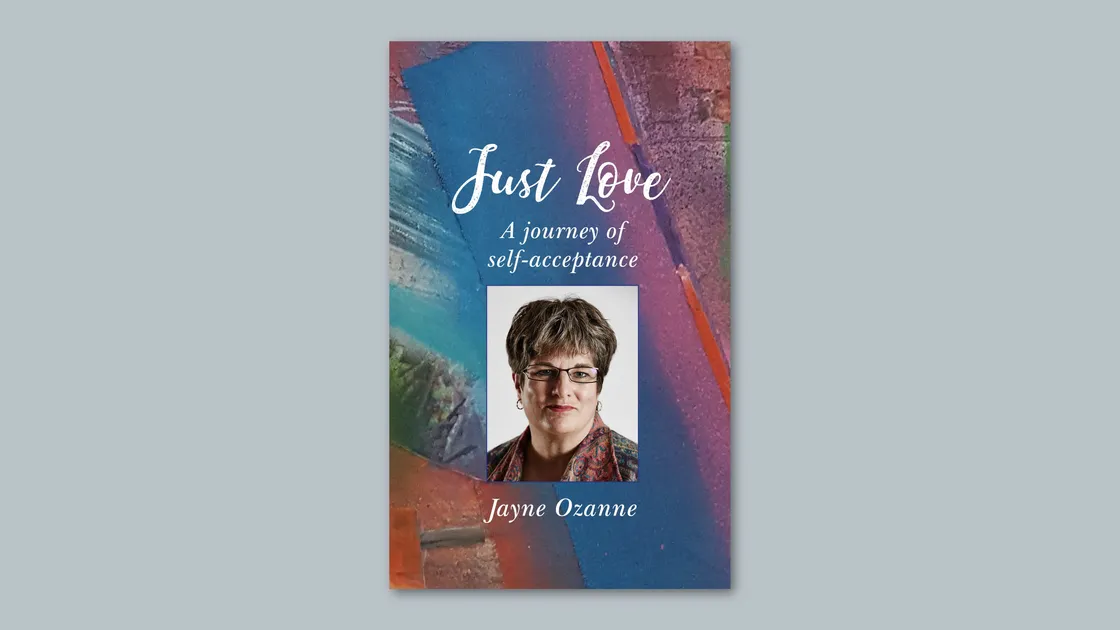
In her book, Jayne describes her childhood and adolescence as steeped in faith. ‘My faith was and still is undoubtedly the most important thing in my life,’ she writes. Her earliest memories are of helping her father put out prayer and hymn books in their parish church when she was still a toddler. She speaks of being conscious of a personal relationship with Jesus by the time she was eight or nine. As a teenager, she lived through tensions in the church locally when there was a split between different traditions in the Methodist Circuit, which still influences the shape of religion in the island today.
After reading maths at Cambridge, Jayne initially expected to work in the Foreign Office, but instead went into industry. ‘That was a fantastic grounding for me – how to write business documents, how to think, how to use research,’ she says. ‘I progressed, and became very senior at Kimberly-Clark, taking the company into central and eastern Europe. I was head of marketing at the BBC. I had a really top-rate business background. But I had this huge secret, that I kept falling in love with women, which I couldn’t share with anybody because doing so would have been absolutely catastrophic in my Christian world. This felt like the worst possible thing. The reason I had a massive breakdown at 28 or 29, and ended up in hospital with my body collapsing under the stress of all this, was that I couldn’t tell a soul as I knew that the moment I did I would be put on the theological naughty step. I could not square the circle of yearning to love and be loved and yet being created in a way which made the object of that love sinful.’
At one point in our interview, I ask Jayne whether she ever came close to abandoning or changing her religion and, if she didn’t, whether she perhaps should have, given all the pain. It felt like a most obvious question to ask, but she looks at me incredulously, and tells a story about a psychiatrist at the Priory Clinic who once asked her the same thing. ‘I remember looking at her and thinking “You really don’t get this, do you?”’ She doesn’t expand on what she means by ‘this’, I think because she regards it as so obvious – possibly that her faith has never been a choice but is inherent, something inescapable even if she had tried to resist. The point, I infer, is that the conflict between her sexuality and her faith had to be reconciled, or it would have destroyed her, perhaps killed her.
Hospitals, psychiatrists and rehabilitation clinics featured frequently in Jayne’s late 20s. Then, in 1999, at the age of 30, she became a member of the Archbishops’ Council, the central executive body of the Church of England. ‘But with this huge secret which I know I need to be cured of, and that’s why I put myself through 20 years of conversion therapy, willingly, because I’m desperately trying to make myself acceptable.’ Conversion therapy is a term used to describe coercive practices which aim to change or suppress sexual orientation or gender identity. ‘I am a senior evangelical, and as far as the evangelical world was concerned, their woman was on the Archbishops’ Council trying to reform the Church of England. I’m the pin-up poster girl and I’ve got this terrible secret which I’m trying to deal with.’
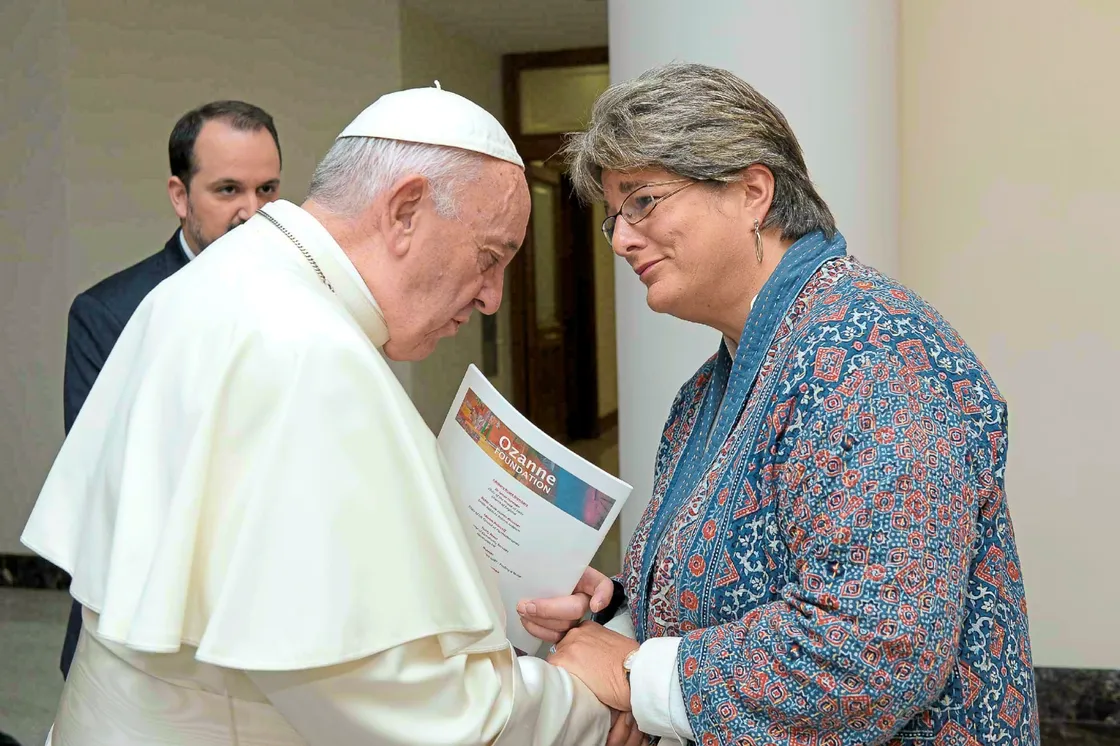
During six years on the council, Jayne helped set up religious elements of the Middle East Peace Process, and its work took her around the globe, from Armenia to Nigeria, from Russia to Myanmar. ‘I think I’m cured and that when I come off the council there will be a man waiting for me, we’ll fall madly in love, and everything will be fine.’ In fact, the opposite happens. She moves to Oxford to study and quickly falls in love with a woman. ‘So all that prayer hasn’t worked. I end up in hospital again. By now I’m 40 and this second breakdown really takes me to the darkest of places. I’m thinking there is no way out, I’m never going to be happy and, if I try to embrace who I am, God will reject me. I had become very suicidal over all this.’
With the help of a small number of influential friends, not least the Bishop of Liverpool, Jayne gradually saw that the only way through was to be open, or at least more open, about her sexuality, and trust that her God would forgive her. She describes this partial coming out, to her family and to close colleagues in the church, as ‘traumatic, horrendous, absolute hell’. She says she was ‘dropped like a stone overnight from church circles.’ She received letters warning that she was going to hell. ‘I was also dropped like a stone by most of my friends, and it was complicated with my family.’ But for the first time in many years, she felt happiness and peace rather than despair, because she was in love, and over time good friends helped her see scripture differently, laying a path which would finally allow her to reconcile her sexuality and her faith.
For more than a decade, until she returned to Guernsey to be with her mum and stand successfully for a seat in the States, Jayne used the pain of her own experience to help others similarly affected, dedicating her life to charitable work at the intersection of religion and sexuality, essentially supporting people of faith struggling with their identity and advocating for a more diverse, tolerant church.
‘I had been through a journey which put me in a very privileged place and I was surrounded by others who had been through similar problems. I began to learn of far too many people who had taken their lives. This was an issue that really needed addressing. For the church it was all about sex, but they were not taking into account the horrendous safeguarding problems, like the damage that was being done to young people who were contemplating taking their lives, or indeed had taken their lives, because of this. This work was the last thing I ever thought I would find myself doing. It was all quite reluctant on my part. The battle lines in the church were drawn, unfortunately, but those who believe that love is love suddenly had a champion, someone who had a lot of weight with bishops and archbishops. I become a very key lay voice in the Church of England. I become the front person of this whole movement.’
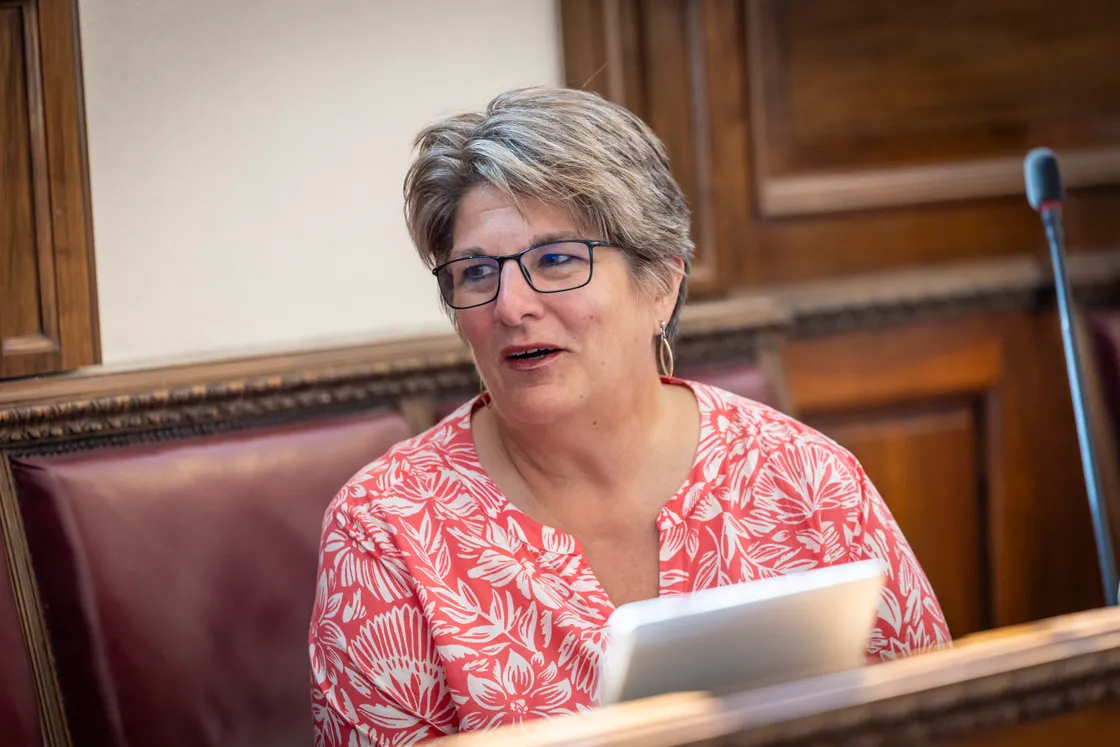
Jayne led debates which resulted in the church backing a ban on conversion therapy. The Labour government has pledged to introduce legislation which would outlaw such practices. She sat on panels advising previous governments. She helped form the Global Inter-faith Commission on LGBT+ Lives, with the support of the Foreign Office. She became a frequent commentator in the national media and built alliances across parliament. After 2018, much of her work was under the umbrella of her own Ozanne Foundation, which was set up to enable positive encounters between those who disagree, help inform and educate, and equip and empower people to advocate for greater inclusion. ‘My previous chair is the Archbishop of Scotland, one of my founding trustees is the Archbishop of Wales, and one of my closest friends who really helped me through the years is now the Archbishop of Canterbury. All the key pieces are in place. These debates are going to go on probably for a very long time, but the centre of gravity has changed.
‘The environment within many churches has changed. The inclusive church movement has become far more the norm. At the time I was struggling, I really thought I was the only gay evangelical in the world, and then having come out of course I realised there were many others. We were going through the same hell, and if only we had known we could have supported each other. That support is there much more now. I think the debate is more informed now, though it saddens me that some still don’t recognise the harm they do. If you tell a young person that they must never have a relationship with someone they love, and that instead they must pretend to be straight or stay single and celibate for the rest of their lives, that leads to significant mental health issues. All the research is there, but there is still this stubborn belief that they’ve just got to trust in God. I’m sorry, I’ve trusted in God in the way they mean, and it nearly killed me, and I don’t believe God supports that view anyway.’
Today, in addition to serving as a deputy, Jayne is training to be a lawyer and has a research fellowship in law and religion at Regent’s Park College at the University of Oxford. She says her faith remains ‘absolute... very much still there’, but she is not currently attending church. ‘I really needed time out of church. I was that burned, to be honest, by the experiences we have talked about. I suppose I am admitting to myself just how much I have been traumatised and that needs to heal.’