
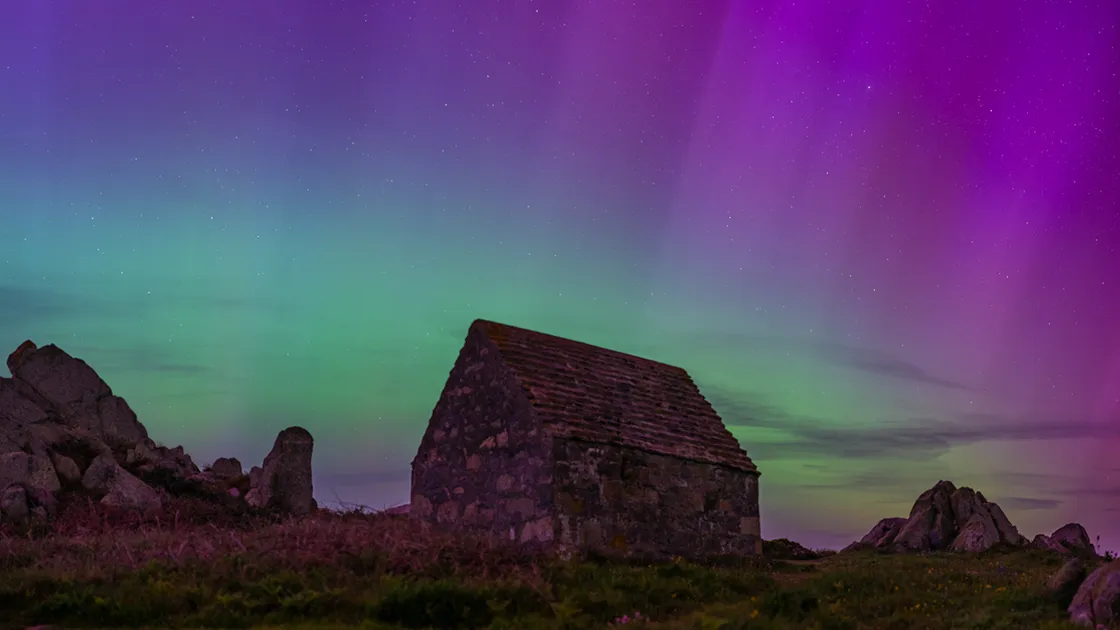
The aurora borealis, or Northern Lights, are beautiful dancing ribbons of light that have captivated people for millennia. ‘Aurora’ is the Latin word for ‘dawn’ and is also the name of the Roman goddess of the dawn. Typically, countries south of the Arctic circle see the aurora as a faint red glow in the night sky, similar to the reddish glow often seen in the eastern dawn sky. ‘Aurora borealis’ means ‘northern dawn’. Our ancestors would have been aware of the faint glow of the aurora.
Aurorae with their ethereal, dancing displays of light are typically confined to high latitudes, but occasionally on an 11-year cycle they are visible as far south as Guernsey. This is called the solar cycle, where the sun’s magnetic field flips its polarity approximately every 11 years. As the poles are about to flip, the sun’s magnetic field is at its most active and there are giant solar flares and enormous bubbles of charged plasma, called coronal mass ejections, that are expelled into space. If this activity happens to occur from the surface of the sun facing Earth, then solar particles stream towards us as an intense solar wind or storm at speeds of up to 6.7m. mph.
When the solar particles approach Earth, some of them become caught in our planet’s magnetic field and are channelled towards the magnetic poles where they collide with atoms in our atmosphere. This causes tiny specs (photons) of light to be emitted. This process goes on all the time, but normally it is too faint to see other than during a large coronal mass ejection event.
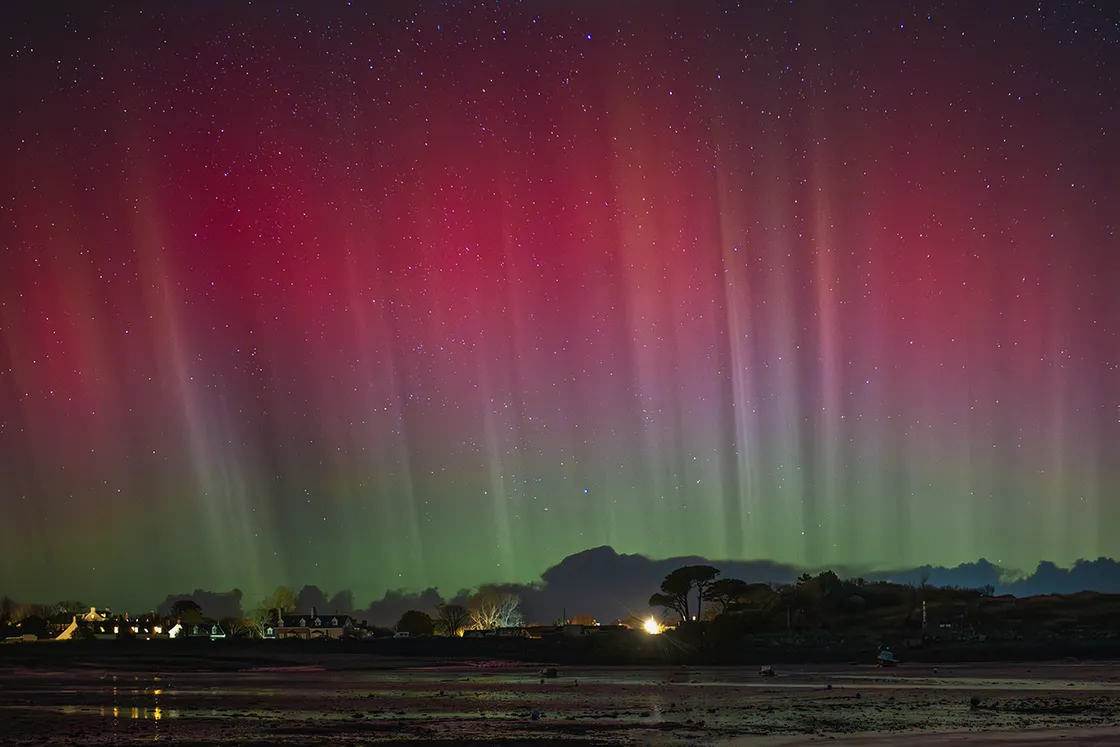
It is a cycle that has been happening for billions of years, so why are we noticing it more now? It is a combination of factors. Modern light pollution over time has made the aurora harder to see. However, more recently, the combination of advances in camera technology with increased sensitivity to low-light conditions, popularity of social media and smartphone apps giving real-time solar information has resulted in many more people being able to enjoy the aurora.
In addition, superimposed on the 11-year solar cycle is another cycle of approximately 100 years when there are periods of lower or higher than average solar activity. The previous 11-year solar cycle was very low, even at its peak, which is why the aurora was rarely seen in Guernsey. It was expected that the current cycle would follow the same downward trend, but the sun’s magnetic field has, in fact, become more active. It looks like future 11-year solar cycles might peak higher with each successive cycle.
The forecast going forward in the short term is that we may still see more aurora in our night skies over the next few months, then they will cease. After that, we will probably have to wait until the peak of the next solar cycle, which will be about 2031. However, if solar activity continues to increase over the next 40 to 50 years, then we should start to see more frequent and intense displays.
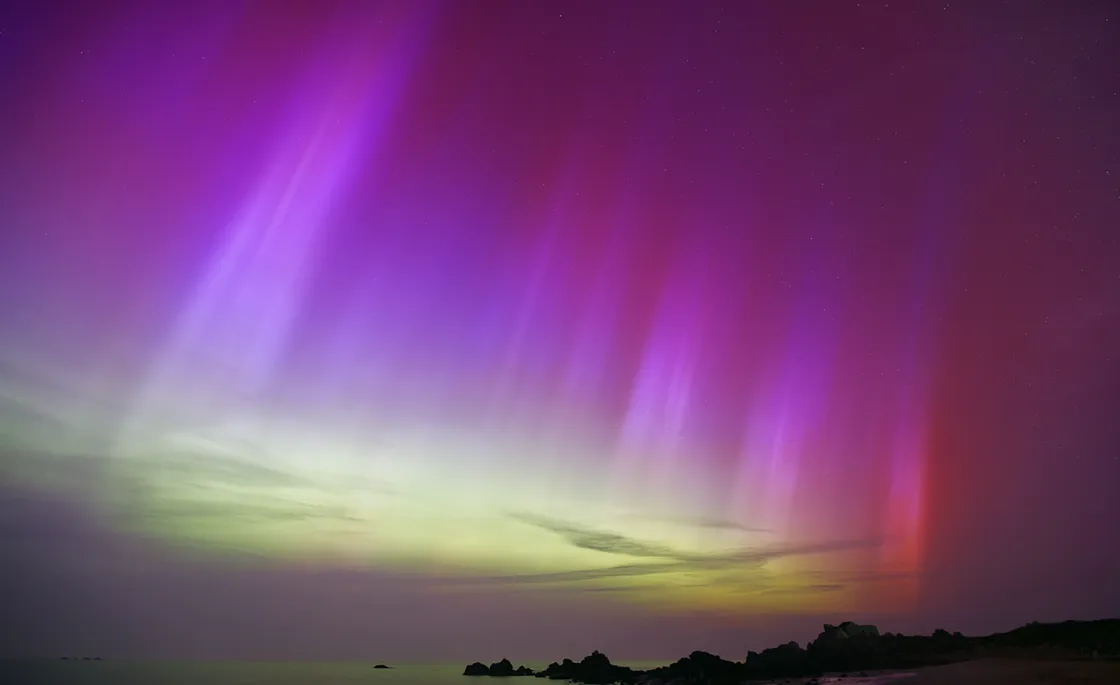
Increased solar activity does not mean that the sun will get hotter and therefore affect Earth’s global temperature, as it only relates to magnetic activity. The nuclear fusion that powers the sun is not changing. Neither will increased solar radiation adversely affect life on Earth as our planet’s magnetic field and atmosphere protect us. However, solar storms can affect a satellite’s orbit and electronic systems, causing disruption to services on Earth.
If you want to get real-time information on the visibility of the aurora from Guernsey, there are many apps that give forecasts and alerts, such as SpaceWeatherLive, which also gives real-time views of solar activity and AuroraWatch UK. You can also see real-time solar activity on Nasa’s Solar Dynamic Observatory website. To photograph the aurora with a mobile phone, set it to night mode, find somewhere stable for the camera and take an exposure for several seconds.
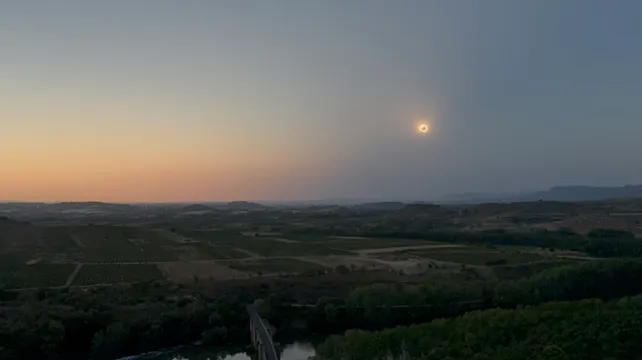
SAFETY NOTICE: Never look directly at the sun without proper eye protection, as permanent damage will occur.








You need to be logged in to comment.