Grainy, sepia-toned images of men in mud with bayonets fixed might cause us to associate the First World War with notions of a bygone era, as if the events were somehow always historical. But RGLI Association chairman Chris Oliver begins his account by highlighting that from the perspective of the men of Guernsey who went to fight in ‘the Great War’, this was a military conflict employing the very latest, cutting-edge weaponry.
‘Our RGLI went to England and were specially trained in combat with this newfangled machine called a “tank”’, he tells me.
‘On 20 November 1917, they found themselves on the flat plains outside of the northern French town of Cambrai, as part of a 10km line with 472 of these machines, advancing against the Germans in order to take the town, which was a major communication, transport and supply chain hub.’
Originally in the second line of battle, the RGLI leapfrogged into the front line on the first day and saw significant success, taking a place called Bois de Neuf and seizing a quarry and some machine gun positions.
‘As was typical in battle, they were withdrawn from the line for rest and relaxation and were able to base themselves a few kilometres away in a small village called Marcoing. Still resting, they were moved across the line a little way to the east at Masnieres on 24 November. But the Germans were very good at regathering themselves and launching a counter-attack, often while their opponents were still disorganised following what they had achieved.’
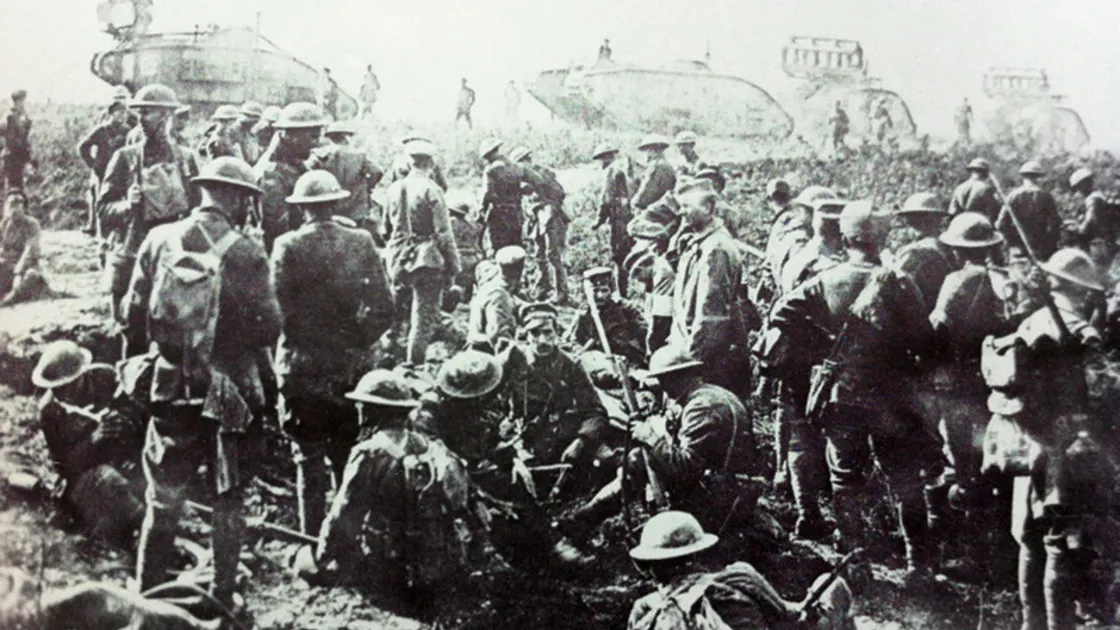
As shells rained down, RGLI personnel took shelter in the caverns and underground quarries beneath the church just north of the Napoleonic Saint Quinten Canal.
‘Realising a counter-attack was coming, the British commanders removed the RGLI from the caverns and sent them a few hundred yards to the south, across the traffic bridge over the canal, and along to a sleepy little lane called La Rue Verte, where they waited.’
On the morning of 30 November, the German attack arrived.
‘If you go there today, this lane is barely changed,’ says Chris.
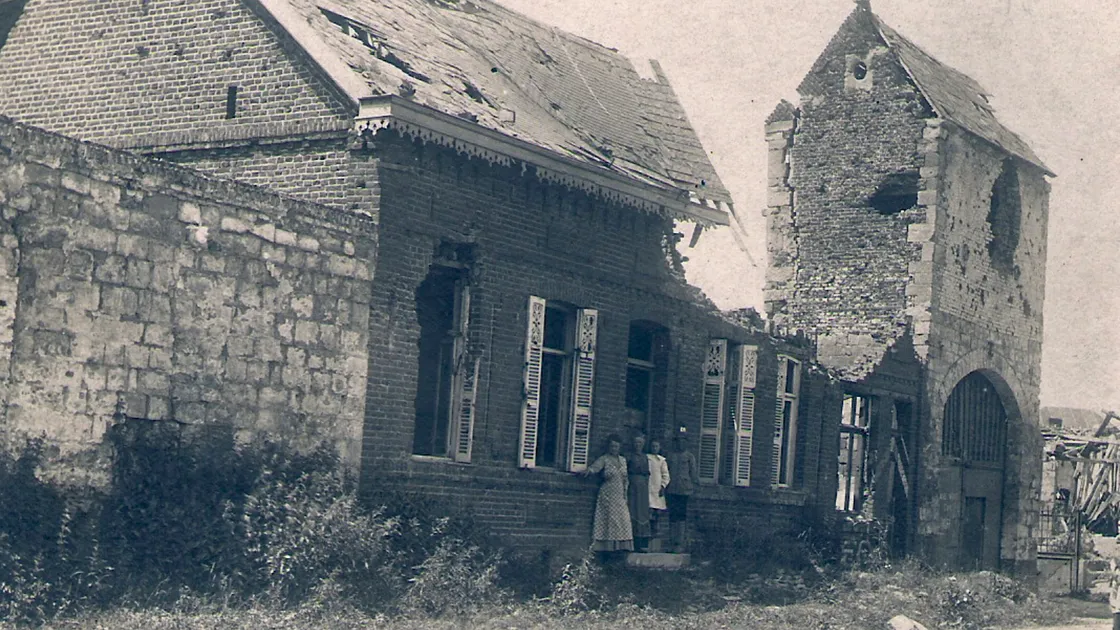
‘It has a few buildings on either side and is part of a small farming community. Well, the RGLI takes up position in the houses – which have mostly been abandoned as people have fled the fighting – and they start taking furniture and feather beds out of these houses and building barricades across the road, knowing the attack is coming. That morning, Lt Oliphant looks out with his binoculars and sees along the canal banks to the east, thousands of Bavarian soldiers advancing while the Germans step up their artillery and mortar fire on this little sub-village of La Rue Verte below the canal. Towers and buildings are hit, roofs are coming down, cobbles are being blown up and men are taking shelter in the houses.’
Chris has studied carefully the two main sources for accounts of the events that followed, namely the War Diary – meticulously recorded day by day by senior admin staff known as ‘regimental adjutants’ – and a colloquial record from 1921 called The Norman Ten Hundred. This was published by the Guernsey Press in a Guernsey vernacular similar to that later employed by GB Edwards in The Book Of Ebenezer Le Page. The title was a reference to the thousand or so men who left this historically Norman land to fight for their duke, the king.
‘These records tell of mortars landing and men just disappearing – literally disappearing – and men who have arms and legs shot off,’ says Chris, ‘and one man who’s walking around with shrapnel stuck in his head. It’s this terrible, horrible, gory picture of what’s going on.’
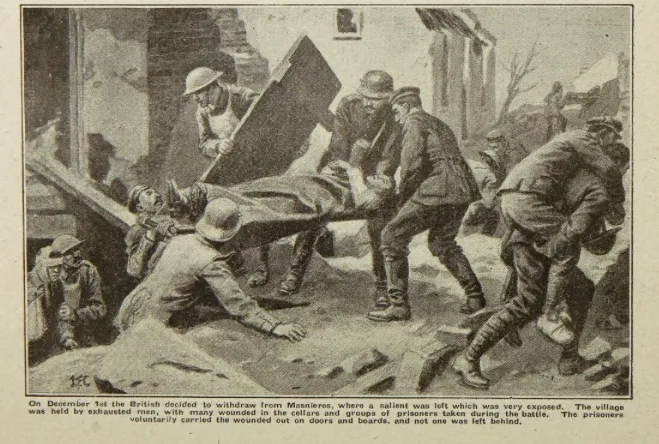
The aim of the onslaught was to ‘soften up’ the defenders of the positions ahead of an attack and when the huge advancing army of German soldiers reached the first barricade at the junction of La Rue Verte and Rue du Moulin, which was manned by ‘A’ Company RGLI, hand-to-hand combat ensued which was destined to last for two and a half days.
‘On either side, the two British regiments are forced backwards but the RGLI holds on to La Rue Verte and it becomes a “salient” – a thumbprint, if you like,’ says Chris.
‘We know from the War Diary that on the corner of Rue du Moulin and La Rue Verte is this small building, No.16, where so many men took shelter – it has a small cellar as well. The regimental adjutant records in the diary that 453 are killed, missing – which means either killed and never found again or taken prisoner – or wounded. So the effect of those three days was that the Germans were unable to take La Rue Verte but at the sacrifice of those men. So the building itself is at the core of that story.’
Already, the site has been permanently marked by the installation of a memorial which was unveiled on the 100th anniversary in 2017. The RGLI Trust raised the funds for that project using a piece of Guernsey granite gifted by Ronez and dressed by Vaudin Stonemasons. No.16, in its now derelict state, is a few yards away.
‘We know with certainty that there are men buried around there, for whom there is no known grave,’ says Chris.
‘They lie in the ground in that area but not in any Commonwealth War Grave. That piece of Guernsey granite now stands as part of that memorial and it has always been our big, hairy goal to purchase the building right beside it, preserve it, utilise it and add to it with something functional, so that we can continue the story of La Rue Verte and the RGLI.’
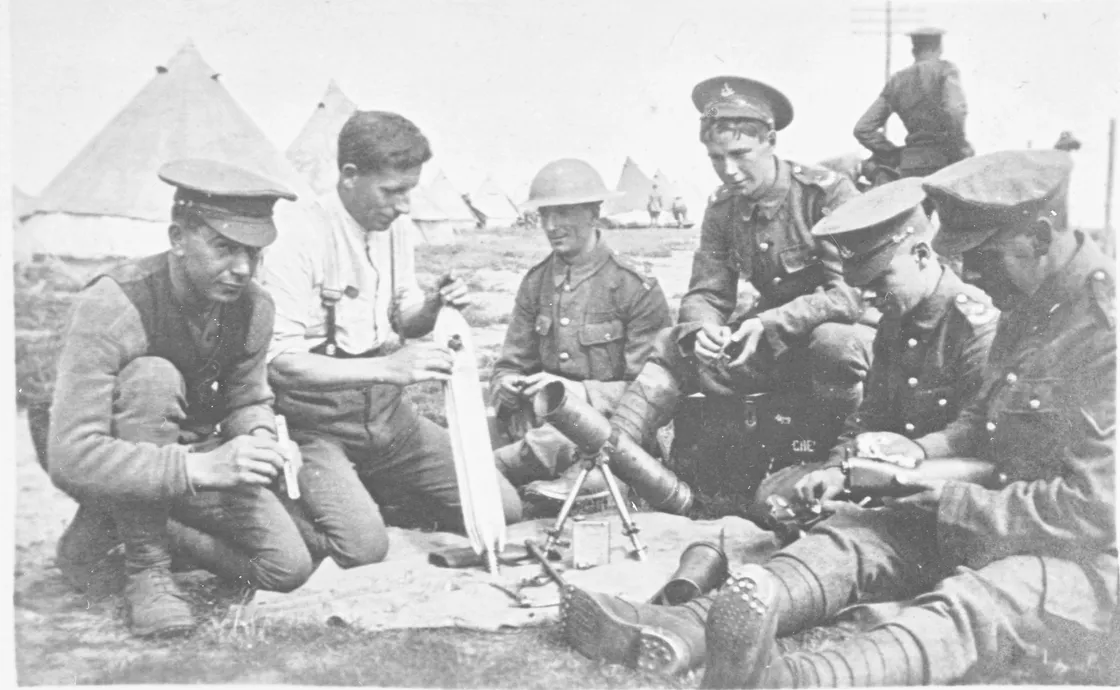
Attempting to picture the scene of this pivotal action that has come to be described as ‘Guernsey’s finest hour’, I ask Chris if the hand-to-hand combat he refers to involves waves of Bavarian soldiers attempting physically to overrun British positions and being repelled by RGLI men with bayonets fixed.
‘It’s exactly that,’ he says. ‘It’s looking in the whites of men’s eyes as I’m sitting here today looking at you.’
Many prestigious medals were won that day, with men from Guernsey – who were perhaps fishermen or quarry workers before they left home – demonstrating their courage in the face of great danger.
‘For example, Sgt William Le Poidevin moves forward with some men and captures two German machine guns at the entrance to La Rue Verte,’ Chris tells me.
‘The other Germans run off and he finds himself with virtually no men at all, so he goes back to fetch some more and when he gets back, the machine guns have been reoccupied by the Germans. He fights them off a second time and retakes possession. His story is on a citation and is fully recorded at the RGLI museum at Castle Cornet.’
With the lines on either side of them having been pushed back, the RGLI troops were almost surrounded but not quite.
‘All during the battle, they’re taking men who are wounded out onto the canal path and down to the clearing station,’ says Chris.
‘When the Germans eventually give up and withdraw, the man in charge of the entire British division – who happens to be a Guernseyman, General de Lisle – decides to straighten the line by bringing the RGLI back. That’s why so many bodies were missing, because the area soon fell into German hands.’
General de Lisle later wrote to Guernsey’s Bailiff Edward Ozanne congratulating him on the conduct of the men of the RGLI, who ‘fought magnificently’ and expressing regret for the losses.
‘Guernsey has every reason to feel the greatest pride in her sons,’ he said.
But their work was far from over.
‘There was another large action six months later at the four-day Battle of Lys – the last German offensive, a massive onslaught – when the RGLI were again on the front line,’ says Chris.
‘This time, there’s no holding on. When they are eventually withdrawn from the line – this regiment of over a thousand men – and they call the roll call on the Hasebrouck railway line, only 57 men answer.’
For many years now, Chris – along with his fellow RGLI Trust members, now numbering 17 – has believed the impact of these events on the people of Guernsey has been somewhat under-appreciated.
‘For Guernsey, what gets lost a little bit is that families back here are only getting their news from the newspapers – no radio, no TV and certainly no internet – and via telegrams from the GPO,’ he says.
‘It’s around Christmas therefore that news of the losses at Masnieres begins to come through via hundreds of telegrams. It’s said – and I can well believe it – that there literally was not one family in Guernsey that wasn’t impacted by the losses at La Rue Verte. There was no social security at the time. Bread-winners were lost. Many left the island and tried to make a new life overseas as a result of these events and Guernsey lives with the social and economic impacts right through until the 1930s, with a much smaller population. And then of course we know what happens in the early 1940s. To a large degree, the curtain of the Occupation hides the significant effects of the earlier conflict.’
The RGLI Association
The RGLI Association, which operated as the RGLI Trust initially, has now achieved many of its goals, having erected memorials in Masnieres and St Peter Port, having established a student exchange programme, having brought back the regimental dinner and reconstituted the RGLI regimental colours, as well as organising memorial rides by motorbike to Masnieres.
‘All of these things have cost money and we’ve grown considerably, so we now have the opportunity to become a membership organisation and offer regular information to those who want to be involved and who want to make a contribution to the work,’ says Chris.
The charity started life with a conversation in a St Peter Port cafe between Chris and Colin Vaudin.
‘We were just sitting there contemplating the dregs of – I’m sure it would have been a coffee, not a white wine – and we were talking about the story of the RGLI and thinking that it was Guernsey’s regiment but there didn’t seem to be much history available, other than of course the museum in the castle,’ says Chris.
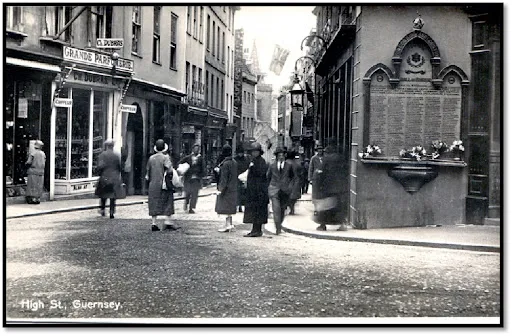
‘There was the memorial at the bottom of Smith Street, which didn’t have all the names on and parish memorials but nothing that brought it together, as such.’
They were inspired to find out more and then, once they discovered more, they were equally inspired to tell others what they’d found out.
‘We were able to build on some research already carried out by others, for example Eddie Parks, as well as the War Diary and Stanley Blicq’s Norman Ten Hundred,’ says Chris.
‘I’d like to think we will be able to produce a definitive story of the RGLI one day, but we’ve got other priorities for now. If we don’t save this derelict building, it will fall down and be beyond saving.
‘Now is the time. We can’t leave it any longer.’
Visit rgli.org for more information and for details about joining the RGLI Association.