They say our dreams come true, just never in the way we intended, and always in their own timing too. I had dreamt of visiting Chatsworth House, located in the Derbyshire dales on the River Derwent, for almost 30 years, ever since I studied landscape geography at university and became fascinated by the work of Lancelot ‘Capability’ Brown (1716-1783), the UK’s most famous landscape designer of the 18th century.
During that time I have stumbled across other country estates where Capability – so called because of his fondness for describing country estates as having great ‘capabilities’ for improvement – has left his mark, but Chatsworth House continued to remain a dream.
That is until I booked a trip to join a friend on a Neolithic tour of the Peak District and realised that we were staying a short drive from Chatsworth House. To say I was excited was an understatement, I was literally bouncing up and down in my seat as the estate came into view, surprising my friend who hadn’t realised quite the extent of my passion for stately homes.
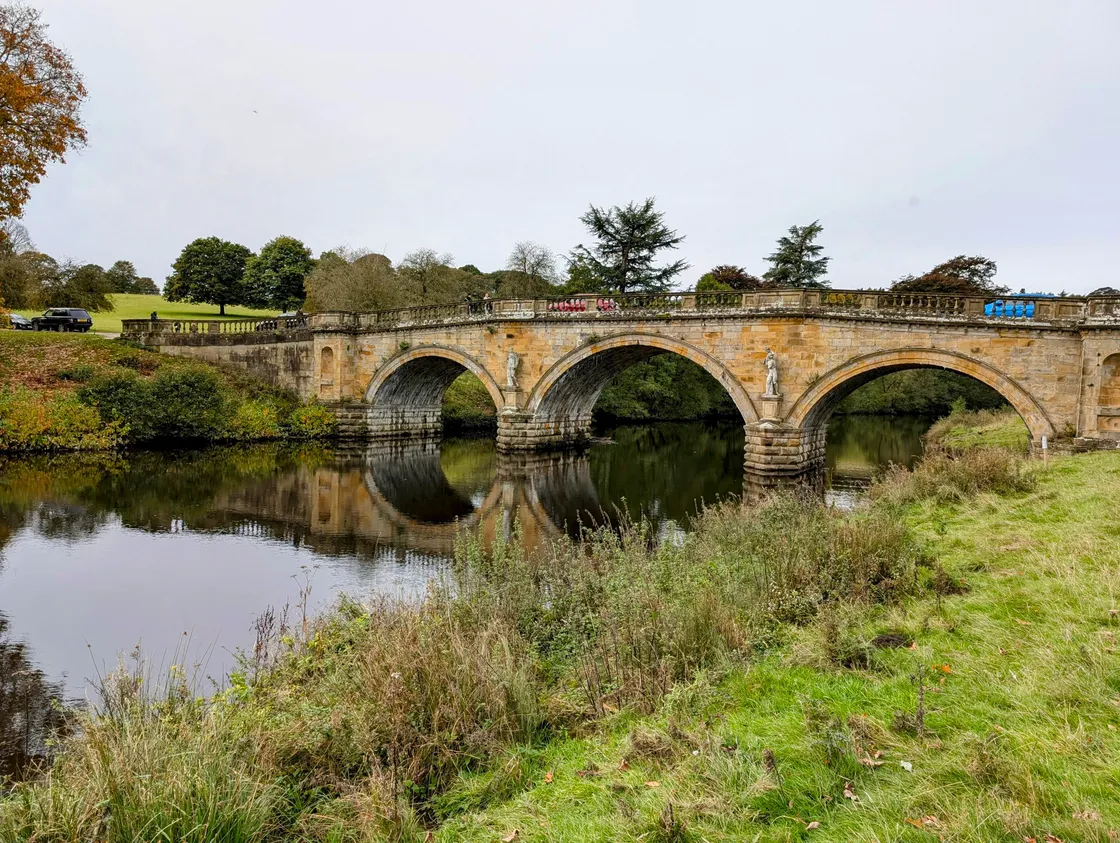
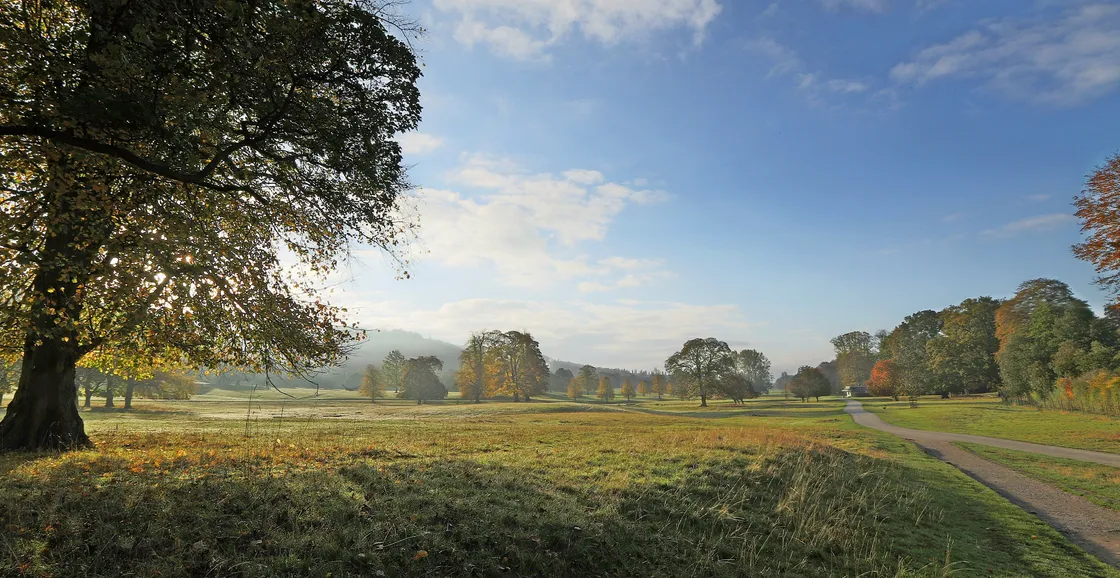
Admittedly, Capability Brown’s intention was to create one of the most impressive approaches to any country estate, with falling parkland in the foreground and views of the bridge and house beyond, backed by steeply rising wooded slopes, and he definitely achieved this.
Many will be familiar with this approach, as Chatsworth House and its incredible vista was chosen as Pemberley, Mr Darcy’s estate in the 2005 adaption of Pride And Prejudice starring Keira Knightly – it is believed that Jane Austen envisioned Chatsworth while writing the novel.
Ancestral home to 17 generations of the dukes of Devonshire (Cavendish family) for nearly five centuries, each has contributed to the careful evolution and preservation, of Chatsworth since 1549. It was the fourth Duke of Devonshire who initiated the great changes made both to the house and the gardens, employing Capability Brown to redesign the landscape of Chatsworth between the late 1750s until 1765.
The old stables and the offices, as well as parts of Edensor Village, were torn down so that they were not visible from the house. Capability Brown then set to task, replacing formal, geometric gardens with a ‘natural’ parkland style, which was part of a broader, 18th-century ‘natural’ revolution, focusing on creating the appearance of a perfect, untouched countryside. He popularised the English landscape style, and advised on over 250 country estates throughout England and Wales during his lifetime.
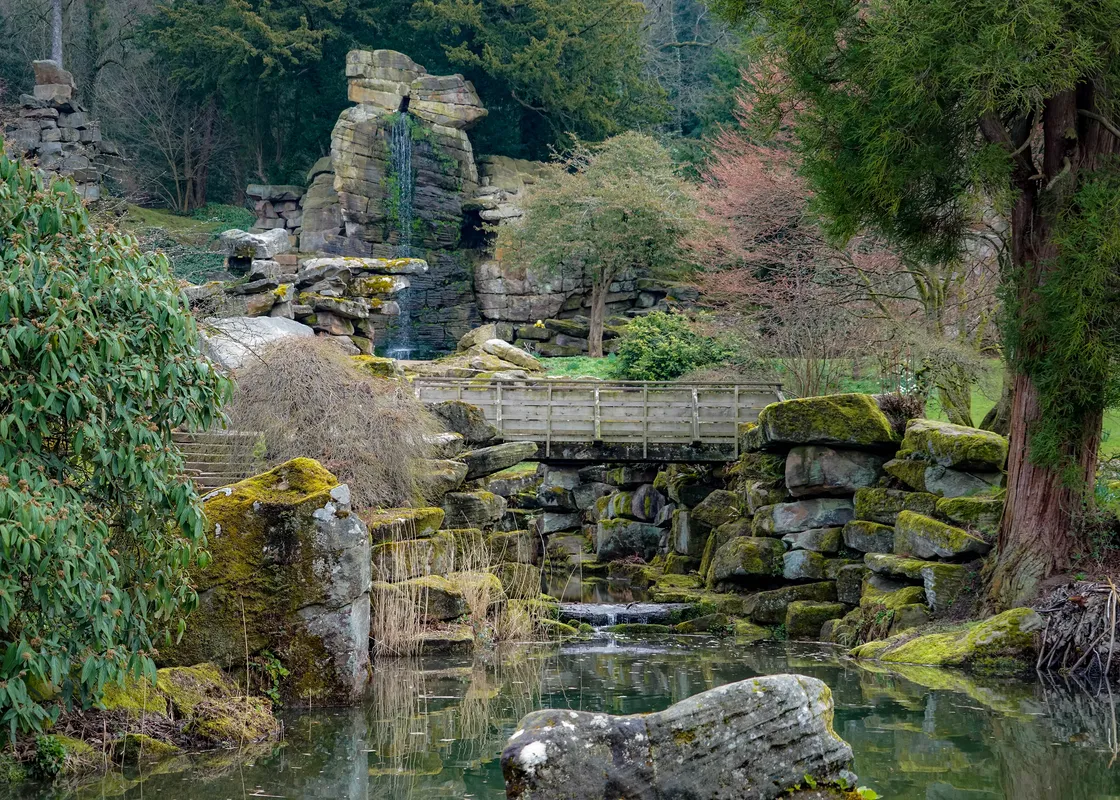
Here at Chatsworth – as was typical of his approach – his work involved extensive earth-moving, creating rolling hills, planting perimeter tree belts to frame the estate, adding clumps of trees to the landscape, and forming a large, natural-looking and scenic lake (often referred to as a ‘widened river’) in front of the house, all aimed at creating an idyllic, sweeping landscape for the Duke of Devonshire. The area also includes carefully designed architectural features including follies, temples, and a hunting tower.
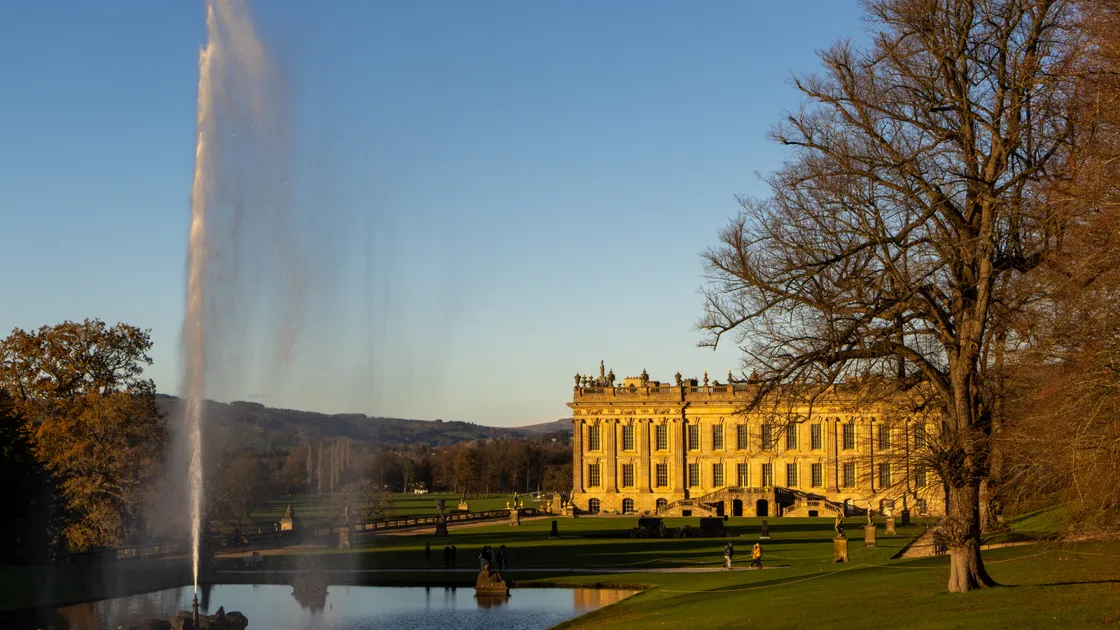
Other key features include the south front and most famous view of the house, featuring a classically designed facade that looks impressive in all seasons, particularly in the winter sunshine. There’s also a 17th-century stepped water feature that flows down the hill behind the house, an emperor fountain in the gardens, a centrepiece designed to shoot water to great heights, fed by a lake 400 feet above the grounds, and classic bridge-and-river views looking towards the house.
The house is framed by a 1,822-acre park enclosed by a 15km long dry-stone wall and deer fence. It is said that the wider estate holds in excess of 1,500 ancient and veteran trees, including notable oak, ash, yew, and a 2,000-year-old yew tree. An ancient alder with a six-metre girth is also a highlight.
This alongside a diverse 105-acre garden featuring a historic 1830s pinetum, which is one of the first established conifer collections in England, including notable specimens of giant redwoods, monkey puzzles and Japanese white pines. As a lover of trees there was something deeply restoring to the soul to be able to walk throughout the grounds and sit under some of these magnificent trees.
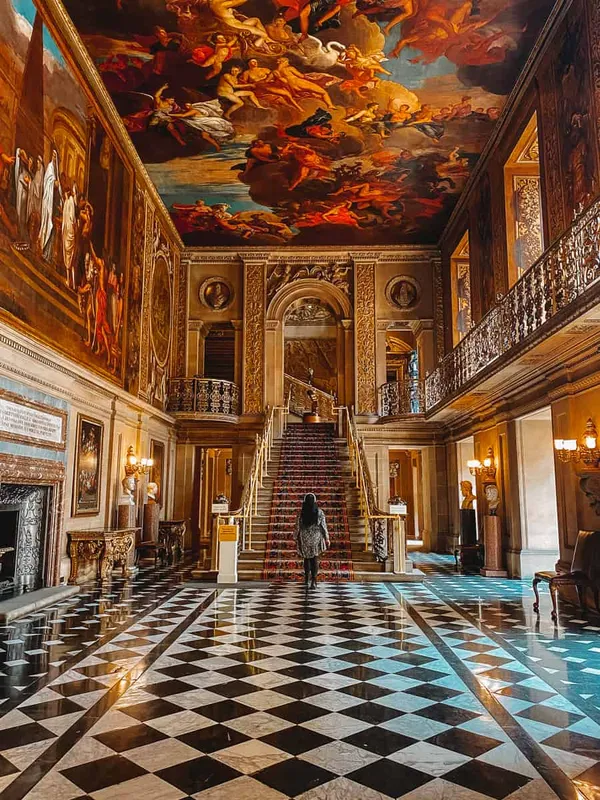
It’s worth visiting for the gardens alone, but the interior of the house is staggering too. It is renowned for its Baroque architecture and extensive art collections, that span 4,000 years up to the present day from ancient Roman and Egyptian sculpture and masterpieces by Rembrandt, Reynolds and Veronese, as well as work from modern artists including Lucian Freud, Edmund de Waal and David Nash – it is one of Europe’s most significant private collections.
Key features include the painted hall featuring dramatic paintings and stone interiors, the sculpture gallery containing neoclassical sculptures, both of which featured in the iconic 1995 adaptation of Pride and Prejudice featuring Colin Firth.
There are over 300 rooms in the house, with 25 being open to visitors. I wandered around in something of a daze as there is so much to take in. The whole place is jaw-dropping in its elegance, craftmanship and attention to detail, quite in contrast to our flat pack, disposable society. It made me hunger for a life now passed, where heart and beauty were encapsulated in home and landscape in a way devoid from life these days.
I don’t mind admitting, as a lover of romanticism, Jane Austen and period drama, there was a moment, standing by a four-poster bed in one of the bedrooms open to the general public, I almost cried with the joy of finally being here, as if some past life memory had been triggered and there was a remembering that made me feel quite at home. I joked with my friend that maybe I’d been a servant at the Grade 1-listed home in times gone past, albeit my imagination keen to believe otherwise.
The estate is a popular tourist destination and for anyone visiting Manchester, it’s well worth the hour or so drive from the airport (90 minutes by train with one change). Not only can you access the house and gardens but there is also a farmyard and adventure playground, restaurants, cafes and various shops.
The estate is now run as a registered charity and the Devonshire Group manages the surrounding businesses, including farming, forestry and hospitality. The current duke and duchess have focused on a 10-year master plan to modernise infrastructure and improve the visitor experience.
For more info, please go to: www.chatsworth.org