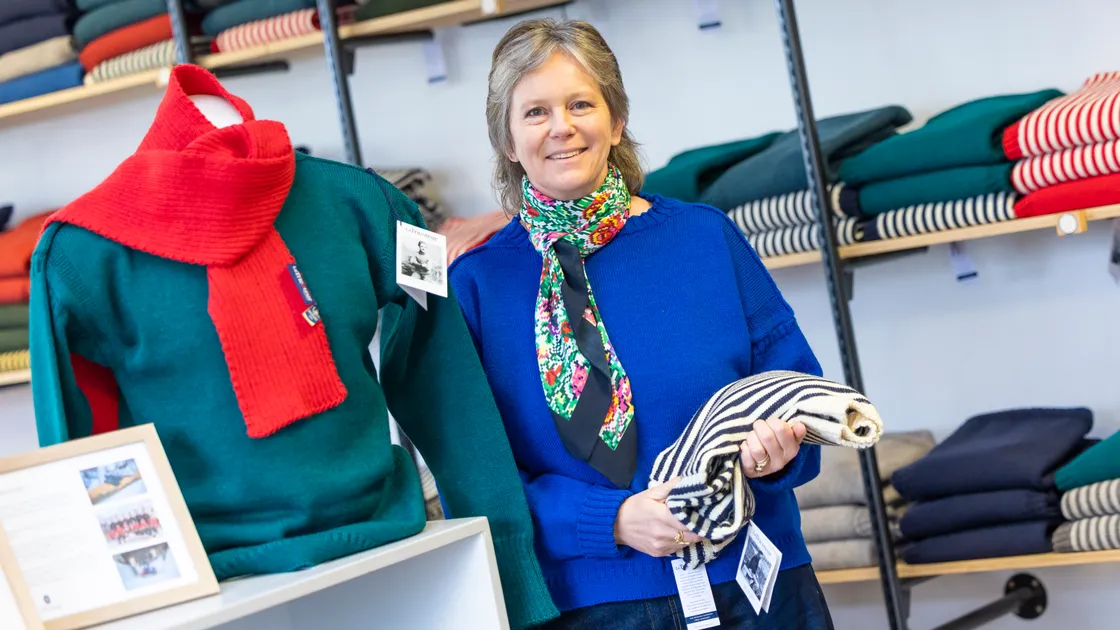
When she first stepped foot into Le Tricoteur to grab a guernsey for a photo-shoot, Rachael Laine would have had no idea how big a part of her life the guernsey factory would become – and how big a part of her ancestors’ life it was.
In 2018 the now owner of Le Tricoteur came to Guernsey with her other business, Salt-Water Sandals, to do a photo-shoot on the beach.
Guernsey had always been a place Rachael had been aware of, with her father and paternal relatives being from the island, and she thought it would be the perfect place to shoot her footwear brand’s products.
‘I wanted to do a very quintessential fashion shoot on a beach that was beautiful and had the rugged cliffs and that kind of feel to it, and I wanted it to have a slightly retro feeling to the fashion shoot, so I said we’re going to go and shoot in Guernsey. And in order to do a fashion shoot in Guernsey you really need to be wearing a guernsey,’ she said.
‘I came along to Le Tricoteur and we borrowed a few for the models.’
Rachael’s trip back to the island prompted her to introduce her husband and children to Guernsey too, where she bought them their first pieces of guernsey knitwear.
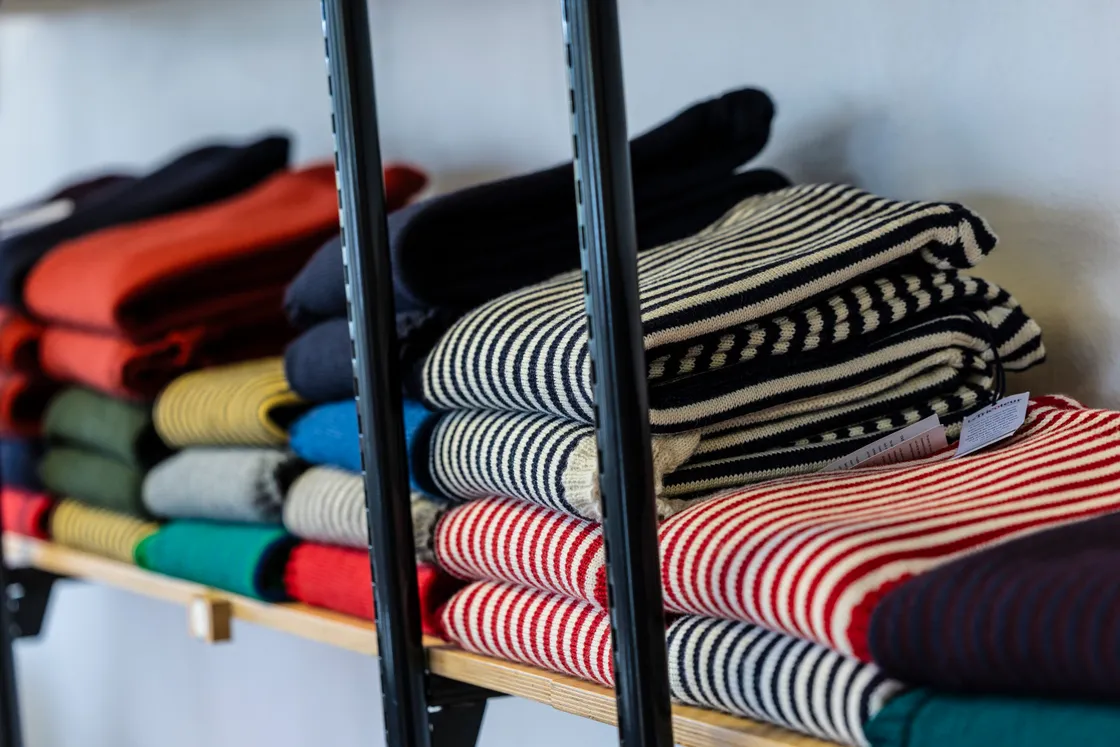
‘My surname is Laine and I was like, if you’re marrying a Guernsey person, you need to have a guernsey. So he came along and obviously he bought a navy guernsey, and then my kids really wanted one. But they were really quite little at the time, and I wasn’t going to invest in one at that age, because we find that a lot of people buy their kids guernseys if they live here year-round – we weren’t living here at the time – or when they’re a bit older and they’re not going to grow out of it quickly because they are an investment piece for a child. So I bought them a beanie each, and they wore them all summer,’ she said.
Her family’s love for their Le Tricoteur products led Rachael to finding out more about the business, which at the time was owned by Neil Sexton, who had been at Le Tricoteur for 50 years and was looking to retire.
‘His sons were living abroad, one was in Australia and the other one was going to Sri Lanka to surf, and he said “I’m just going to go surf with my sons and that’ll be it”. I said to him, “You cannot lock up and leave".
From that conversation Rachael decided that she wanted to take Le Tricoteur over. When she told her family that she was going to buy the knitting business, a family connection was revealed.
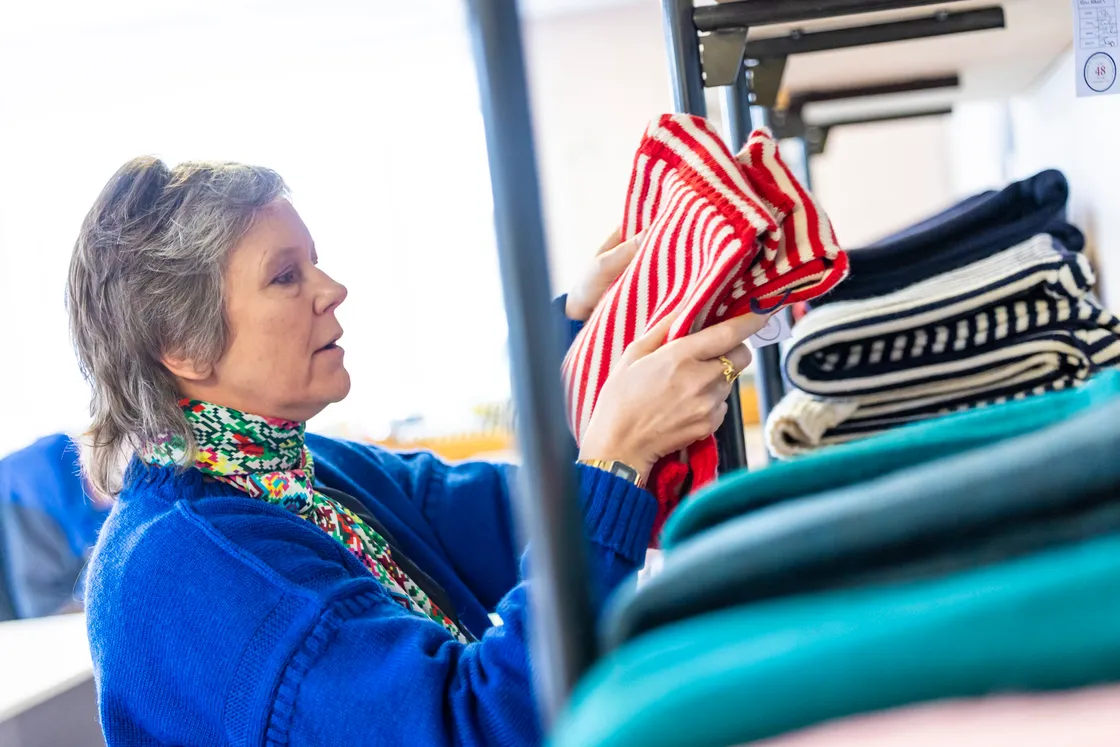
‘They said to me, “Rachael, your cousin set up Le Tricoteur”. I was like “What!”, because I didn’t know, he’s a much older cousin, he’s my father’s age,’ she said.
‘They told me to go and speak to Mac and find out about the business from when he was involved. It’s been really great that I had Neil to help onboard me and also Mac goes and speaks to him every now and then.
‘I could see that Neil loved the fact that I was related. Because we’ve got different surnames, he didn’t realise that I was related to the founder, but he had been general manager with Mac years ago, and it’s kind of really neat and lovely, and it feels really great to bring the business back into the family in a way.’
Once it had been agreed, Rachael planned to move her family over, but as they were making the arrangements from Singapore, where they had been living since 2019, Covid hit and they were unable to move. Neil carried on running the business until Rachael could take over. She finally moved over in July 2025.
Since starting there has been a resurgence in the popularity of guernseys and Le Tricoteur has started making a variety of more modern styles and colours, as well as the traditional jumpers.
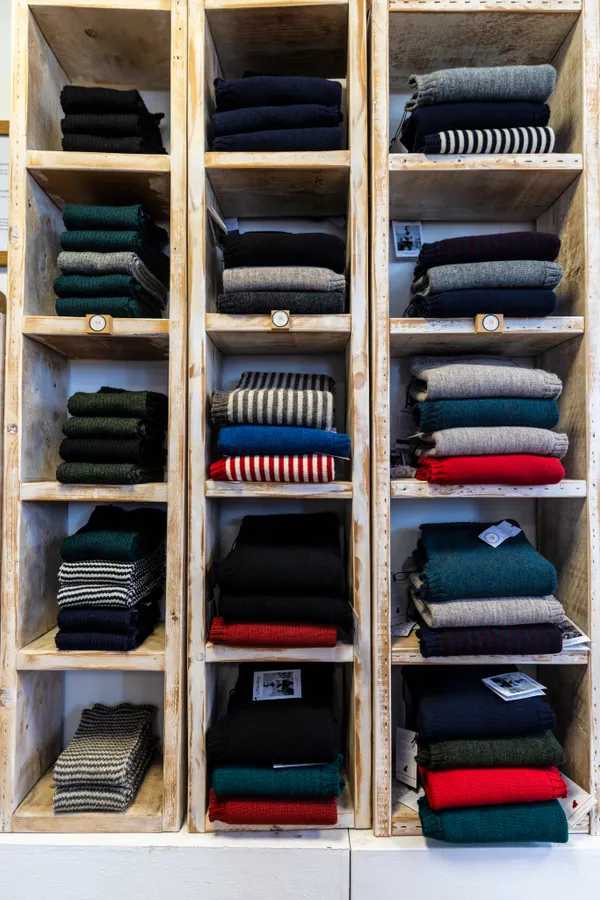
‘I’m not reinventing the wheel, we still sell navy guernseys. Number one, that’s our best seller globally in the shop online, navy is always going to be because it’s the most traditional one, but what we’re trying to do is introduce fashion colours or slightly different silhouettes,’ said Rachael.
‘We’ve done this cropped off-shoulder one that has been hugely popular with women, it’s more flattering in a way, and also very popular with some young guys who like this layering look, kind of a Japanese, Korean-style layering streetwear look. We sell it to men and women, but it’s definitely more popular with women.
‘We did this bright pink one that went a bit bananas where we sold out in under an hour the first time we launched it. Then the next launch we actually kept just for Guernsey. We sent emails out to people in Guernsey who were subscribed, and the morning that they went on sale we had a queue out of the door – they sold out in one morning.
‘Then we did another third drop recently, we had to put it online because it’s not fair for everybody else who doesn’t live in Guernsey, they wanted it too, and that sold out again.’
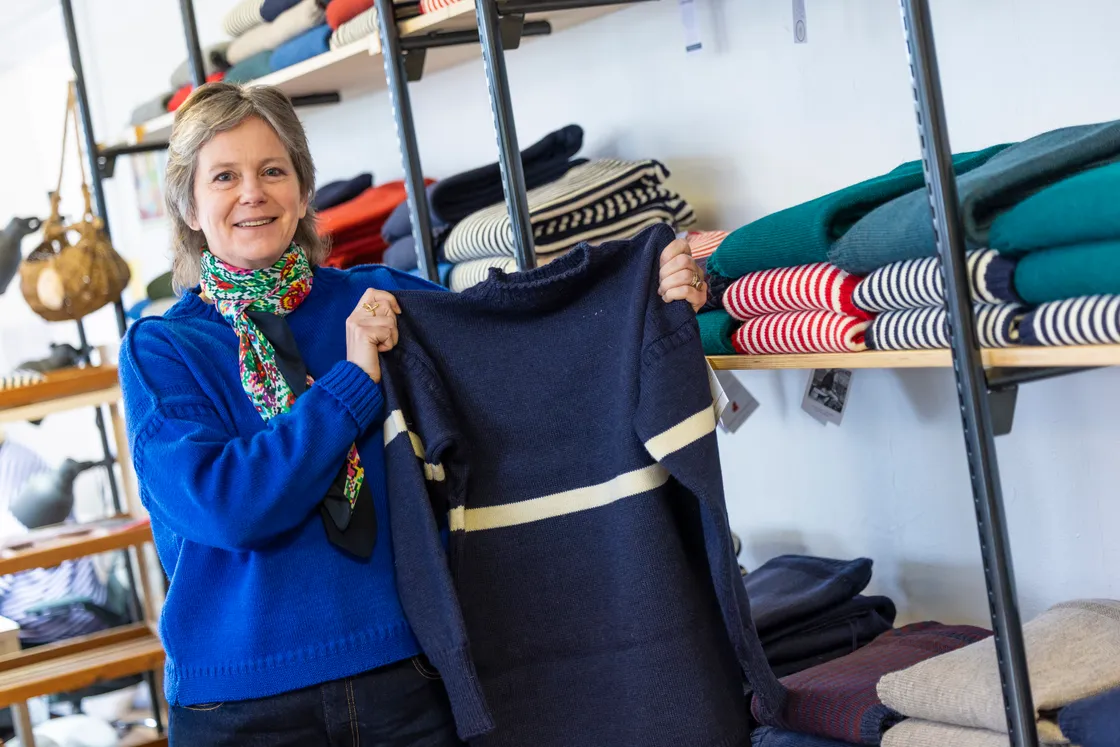
While Le Tricoteur is creating modern guernseys, most of the products are still made on the vintage machines, and hand-finished.
‘We are training the trainees on the vintage machines because they knit in a slightly different way. They have more wool per inch than a modern machine,’ said Rachael.
‘You may have noticed that we do have one modern machine in there, and that is solely because with some of the really bright fashion colours, the wool is dyed in a slightly different way and the old machines simply don’t like it, they’ll snap it. So we do tend to do all the traditional colours on the traditional machines, and with some of the brighter colours we have to do them on the modern machine because it’s a slightly looser knit and the yarn is a little bit fatter.
‘The ones that are knitted on the vintage machines actually go to hand-knitters. Hand-knitting and hand-finishing are different, our hand-knitters work on the wool ones and they will actually do the shoulders and the neck completely.
‘If you look at one of our premium traditionals, they have gone out to a hand-knitter who will spend three hours knitting their guernsey at home and then they get it collected the following week. Then they get hand-finished which is the linking, putting the sleeves on and the side seams on. It’s really important to us to keep the hand-knitting going because of the generational history of it on the island.
‘We’re always saying if you are an experienced knitter, we’ve got work for you.’