Guernsey's 10 historic parish churches were primarily constructed during the 11th and 12th centuries and feature a traditional medieval Norman configuration.
The outlier, in both age and design, is St Philippe de Torteval, built centuries after its cousins, and with far fewer right angles.
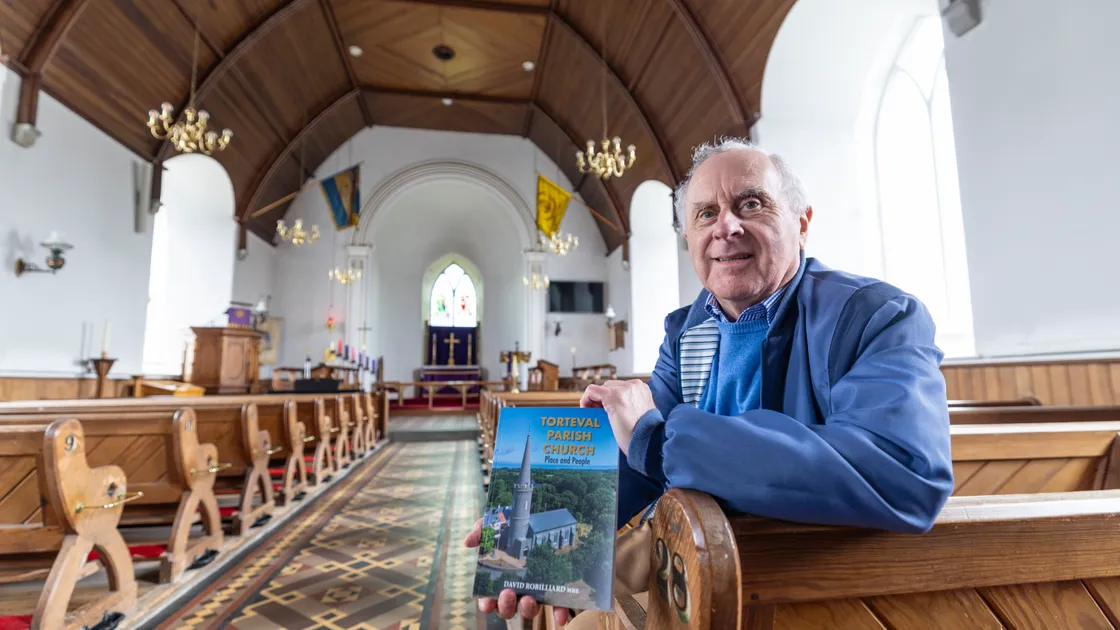
David Robilliard has been Torteval church warden for more than 30 years and has attended services there most Sundays of his life.
He agreed the most striking thing about the church was no doubt its round, almost Rapunzelesque tower, which makes it the tallest church on the island, so tall in fact that it was once used as a navigation aid for mariners.
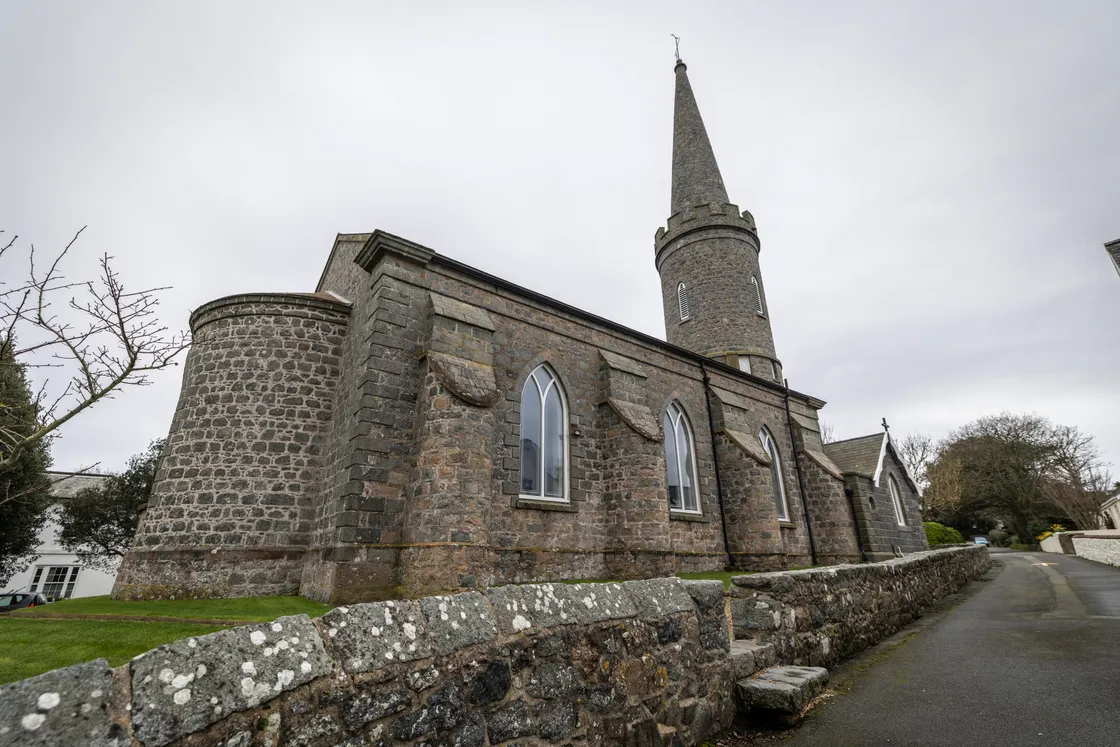
‘The design of this church with the spire is not an average looking church,’ he said. ‘It certainly doesn’t replicate the standard medieval church. It was designed by John Wilson, who also designed Elizabeth College, St James, the Markets, and Castle Carey.’
‘Wilson was on the island for about 18 years, and he was prolific while he was over here. There are similarities between Torteval and St James, you can see the round shape replicated. I can’t imagine the ratepayers saying, we want a round tower, so I think he probably had a free hand.’
Wilson was sent to Guernsey in about 1813 to supervise the construction of permanent barracks for the garrison in Guernsey and Alderney.
His work with the Board of Ordnance allowed him time to take on private commissions, and his first major project was Torteval Church.
Prolific in Guernsey, Wilson oddly appears to have done little work outside the island.
The present church was built between 1816 and 1818, and replaced a former building that had fallen into disrepair.
That church, consecrated in 1140, was built under the reign of King Stephen, William the Conqueror’s grandson.
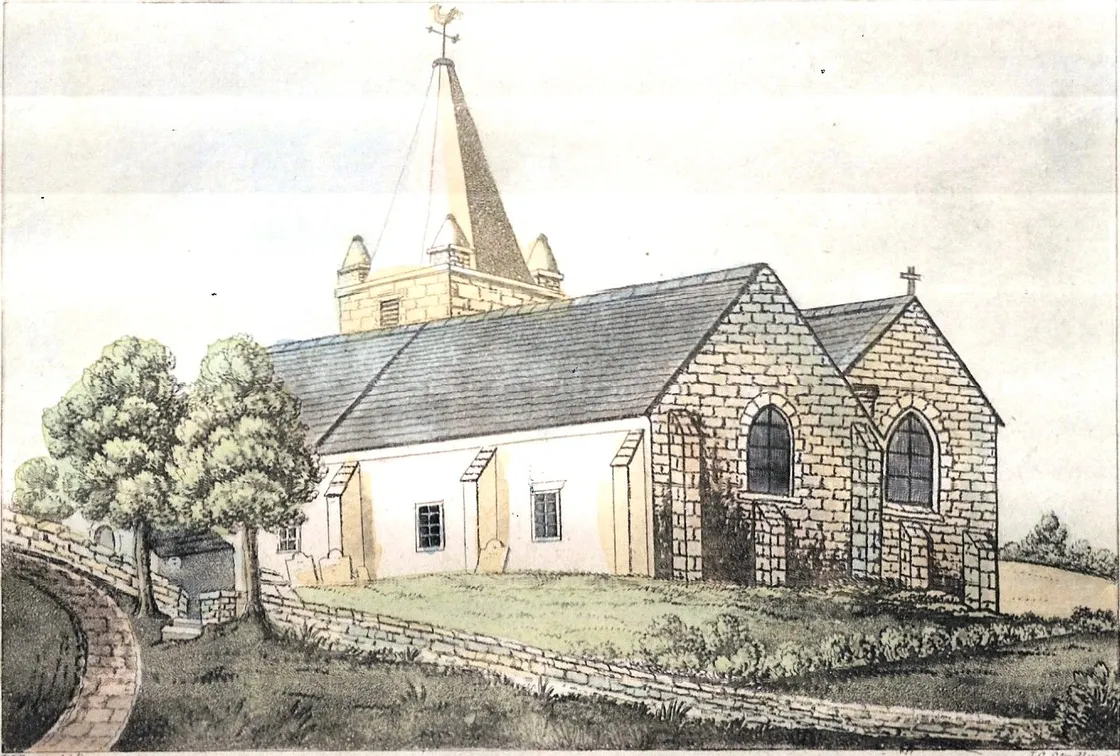
‘The old church had been a much more traditional shape,’ explained David. ‘Effectively exactly like St Andrew’s, but slightly smaller.’
‘It was located slightly lower down the hill, effectively, where the cemetery is now, and one of the problems was the lower wall was starting to fall away from the rest of the church, and they decided to build the new church on higher ground. If the old church survived another 100 or so years it may have been able to have a restoration, as they became more skilled at restoring buildings.’
In Wilson’s original design the church had a wooden roof.
However the nine other parish churches all had stone roofs and it seems that was something the ratepayers of Torteval would not tolerate.
‘They decided that, for a building befitting of the house of God, it should have a stone vaulted roof. So he had to then change the plans and because of that, he had to include four buttresses on each side.’
That stone roof is now completely hidden due to a wooden ceiling added in 1901.
‘If this ceiling wasn’t there, you would see the stone vault which more or less follows the shape of the roof,’ he said.
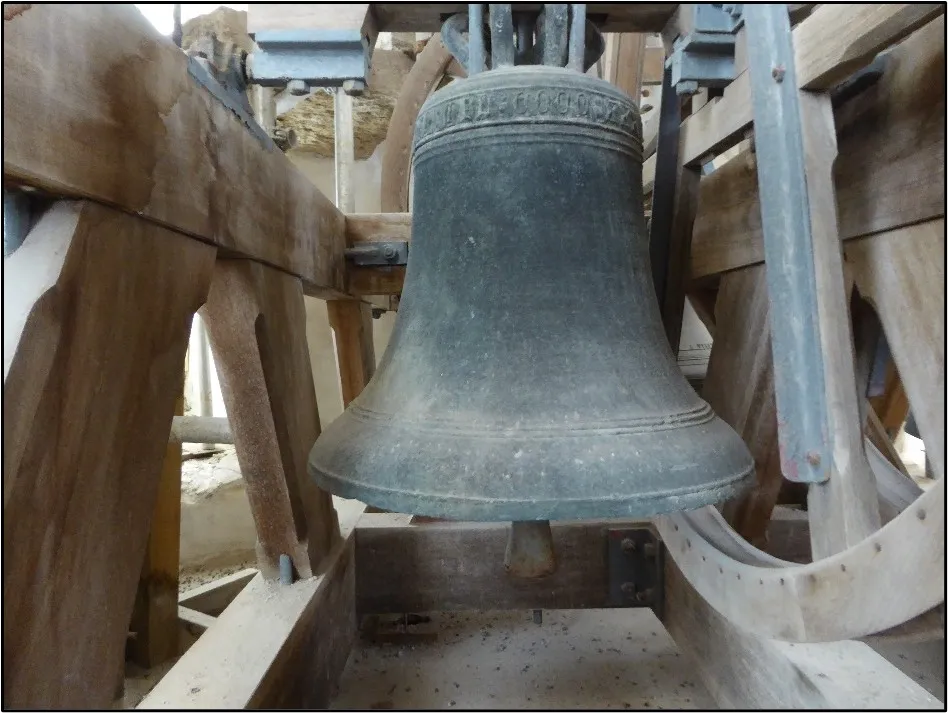
Despite being the youngest parish church, Torteval does have one claim to antiquity, as it’s home to the oldest bell in the Channel Islands.
‘It’s from the old church and was almost certainly cast in France,’ explained David, ‘It’s actually a very rare thing, because a lot of the French bells were destroyed during the French Revolution, as they got melted down.’
The bell can still be heard ringing across the western parishes and is one of three confined within the tower.
‘The largest bell is the one that’s used every Sunday. The two little bells, one of which is the one from 1432, are usually used for festivals or weddings. Someone may prove me wrong, but it could be the oldest dated object in the Channel Islands because it’s clearly dated 1432.’
In contrast to the other churches there is also only one stained glass window that was not added until late in the 1950s.
‘There was no real desire to have stained glass, particularly after the Reformation,’ he said. ‘Stained glass with images of saints was thought to be very sort of pro-Catholic. This is the only parish church, of course, that has never been Catholic.’
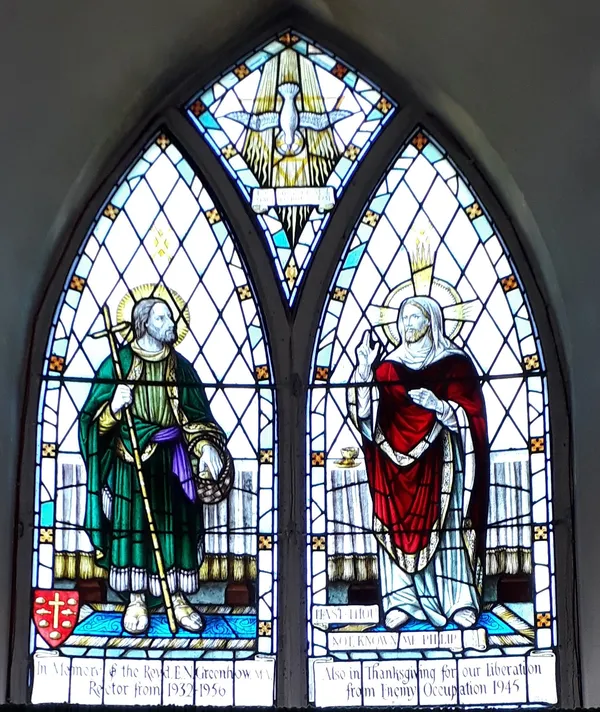
The only piece of stained glass in the church is situated behind the altar and features St Philip alongside his heraldic arms.
‘Now that’s a little bit of a fabrication, because they obviously didn’t have heraldry, but very often saints have been given arms that then get represented within the dedications of the church. In the heraldic shield, there’s a cross and five loaves and two fishes, because in the parable of the feeding of the 5,000, it’s Philip who says to Jesus, how are we’re going to feed these people? We quite like the way they’re represented, as we always claim that they’re Guernsey biscuits.’
The parish churches are generally known by their parish names, with most islanders probably struggling to remember outside of their parish which saints they are dedicated to.
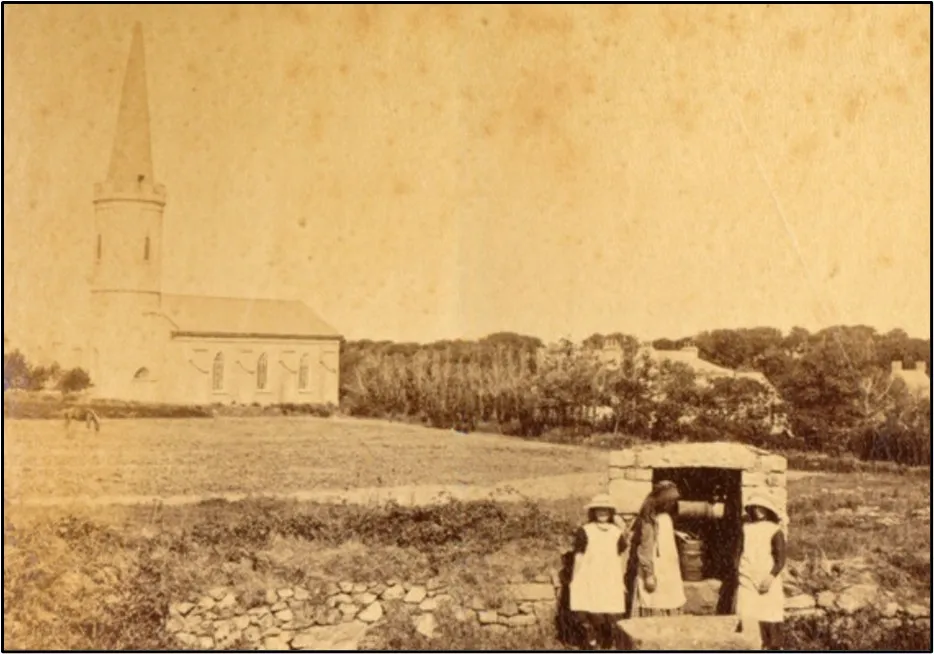
Torteval is dedicated to the aforementioned Apostle Philip.
‘Even in Guernsey, people will refer to Torteval Church, the Forest Church, Vale Church, and so on, but every church will be dedicated to either a saint or to one of the persons of God, for example Holy Trinity or Holy Spirit, or like in Guernsey St Saviour’s, that’s effectively dedicated to Jesus.’
‘The origin of the name St Philippe de Torteval was something I was at pains to cover in my book. It was all a big mistake.’
David explains that ancient documents dated 1048, showed the medieval church was dedicated to Notre Dame – Our Lady, the Virgin Mary.
‘Sometime, probably during the 1600s, there was a spurious document called the dedication, and that document purported to give the date of the dedication of all the parish churches. It claimed that the old Torteval church was dedicated to St Philip. There’s this crazy story that Philip de Carteret of Jersey was travelling to Guernsey and he was shipwrecked, and vowed that if he would be saved, he would build a church in thanksgiving.’
The dubious story says that de Carteret built the church, and dedicated it to his namesake St Philip.
‘There’s no truth to it and they knew as early as the 1700s that this was a fictitious document. Throughout history, island historians have said don’t pay any heed to this, it’s just a fabrication, but the story keeps being told, so I’ve included it here to put the record straight.
‘When they came to build the new church, they mistakenly consecrated it to the name of St Philip to continue what they believed was the dedication of the old church.
‘However the fact that it was a new dedication by the Bishop of Salisbury in 1818, means its dedication is truly St Philip, even though the name was chosen for the wrong reasons.’
One other thing that is unique to Torteval Church among its peers is that it is now home to Methodist services as well as Anglican.
‘The Methodists had their own chapel just across the valley. It was getting too much for them to maintain, but they wanted to continue as a worshipping community,’ he said. ‘In contrast to the mainland, the Church of England doesn’t own the church buildings. The building is, of course, owned by the ratepayers, the people of the parish. So our view was, if the secular parish is happy with it, we’re quite happy to let the Methodists have their service here.’
The Methodists hold a 9.30am Sunday service, with the Church of England service following at 11am. Then at least once or twice a month, the two communities share a service as well – an arrangement that David said had worked well for both communities.
‘I think it worked because it’s a bottom-up arrangement, it’s the people themselves that wanted it and it wasn’t imposed from the top.’
David spent 10 years writing, and researching the book, trawling through the churches ancient documents, the Priaulx Library, the ecclesiastical court and past copies of the Guernsey Press.
‘But these sorts of works are never finished, really,’ he said. ‘I’d just gone to print, and I discovered a new fact. I wrote that “prior to 1871 Messrs Gallienne of Lihou provided music for services with flute and clarinet”, and that’s as much as I knew. A lady came to me after a Sunday morning service, and she said, you referred to the Galliennes, that was one of my ancestors. A few years ago, she had gone to New Zealand to stay with a cousin who produced the actual flute, which she brought back with her to Guernsey. Had I known that, there’d be a picture of it in the book.’
Torteval Parish Church – Place And People, is published by Blue Ormer and is available now.