You might have gathered from previous articles that I love logically thinking through from what we know of an animal’s evolutionary history to what we know of them today. Joining the dots is great fun, and I find it really helps me to make sense of the quirks our pets have.
Dogs are pack animals. They are highly social, with a complex ‘language’ composed of noises, body language, smell, and pheromones. With a slight change in face shape, a dog can communicate to another dog ‘stay away please’, and they have ways to escalate if that polite request is broken.
Cats, on the other hand, are fairly solitary. While they can and do make noises, the mewing sound we recognise is mainly reserved for ‘talking’ to us humans – it’s not a noise that adult cats naturally make to one another. And while cats do have some body language capabilities, it’s limited (probably – although we’re learning more about cats all the time). Instead, as solitary species, they tend to communicate through pheromones and smell. They can leave messages that last hours, days, or weeks, that can be ‘read’ by other cats. Things like ‘Kitty woz ‘ere’ and ‘I’ll be coming into season soon, hang around!’ and probably even ‘I was scared yesterday’ or ‘I don’t feel well at the moment’.
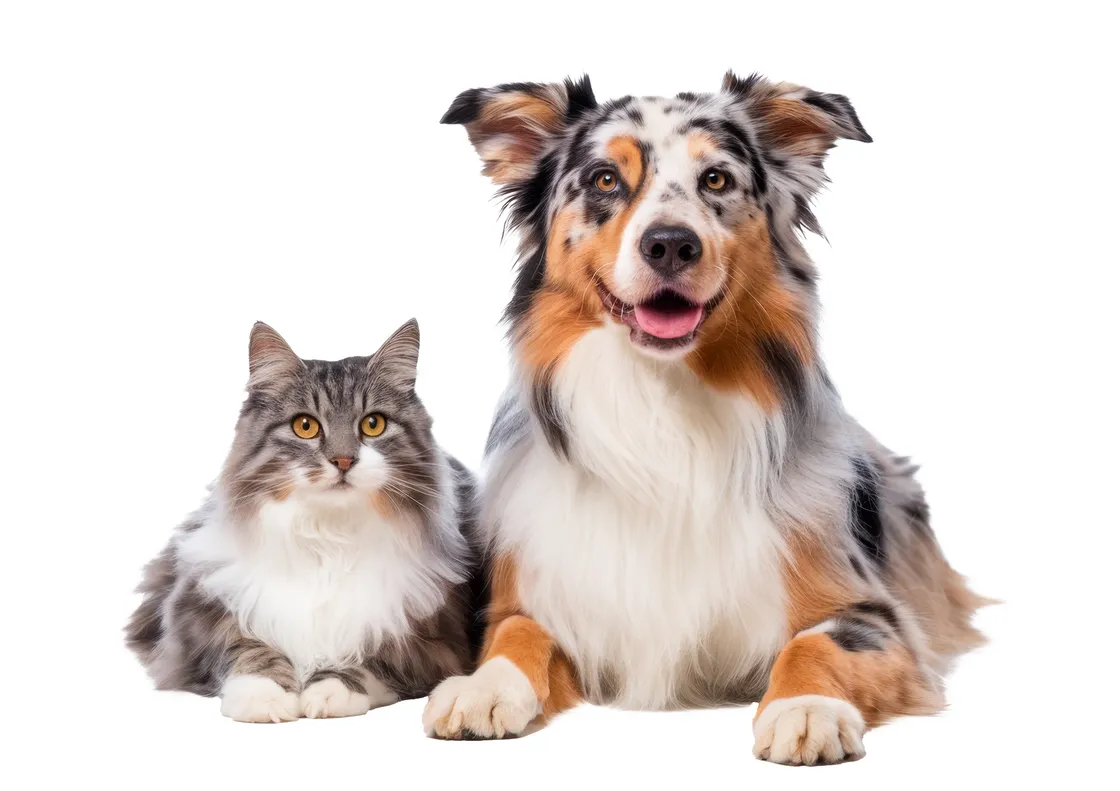
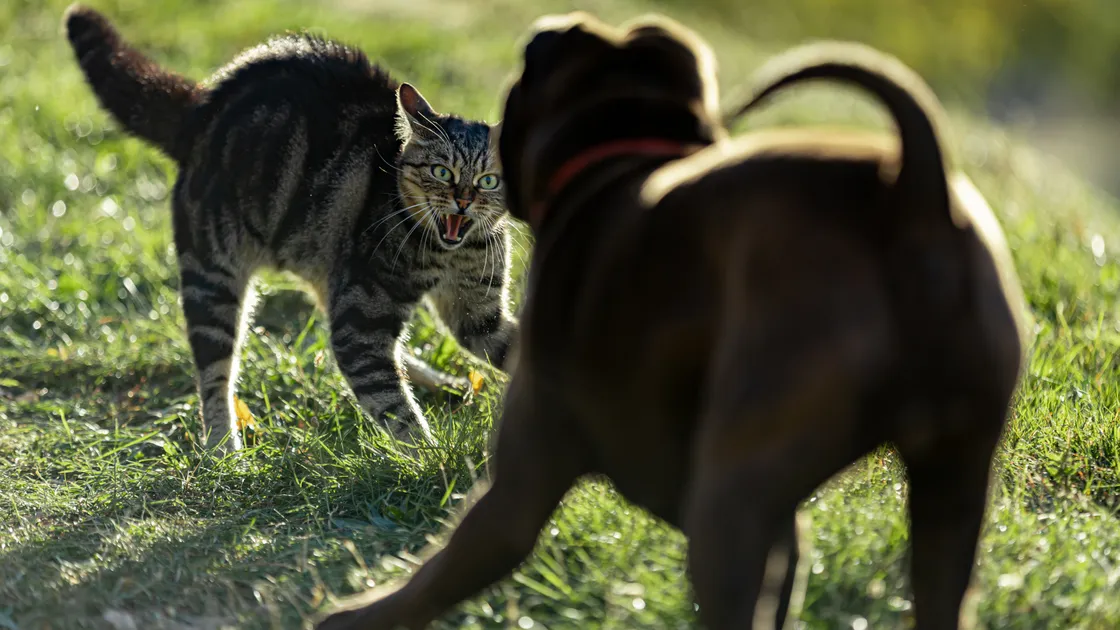
So, what does that mean for behaviour? Well, dogs are likely to give us visual cues when things go wrong. Showing the whites of their eyes, going stiff, and yawning are all signs that a dog isn’t comfortable with a situation. If visual cues fail, they’ll use their voice – a low growl, perhaps. Even a nip is intended as a non-damaging warning – most dogs will try very hard not to hurt members of their pack.
Cats, on the other hand, are much harder to ‘read’. We silly humans can’t smell their subtle changes or pick up their pheromones, so we have no idea if they’re stressed. We can pick up on certain stress behaviours – like scratching the furniture – but by that point we’ve missed plenty of early-warning signals. Being solitary, they protect themselves at all costs. If they can’t flee, they’ll often fight tooth and claw – literally. And make no mistake, a scared cat is not going to give a small warning nip like a dog – they’ll put you in hospital (ask me how I know).
Evolution has a lot to answer for. And it’s not hard to see why dogs are often called ‘man’s best friend’ while cats are considered ‘aloof’ – we just aren’t as equipped to understand what they’re telling us.