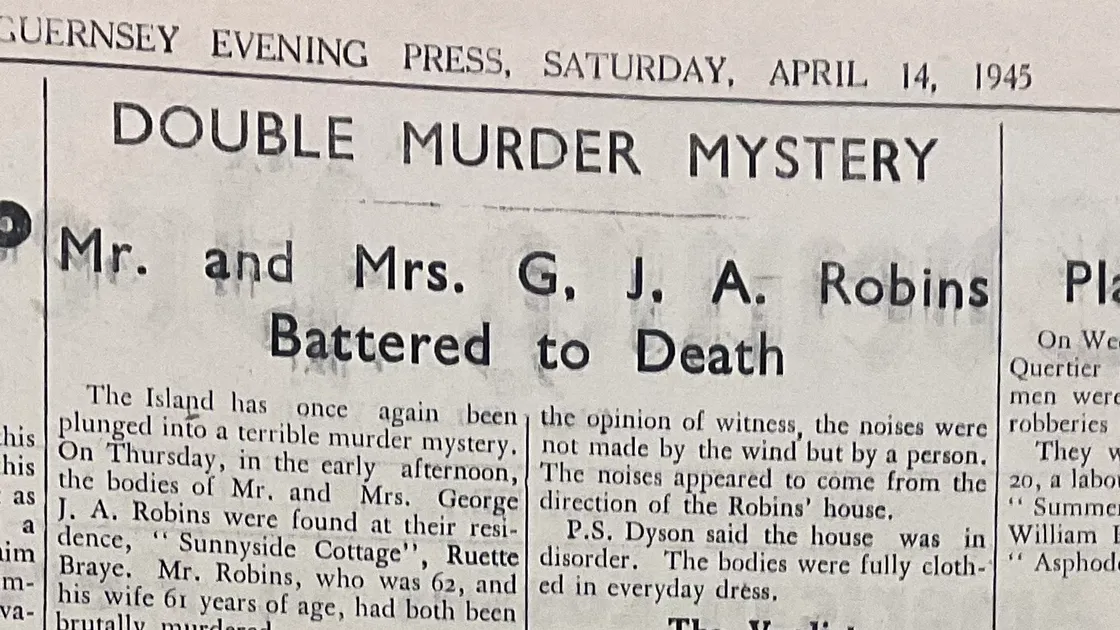
Who would harm a gentle old lady?
And, for that matter, who would slit the throats of both her and her elderly husband?
Questions, I am afraid, we will never get answered, other than it was most likely by a wicked and desperate man, or men, with the island so short of food a month away from freedom in the spring of 1945.
The unsolved murders of the Robins of Ruette Braye, the mysterious deaths of the elderly Sigwart couple in Hauteville a couple of months earlier, and, in between, a succession of food raids on three separate Mahys, are all noted in the superb ‘Battle of Newlands’ diaries of Winifred Harvey, republished this month.
Miss Harvey herself does not venture into details because they were so few, but 81 years on they warrant revisiting for the sheer ongoing mystery relating to the deaths of four of the island’s older generation with the war so close to its end.
In 1945 and now, the finger points to German personnel or, as Ken Tough notes in his valuable ‘dramatis personae’ section in Battle of Newlands, ‘their auxiliaries’, whoever they may be.
The Robins’ downfall lay in the fact that they were poultry farmers and on the night of 12 April the lure of a fresh chicken clearly proved too much for someone or some people to resist.
The result was ghastly and, without entering into too much grizzly detail, both George, 62, and Lily, 61, had their throats cut and heads battered.
When, the next door neighbour Mr Mauger called to collect eggs, he found the curtains to Sunnyside Cottage drawn.
A relative was called and when they entered the property the bodies of the couple, who had been married for 39 years, were discovered.
A bread bin was found as if rifled, a money box emptied and there was no other food around the house, although a recent Red Cross parcel had been delivered.
Out back, where there was a wash house, blood from a fowl’s head was discovered.
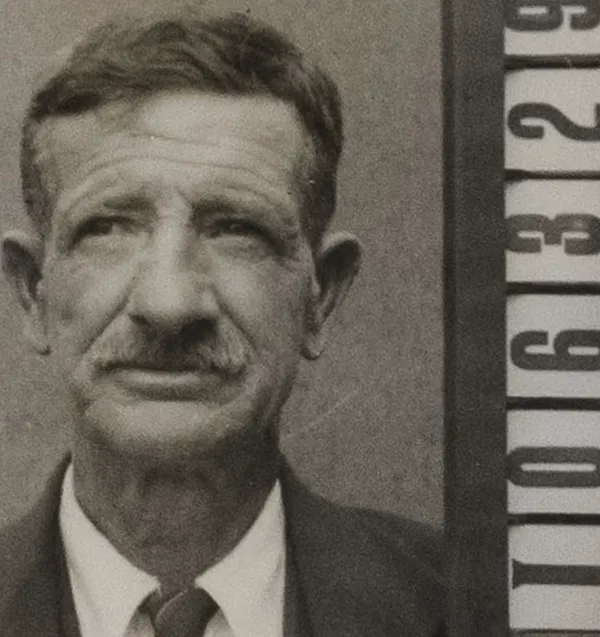
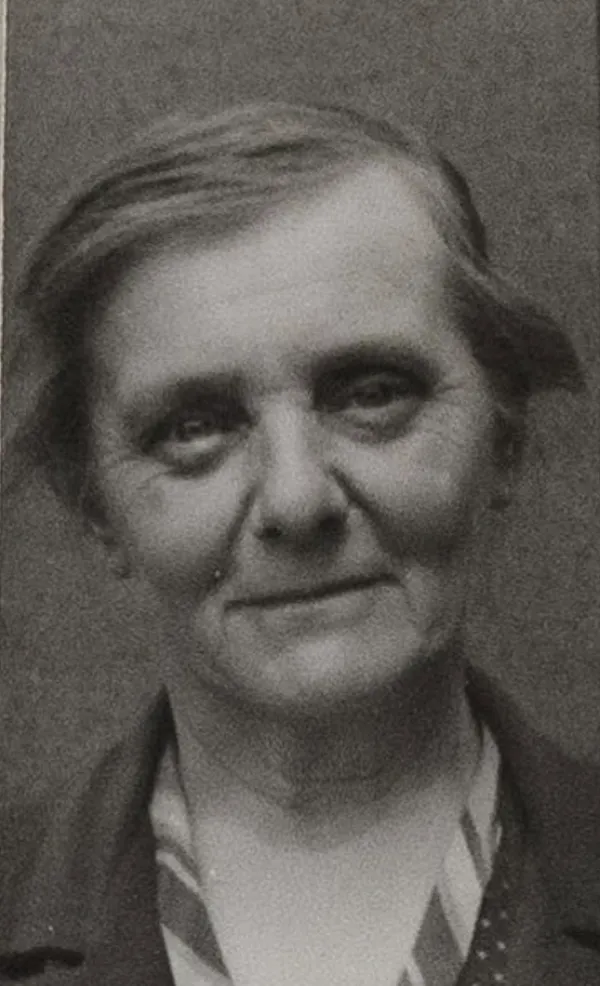
The inquest, staged before Jurat Quertier Le Pelley just two days later, concluded it was murder, but who was responsible was another matter and the final weeks of the German Occupation proved the perfect backdrop for the culprit or culprits to escape undetected.
In between the murder and the Occupation end, the Robins’ funeral was held in front of 100 islanders gathered at Foulon Cemetery.
The chapel itself was filled and again as many people stood outside to pay their respects to the couple who had suffered such a terrible end.
Among the mourners was jurat John Leale, president of a Controlling Committee with no control over the behaviour of the Nazis.
The imminent end to the war frustrated all the investigations, unlike the equally tragic deaths of elderly Hauteville residents John and Marie Sigwart, which had occurred in late February.
An inquest into their deaths concluded that the 74-year-old German-born interpreter and watchmaker at Jewellers & Silversmiths had murdered his 77-year-old wife before drowning himself in a bath.
A next door neighbour told the drawn-out inquest that he had heard louder than usual and fast, heavy footsteps next door at 11.30 that night.
There was also a cycle seen outside the house earlier in the evening.
But come the end of a third session of the inquiry into the Sigwart deaths, coroner Mr Le Pelley went some way to lifting the veil of mystery overhanging the case by concluding that in a likely ‘brain storm’ the old watchmaker had strangled his wife before committing suicide in the bath.
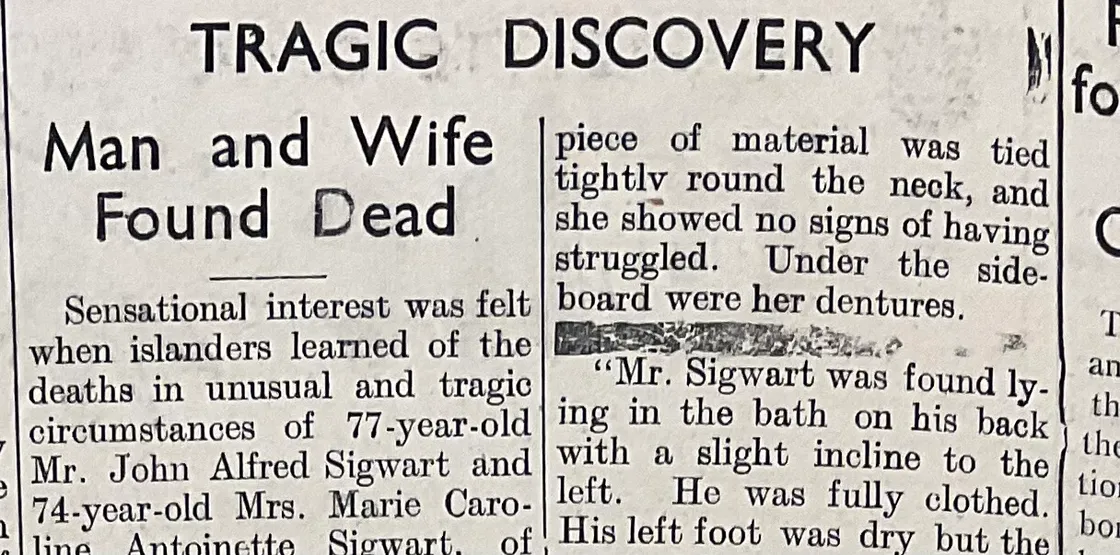
But the Sigwart deaths remained mysterious beyond the end of the Occupation, unlike this third war-time tale of an islander meeting his maker before their time.
It was New Year’s Eve in Collings Road when George Fisher and his wife Mabel heard a knock on the door shortly before midnight.
Opening the front door, they encountered six sozzled Germans in a merry mood and eager to join the family celebrations.
Perhaps the connection to the Fishers had come via Mabel’s job as a kitchen worker at the Brock Road ‘school’, as referred to on her ID card.
They had brought with them several bottles of drink which they offered around and at the stroke of midnight an NCO of the German party went outside through the front door, apparently with the intention of ushering in the new year by firing his revolver.
This is how the closely monitored Evening Press reported it a few days later:
‘Shouting out that New Year had arrived he called his friends to come outside. Mr Fisher (who had married Mabel at the tender age of 19 22 years earlier) followed him outside and was apparently struck by a revolver bullet and later died from haemorrhage as a result of the wound. The German NCO, who was completely unnerved by the shock, has been arrested by the German Field Police pending a thorough investigation.’
What that investigation concluded remains unreported, while George Fisher’s death form notes he had been shot in the lung.
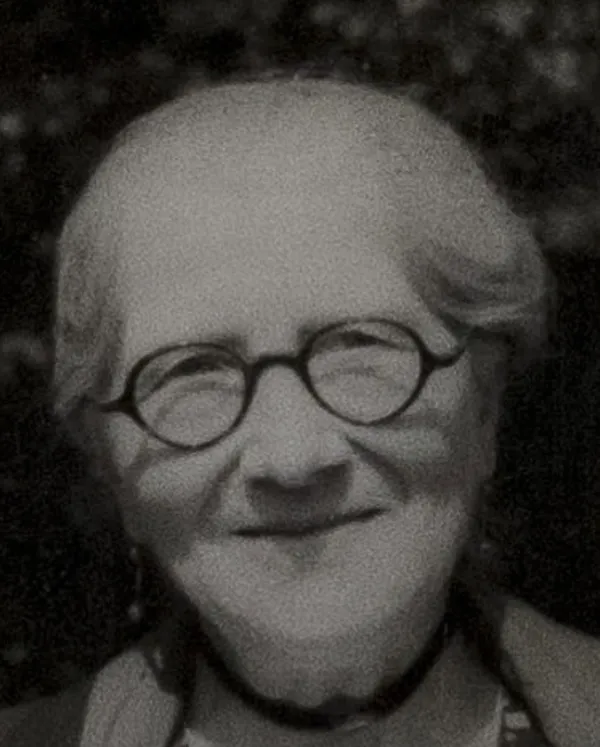
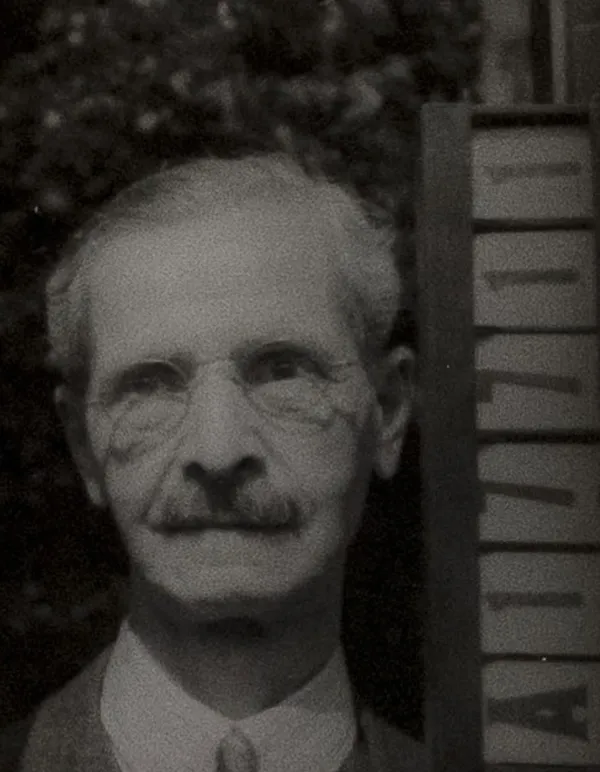
John Mahy escaped much more lightly when set upon by starving soldiers at his Landes du Marche home in the last months of the war.
The 74-year-old tomato grower and farmer was attending his cattle on a Sunday afternoon when two masked intruders jumped him at gunpoint, tied him up and bound his mouth.
Although ultimately able to release himself, by then the invaders had run off with a bounty of potatoes, beans, rabbits and meats from two Red Cross parcels.
Strangely, within the same week, two other northern properties owned by Mahys were robbed, and in each case the robbers took food, either potatoes or rabbits.
It’s evidently clear some Germans would do anything to fill their stomachs and, in the case of the poor Robins couple, they were fully aware of the dangers that lay ahead of them in early 1945.
That as much was written in Arthur W Bell’s I Beg to Report where he reported the Robins specifically asking for surveillance after, on 22 February that year, a PC Le Page took a call to say two of the fowls had been taken.
PC Le Page recalled the husband saying: ‘Do you think I should have a policeman with me for a couple of nights because I still have a head of 62 poultry and I will be very glad to have someone watching out.’
Thereafter the Robins couple made a point of not leaving their house unattended, especially with the property easily accessible through fields.
After their horrific murders, PC Lamy did his best to track down the culprits and the German police were of the opinion it was carried out by a Georgian soldier, a large number of whom had been absorbed into the Nazi army.
But before PC Lamy and his colleagues could make an arrest, the Occupation had ended and the suspects from a nearby house had been despatched to British war camps.
As for the Sigwarts, despite the court verdict there was widespread belief of something more sinister than an old chap taking his own life after putting his supposedly disturbed wife out of her confusion.
Bell’s I Beg To Report summed it up this way: ‘[With] The evidence of the heavy footsteps and the bicycle parked on the [Sigwart[] steps, together with the protracted inquest – it was twice adjourned – caused intense speculation. Was it murder by some person so far unknown?’
Eighty-one years on, these collective mysteries remain unsolved.