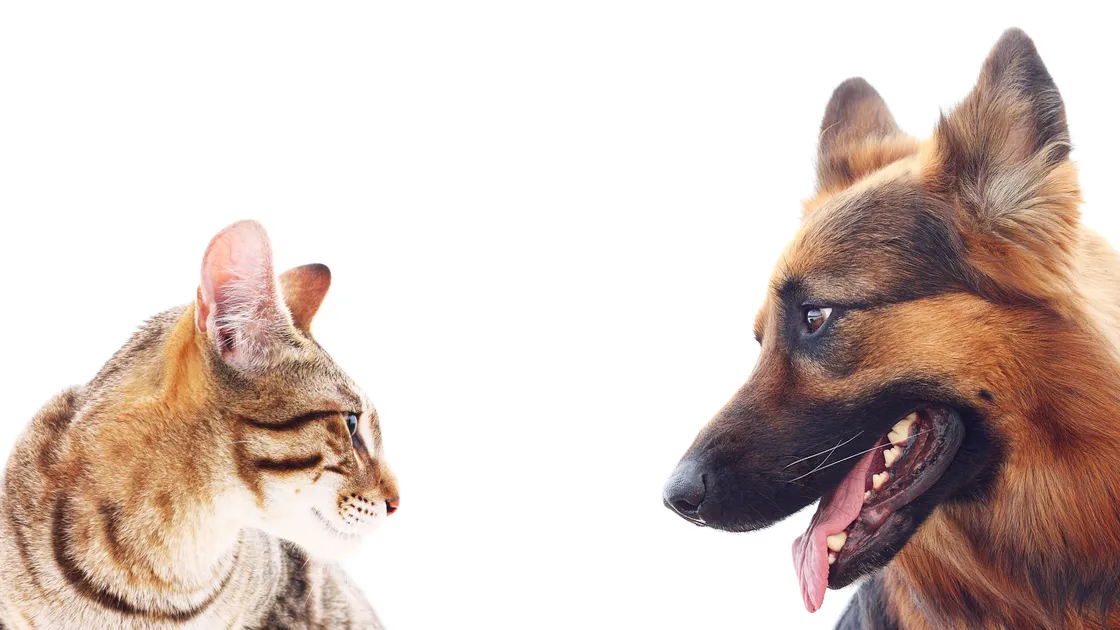
This will probably be the last of my cats vs dogs articles – I hope you’ve enjoyed my humorous look at some of the main differences in how our most popular pets operate. This last one comes straight from vet school, and has stuck with me.
First, we have to go back to the way cats and dogs have evolved to live. Cats are mostly solitary. They may not see another cat for many weeks or months, instead using the power of smell to communicate. Dogs, on the other hand, evolved to live in social groups, in dens, surrounded by family.
What’s super-dooper cool is that their most common diseases have evolved to exploit this lifestyle. For dogs, diseases need to be messy so that they can spread and infect a lot of the pack in a short space of time. Think of parvovirus – you’ll get the idea. Causes explosive diarrhoea, whole pack infected. And virus gets its lifelong wish (to make as many copies of itself as possible) and doesn’t care that it is fatal to the host, because it’s already moved on to another.

As a back-up plan, parvovirus can last in cool dark environments (like dens) for up to a year, waiting for the next pack to move in. Thankfully, we vaccinate against parvovirus… but it’s persistent, and still regularly crops up to attack puppies or dogs whose vaccination has lapsed.
Now, let’s take the most common disease we vaccinate for in cats – cat flu. Like human flu, cat flu is a collection of symptoms that can be caused by many diseases, and it doesn’t really matter which we focus on for this exercise. Let’s go for calicivirus. It can infect animals at any age, and hang around as long as it wants to before causing symptoms. It hides in the cat’s body, not causing disease – what’s the point? Nobody to pass it to – until it causes symptoms seemingly out of the blue, often when stress is high. This makes sense both biologically (high stress = lower immune system) and epidemiologically (high stress accompanies an unexpected visit by another cat, which gives the disease the best chance of spreading).
It’s no accident that cat flu ‘recrudesces’ (reappears) when cats go into catteries – it’s nature at its finest. And cat flu’s chosen method of spreading – in a sneeze – gives it maximum propulsion too. There’s no point in being a close-contact disease if you’re infecting a fairly solitary species.
Although calicivirus doesn’t last as long as parvovirus, on the right surfaces it can last up to four weeks – plenty of time to let a passing rival cat accidentally breathe in some virus – but its real longevity comes in the host. Calicivirus is rarely fatal. Instead, it lives a slow life, infecting other cats whenever it gets a chance, and being quite content to wait a year or more if needed. Parvovirus may infect a whole pack in a week or two, but once they’re all dead it can die itself. Calicivirus may infect only one other cat a year, but over 10 years it infects just as many cats as parvovirus does.