The island’s fascination with ‘old Guernsey’ lives on healthily.
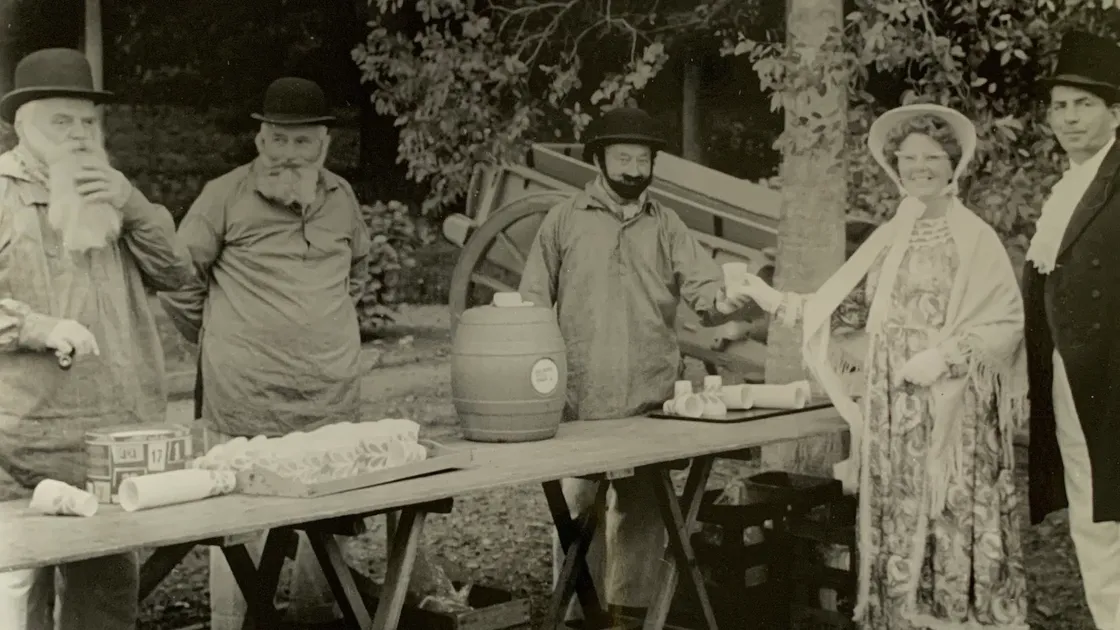
But for more than half a century one specific evening has provided those yearning for a visual feel for how Guernsey was in the days of scoops, butter, cider and crab pot making, pickling ormers, horse-drawn carts and clothes seemingly far too bulky for summertime. The Viaer Marchi.
The brainchild of the late Peggy Carey MBE, kick-started in 1970 by the Hollywood actress Olivia de Havilland and forever driven by the National Trust, Viaer Marchi pulls in the crowds year after year.
The 2026 event, set for Monday week, 6 July, will be no different and if the founders were alive to see its lingering success, they would surely be bursting with pride.
Legend has it that Mrs Carey and four friends had got together to formulate a plan to preserve local buildings and land for future generations.
This led to the formation of the National Trust in 1960 and nine years later Mrs Carey had the idea of the Viaer Marchi, meaning old market.
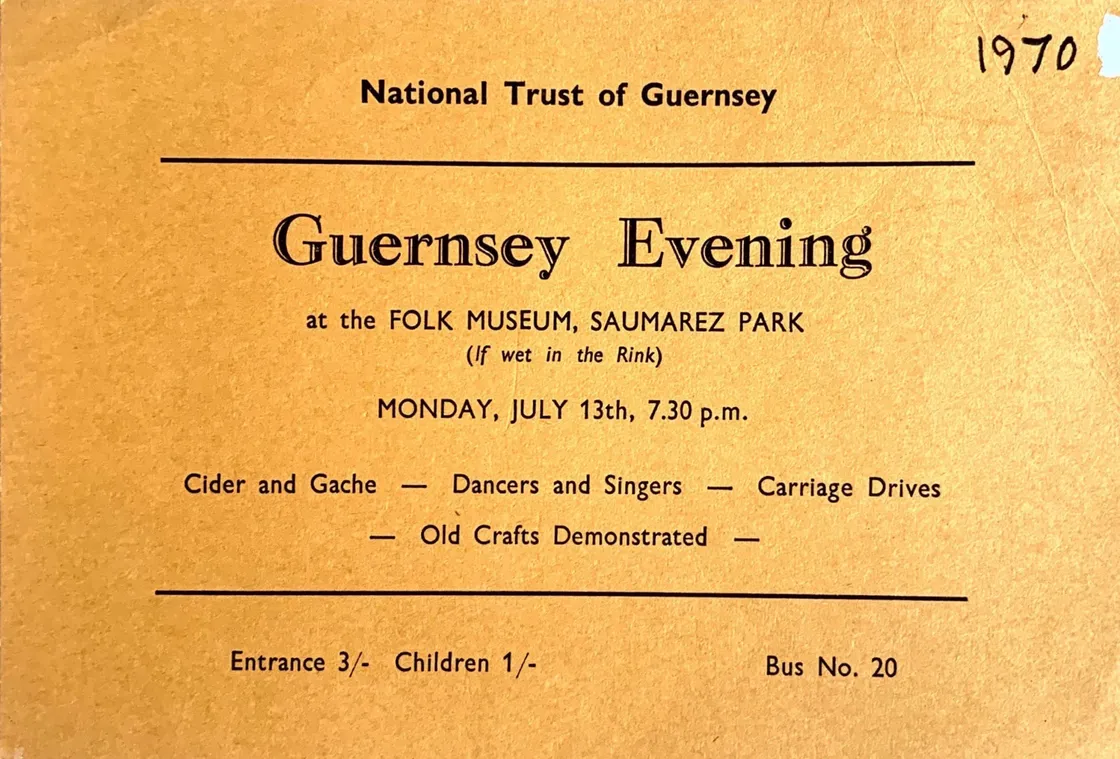
In 1970 her dream came true in the form of what was initially titled a ‘Guernsey Evening’, held at the Folk Museum. It was soon to be renamed Viaer Marchi.
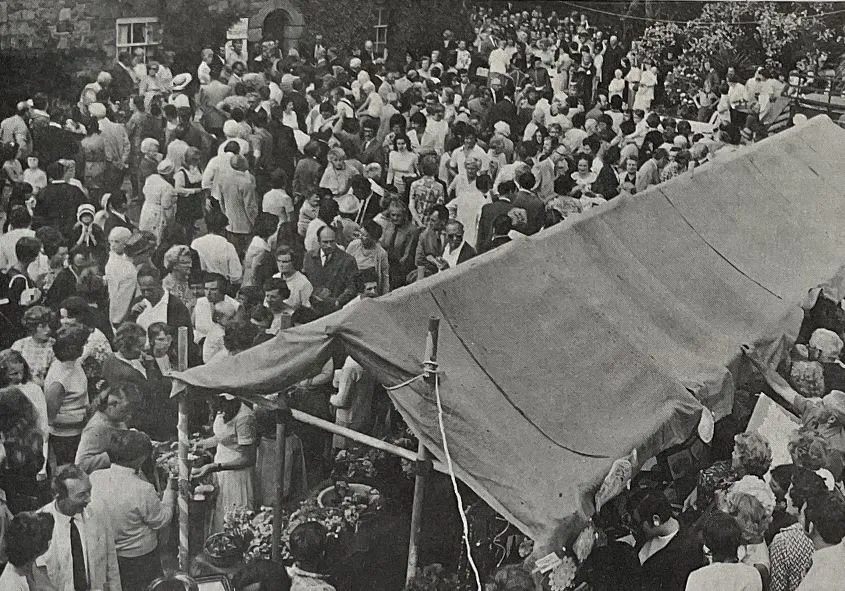
Sara Lampitt, vice-president of the National Trust: ‘It became so popular that, mostly owing to crowds and no room to swing the proverbial cat, the event moved into Saumarez Park.
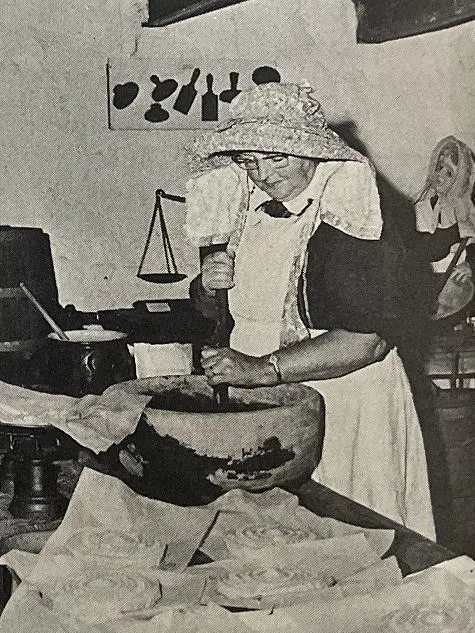
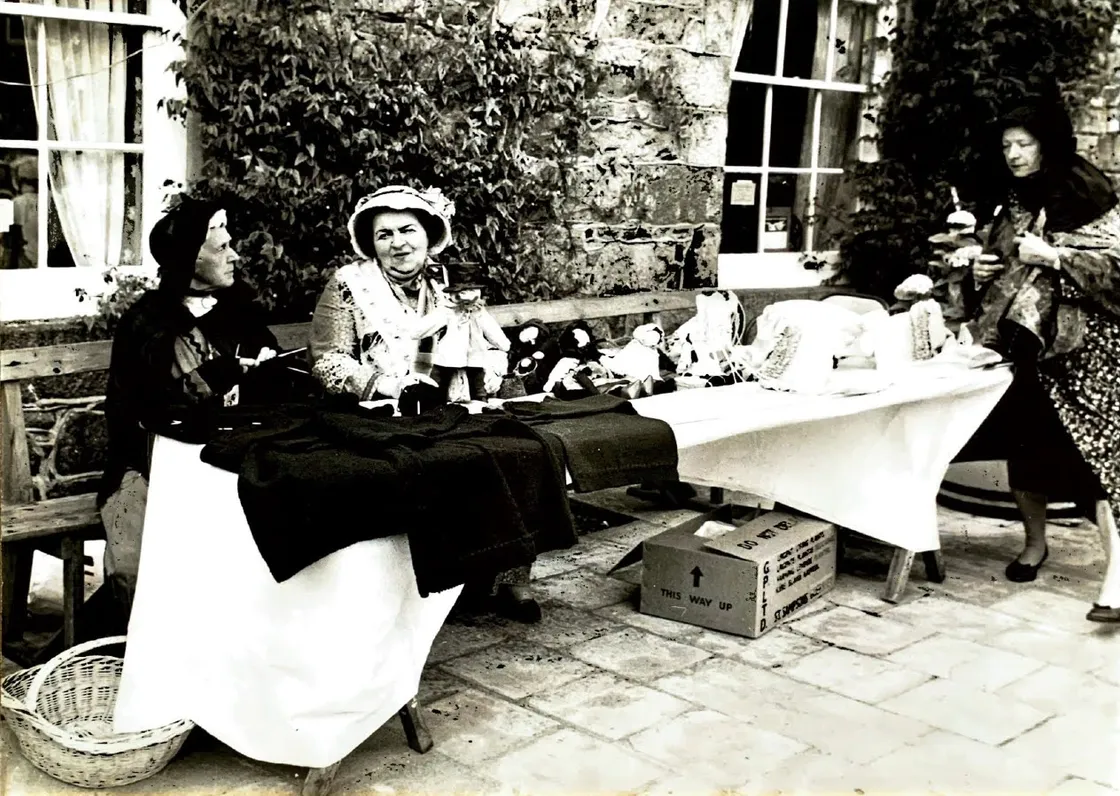
‘At first and true to its new name Le Viaer Marchi, it simply showcased Guernsey heritage crafts such as crab basket weaving, complemented by traditional market stalls selling flowers, bean jar, crab and local produce. All stallholders wore traditional clothing of the late Victorian era.
‘But it soon expanded its offering to include carriage rides using some of the artefacts owned by the museum and privately-owned.’
The carriage rides eventually fell foul of health and safety rules, insurance costs and the usual accompanying red tape, but the event thrived, regularly bringing in crowds that would make Muratti organisers jealous.
Whether the inaugural event needed a leg-up or not, it sure got it with the presence of Olivia de Havilland, the famous actress of Guernsey descent who, four years earlier, had headlined Guernsey’s spectacular re-enactment of the Chevauchee.
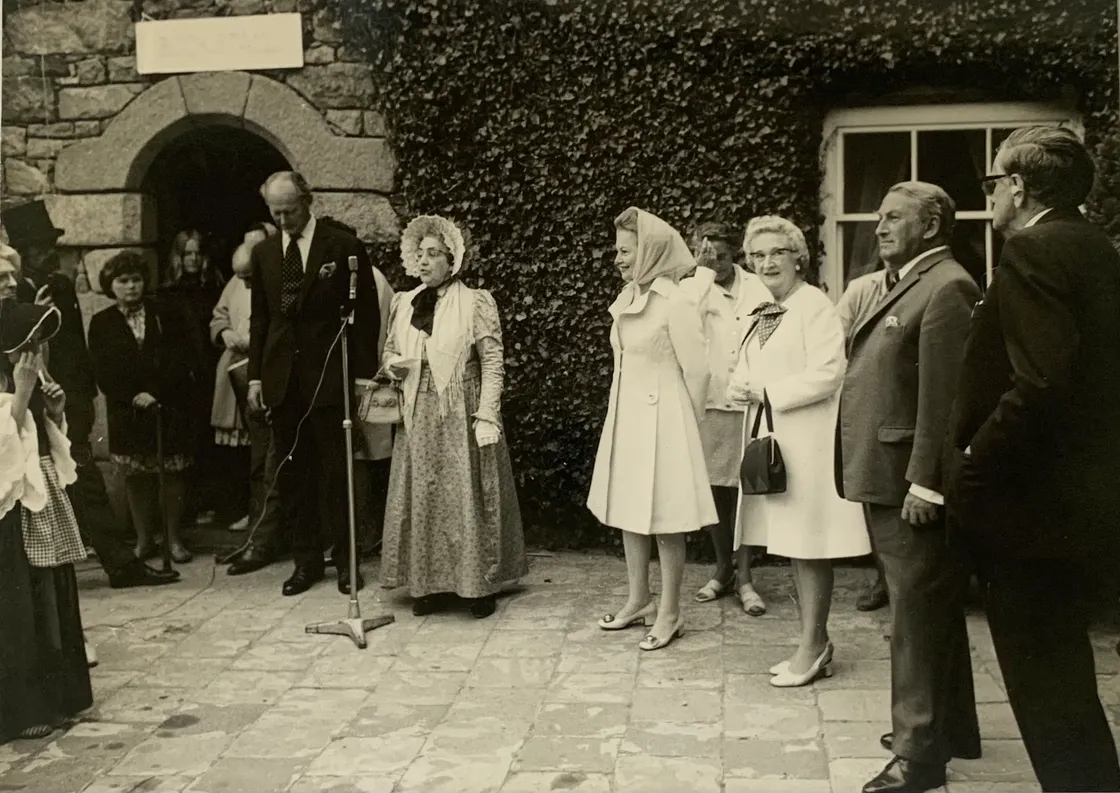
This time she would arrive by carriage, one of the Folk Museum’s exhibits, driven by Diana Meldrum, which later in the evening was available for carriage drives around the park.
A star of Gone With The Wind, for which she was Oscar-nominated for best supporting actress, Miss de Havilland had no Clark Gable to accompany her this time, having to make do with the Bailiff, Sir William Arnold, Lady Arnold and Cecil de Sausmarez.
Out of the carriage, the guest star was introduced to the crowd as the great-great-granddaughter of a former Bailiff.
In return, the actress spoke a few words of Guernsey-French and expressed thanks for a charming welcome and noted her previous interest in the Folk Museum which was packed to the proverbial rafters.
She would witness a demonstration of knitting, scoop-making and beautifully made Cobo Dolls, dressed in traditional costume.
And to take back to Paris with her, an old print of the island was handed over by little Caroline Winder.
But before departing Miss de Havilland would also see Castel School children, the girls in traditional dress and the boys wearing guernseys, dancing away.
The ‘Guernsey Evening’ had been a hit and the following July it was back, this time billed Le Viaer Marchi, Sir William Arnold again present, Frank Falla a perfect MC and the Folk Museum courtyard packed again.
Only one thing was lacking – space.
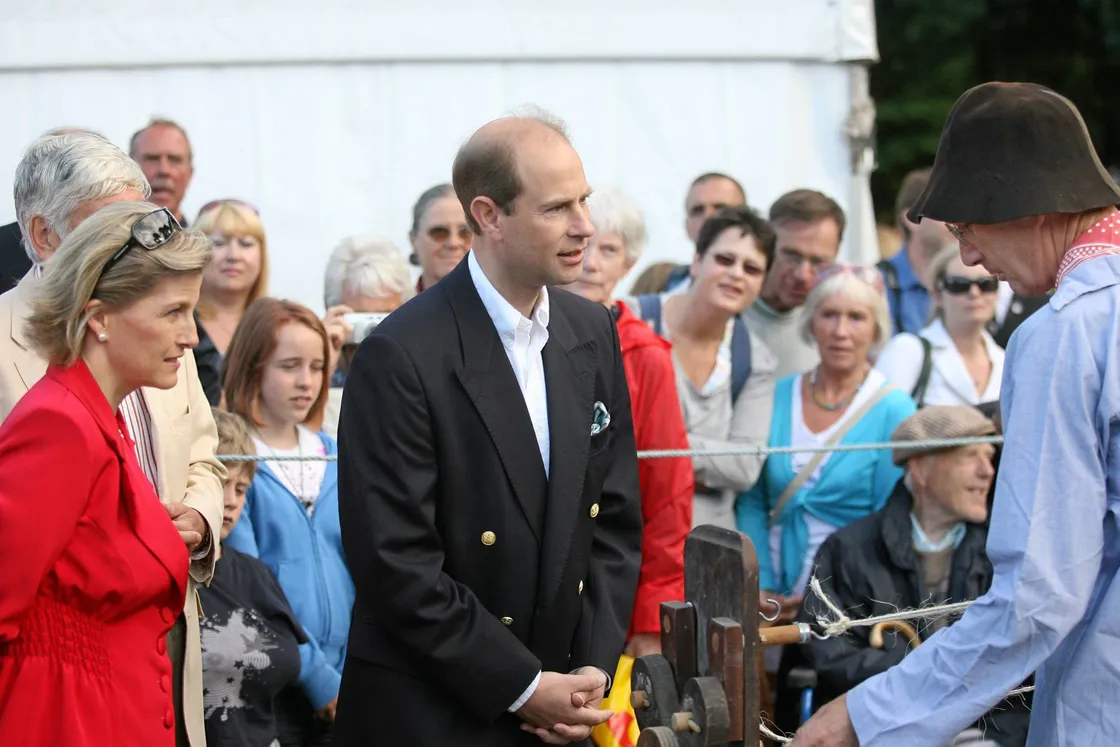
At some early point in its story, Le Viaer Marchi would spread out into the wider park and visitors could breathe, access the stalls far more easily and relax.
It was here to stay and, in many eyes, mark the real start of summer.
Covid would break its run, but it bounced back in 2022 with the sun lighting up the late Fourth Baron de Saumarez’s once private sprawl just a fortnight after the longest day.
Then National Trust of Guernsey president Tony Spruce said the event was often considered by locals as heralding the start of Guernsey’s summer.
‘Set up to mark Guernsey’s history, this event is now part of the island’s history,’ he said.
It may be that the simpler elements of the original event would suffice for entertainment, but in half a century so much has changed, not least that there is no longer a Guernsey Market and no living memory of the original period when many things were so very different.
But, the good news is that the event maintains a generational following.
The 2026 event is supported by Ravenscroft Capital and all funds raised will go to the National Trust of Guernsey.