In the early months of 1976, the main concerns reflected in the pages of this newspaper were about the high rate of inflation, the danger of rabies getting a foothold in the islands and the economic threat posed by Dutch tomatoes.
But as spring arrived, the threat to our water supplies began to take over as a preoccupation.
In truth, the main source of the problem had already been and gone – an exceptionally dry winter. But the rain that had gone away simply wasn’t coming back another day, and as the year progressed, the realisation spread that all was not well.
April
In our edition of 9 April, the States of Alderney were warned by the island’s new water board chairman Mr J Winckworth that there was ‘probably enough water to cope with this summer, but not with the summer of 1977 unless next winter is wet’.
No doubt this was received as grim news but with the benefit of hindsight, it seems optimistic.
The same week saw reports of a decline – caused by the dull winter – in Guernsey’s main export crop, tomatoes.
Some readers might not immediately grasp the seriousness of such a report. These days, our biggest crop is potatoes, and we eat most of them ourselves. But there was a time when most of the tomatoes eaten in the UK were grown in Guernsey. Fully 7% of the island’s surface area was covered by glass. Under this glass, every year, a ton of tomatoes was grown for every man, woman and child on the island. It was half our economy.
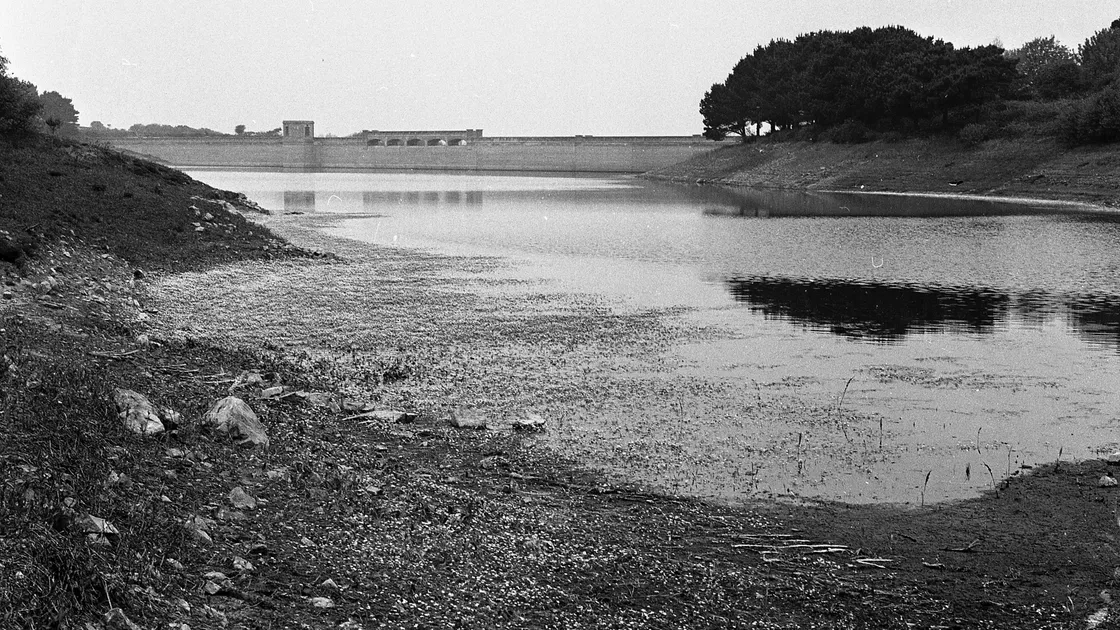
By St George’s Day, the States Water Board – the forerunner to today’s Guernsey Water – was putting out communications appealing for islanders to save water, with storage levels having dropped to what would normally be expected around mid-July. Rather than the usual 520 million gallons, there were 368 million left, down by nine million in a week.
‘There is a moral obligation upon every person to use water with the utmost care, and for positively necessary purposes only,’ was the rather austere message.
Well and borehole owners were not exempted from this moral imperative, it was pointed out, as they would be obliged to use mains water once their supplies ran dry.
We spoke to Neville George from Jersey, who said he had drilled two or three boreholes a week in Guernsey over the winter, of depths between 40-250ft.
One happy customer was Stanley Ephgrave of Les Clerqs, St Peter’s.
‘The water is wonderful... out of this world, compared to well water or States water,’ he said regarding his new 130ft-deep private borehole.
SWB’s Tom Hurst estimated 500 million gallons was being pumped up to the surface each year by a combination of the States, commercial operators and private individuals. The big problem, he said, was ‘who was being robbed of water’.
A general election in the spring led to a major reshuffle of responsibilities and it fell to a young Deputy Roger Berry to take the helm at SWB on 29 April.
The following day we reported the level of concern expressed at the Guernsey Island Federation of Women’s Institutes’ annual council meeting, where SWB officials patiently explained to agitated members that island-wide metering had been ruled out on cost grounds, along with major works to improve water capture on the south and west coasts.
Promoting the installation of water butts and putting bricks in cisterns to reduce the volume used when flushing toilets were suggestions that found more favour with the visiting SWB team. Their reaction to one member recommending the use of oil paints rather than water colours was not recorded.
April’s water statistics – 100 million gallons used, 50 collected, 343 remaining in storage.

May
‘Every one of us has to institute his own personal regimen in the use of water,’ declared our comment column as the month began.
‘Unless we discipline ourselves now, we will almost certainly be in greater difficulties than we were last summer.’
Yes, 1975 had also been a bit of a worry. In fact, most years were.
To put this into context, while 1976 was clearly shaping up to be ‘even worse than 1921’ and possibly the worst ever, water shortages were really quite common.
The total amount of water supplied to islanders by the SWB in a typical April in the early 1970s was 100 million gallons (about 378 million litres), while today, Guernsey Water supplies us with about 365 million litres a month, year-round. So not much change there. Household use may have shot up in that time, but without the massive drain from a dominant horticulture industry, overall use is about the same now as it was 50 years ago.
However, the total storage capacity available to the SWB in 1976 was only about 525 million gallons (about 2 billion litres), whereas today Guernsey Water has a maximum capacity of 4.385 billion litres.
Water restrictions were announced, which were to be enforced from 4 May.
‘The use of hoses for the purpose of cleaning vehicles, windows or shop fronts, or for watering gardens and lawns will be banned. It will also be an offence to fill or replenish swimming pools.’
The latest figure for water storage was 350 million gallons, 18 million down in one week. Another 6.4 million gallons had been used from streams.
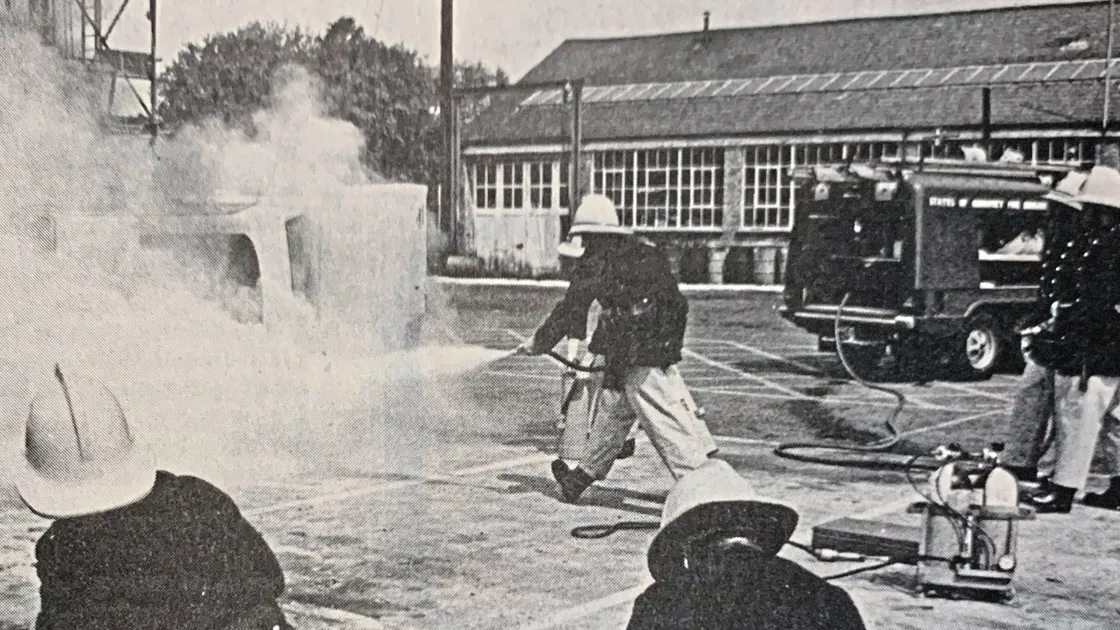
On the day the new restrictions were imposed, we carried further warnings about the dire effects of the frequent fires on cliffs and elsewhere, with ‘a day’s worth of water for the whole island’ typically being needed to put each fire out.
Rainfall from 1 January to 30 April had been 5.56 inches, against an average of 11.18, it was announced. If this 50%-below-average rate continued and demand remained unchanged, Guernsey would run dry by mid-July.
‘The island has never before been in such a critical state,’ warned Deputy Berry, ‘and the situation is deteriorating rapidly.’
On 7 May, we reported that the States of Alderney had approved £4,800 to enable pumping from L’Etoc to Battery Quarry. A question from States member Mrs P Allen about the use of sprinklers at the golf course was ruled inadmissible by president J Kay-Mouat.
As the mercury edged up to 25.6C that day, Deputy Berry said he was still hoping to avoid the implementation of standpipes and shutting off the water supply to 15,000 homes.
Attention turned towards the 200 million gallons of somewhat brackish water held at the former Longue Hougue quarry. Deputy Berry said it might be possible to pump about 40 million gallons of it out ‘without risk to the quarry sides’. Medical Officer of Health Dr Geoffrey White said he had no objection to water from Longue Hougue being mixed in with Juas Quarry water at a ratio of one part to five in order to alleviate shortages – and at their monthly meeting, the States approved.
By mid-May, the Emergency Council – forerunner to today’s Civil Contingencies Authority – was gearing up for business, with debate over whether standpipes would be positioned every quarter-mile or every half-mile.
Given the importance of tourism to the island’s economy, it was decided that hotels with swimming pools should be allowed to replenish them, as long as it wasn’t with the States’ piped supply. All 26 such pools together were estimated to use the same amount of water in a year as three 100ft-long glasshouses.
Guests were to be encouraged to save water, however, and were supplied with bottled water for drinking.
The SWB itself also found ways to save a few drops, by installing a new main raw water pipe at King’s Mills to ensure more could be taken in the event of heavy rainfall, and by recycling the water used to clean water filters.
That heavy rainfall seemed like a forlorn hope – official figures in mid-May revealed that April’s rainfall had been just 12% of the average, and growers announced they would need an inch of rain, imminently, to save their crops of potatoes and other vegetables.
Advice continued to pour in for readers. The Fire Brigade appealed to the public to stop dropping matches and cigarette ends on the cliffs, so as to cut down on the water needed to put out fires, while one member of the public poo-poo’d the idea of using a bag of gravel to reduce the volume of water used during toilet flushes and instead suggested a bag of water – less likely to cause plumbing issues if it splits.
One letter writer calling themselves HOPEFUL, rhetorically asked why Guernsey hadn’t built a desalination plant instead of the still-under-construction Beau Sejour Leisure Centre, while Lt Col Patrick Wootton wrote in to ask why he was ‘busy ladling the four inches of bath water into buckets for the loo’ when Guernsey could have had legislation like Malta’s for all homes and commercial premises to install rainwater catchment, such as water butts.
Growers were urged to cut back gradually, increase shade, and water as frequently but with less water if growing in peat, and with as much water but less frequently if growing in soil.
With storage falling to 305 million gallons and predictions of standpipes being needed by mid-August, tomato growers were nevertheless promised enough water to get their crops out before severe rationing would come in.
As boreholes and wells were more heavily relied upon, and water from taps was more frequently affected in appearance and taste, the Board of Health offered drinking water testing at Lukis House, while water for irrigation could be tested at the Experimental Station.
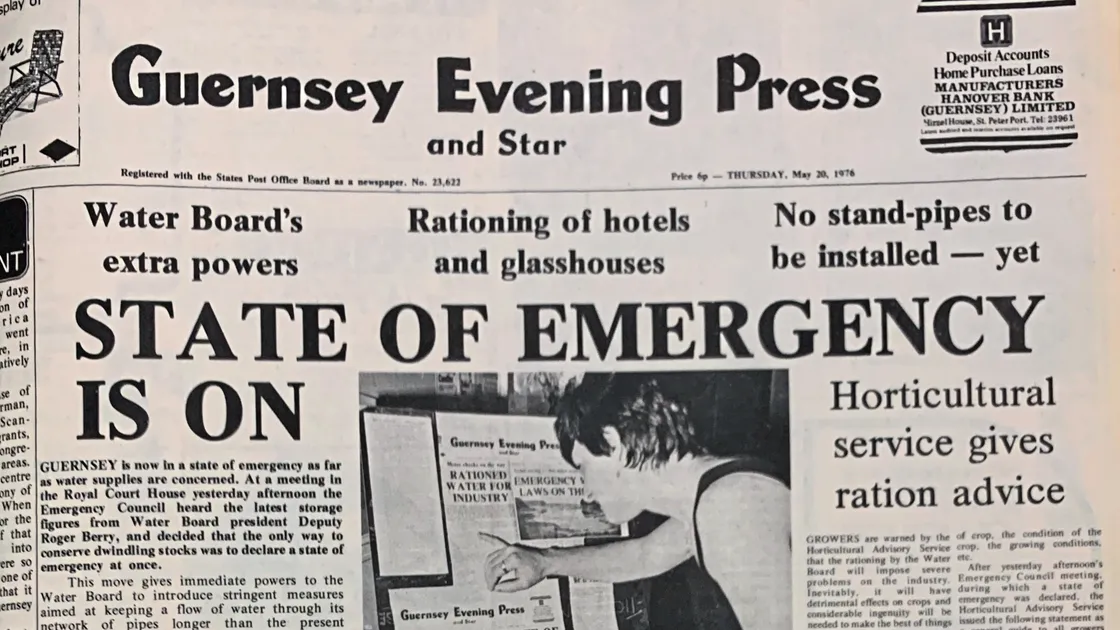
STATE OF EMERGENCY IS ON ran our headline on 20 May, amid myriad restrictions announced by the Emergency Council.
No longer could States-supplied water be used to clean cars, aeroplanes, boats, windows and shop fronts, or to water flower gardens or lawns.
Commercial undertakings, including hotels, glasshouses and factories were to have their water rationed and the SWB was officially given the power to cut off all homes and introduce standpipes.
In the same edition, we reported that the previous evening’s cricket match between Optimists and Rovers A at the Osmond Priaulx Field had been called off – due to rain.
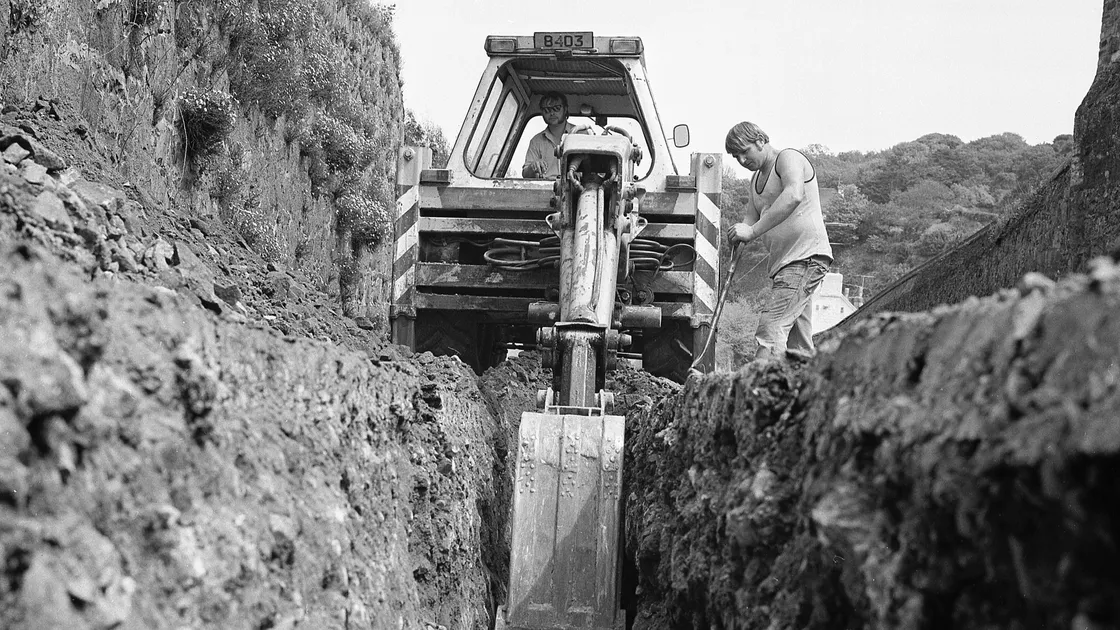
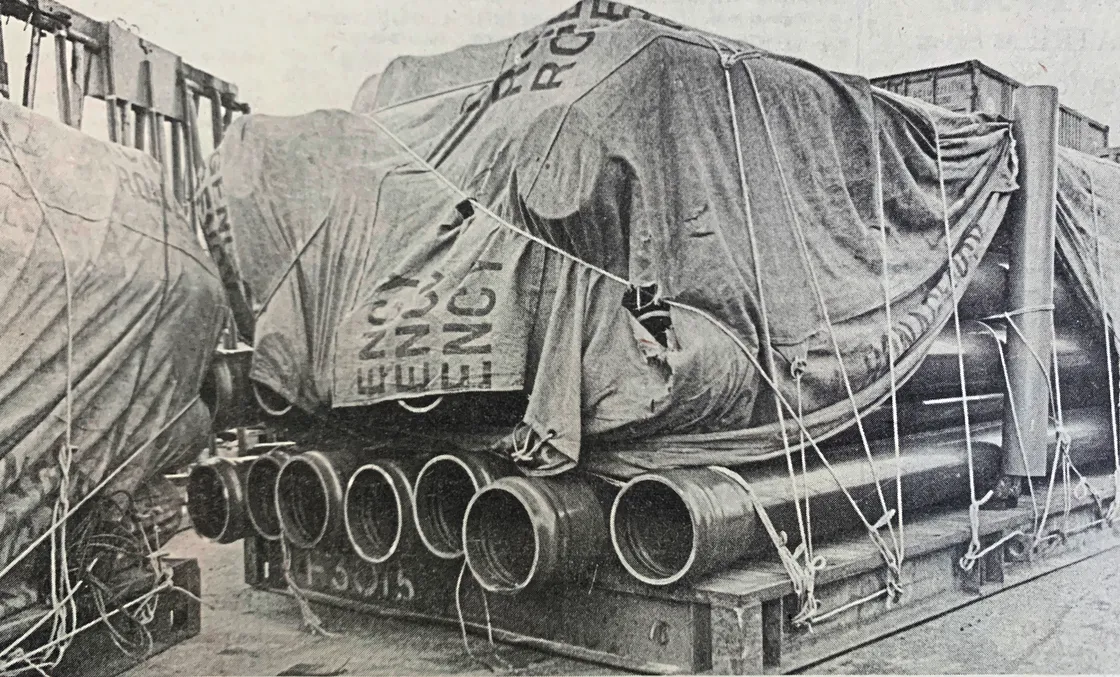
Public-spirited landowners gave permission for pipes brought from the UK to be laid in order to carry pumped water from La Charroterie up Prince Albert Road and over to the Havilland Hall stream, but a strike at Portsmouth docks delayed their delivery until 22 May. Once installed, the pipes would enable the capture of 200 million gallons a year that would otherwise flow out to sea.
‘We stand on the brink of one of the gravest crises the island has experienced since the Occupation,’ ran another comment column, amid warnings that those businesses that exceeded their rations would be shut off ‘until the consumer qualifies for more’.
Meanwhile Housing Authority staff placed bricks or polythene bags in all 2,000 toilets in States houses.
‘Since this saves about two pints of water on each flushing, if each household flushes the toilet twice a day, about 1,000 gallons is saved per day.’
Yes, they really did say ‘Twice a day.’
Further savings were achieved when the Fire Brigade used dry powder for the demonstration of firefighting techniques that they had scheduled to provide for the Lt-Governor, and when power station staff decided that its generators should be cooled using 1.5 million gallons per month direct from Longue Hougue.
Hairdressers started collecting water below their sinks and used it to flush their toilets.
Several stockists reported selling out of water butts, while electric water pumps were selling at three times the usual rate.
When the rationing rates were announced, bakers and those businesses in horticulture and farming were faced with a 20% cut in supply, while there was a 30% cut for tourism and brewing, and a 40% cut for schools.
The Committee for Agriculture warned farmers not to reduce drinking water for animals, as a lack of moisture in the grass and dry air would increase their need for water.
‘Any attempt to restrict water intake will result in a rapid decline in milk production and considerable discomfort to the animals,’ the committee said.
Another committee – Recreation – felt obliged to reassure islanders that the water that had been seen in the Beau Sejour swimming pools had been diverted rainwater, which was needed to test they were watertight before draining and tiling.
A letter from G J Nixon of King’s Road urged parishes to figure out in advance, on a house to house basis, who would need help in carrying water home from standpipes.
By the end of the month, water was being captured at streams all along the south coast and at Grande Mare, with improvements to pumping from La Mare de Carteret and improvements to the Marais stream.
However, the removal of 40 million gallons from Longue Hougue raised fears of subsidence due to a 20-30ft drop in its water level. It was decided to pump storm water there for storage, which would also reduce salt levels.
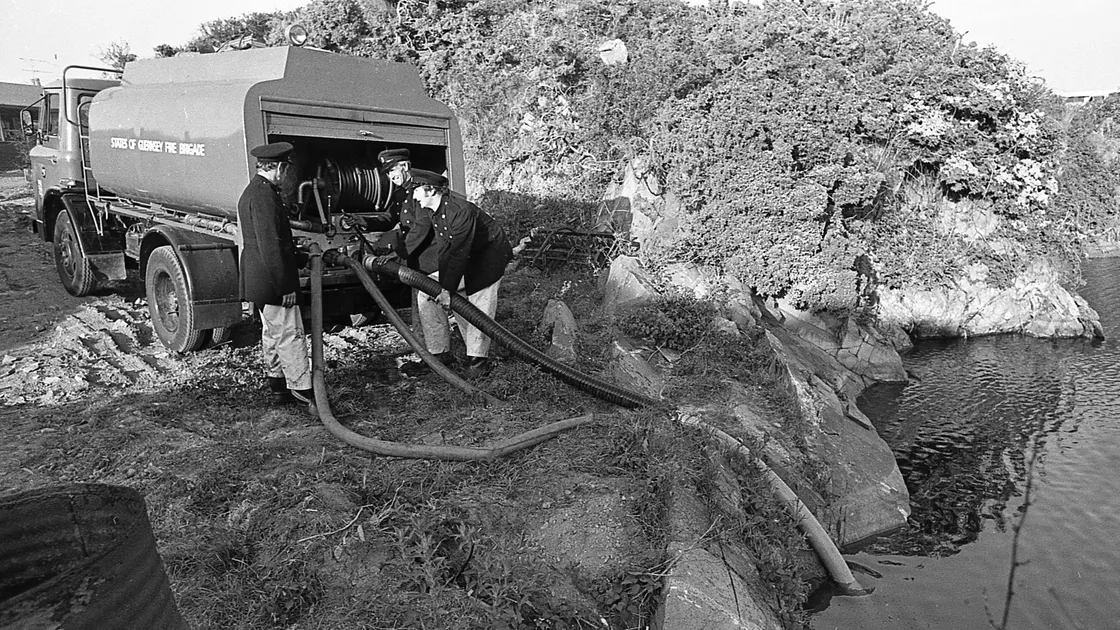
The Fire Brigade spent hours beating a fire with shovels at L’Ancresse before using sea water from St Sampson’s harbour and a salt-water quarry at L’Ancresse. There were also two fires on the cliffs, at Mont Hubert and Le Gouffre, both in Forest.
Ahead of water rationing – due to begin on 1 June – we published guides on how to read the various types of water meter in use around the island.
May’s water statistics – 96 million gallons used, 50 collected, 297 in storage.
In our next feature of this series, we’ll look at the ever more drastic measures taken to cope with the drought during June and July, and the grizzly discovery of bones at the base of a dried-out well.