Legend is an over-used word.
For a start, what makes one?
They falsely crop up in sport, music and politics, on a regular basis, while those who go about everyday life quietly doing very admirable deeds, are often the real legends filling the modern slang description of ‘a cool or helpful person’.
Steve Picquet is remembered as a legend, this very paper referring to him in that elevated status in a Press feature of 1963, all of 63 years ago.
Steve was – and remains – a man of mystery who kept people guessing right up to the end.
In fact, he was not Steve at all, rather Eric John Stephen Picquet, according to his very brief death notice in this very paper two days after he passed on 21 August 1963.
‘Meet at Torteval Church’ was the request of any potential mourners to this man who spent his final 15 years or so living in a German bunker buried into the La Varde hillside at Pleinmont.
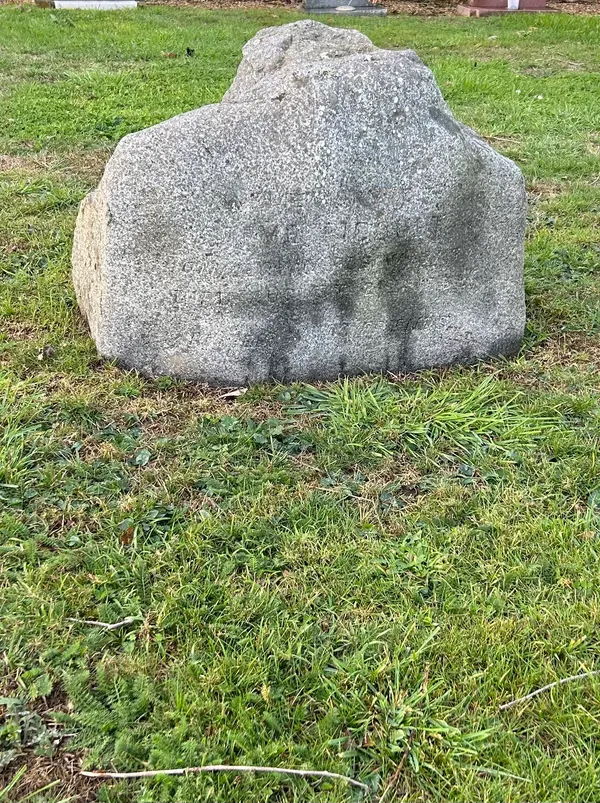
The absence of a funeral report denies us the numbers of those who turned up, but the fact that somebody paid for a large lump of granite which doubles as his headstone in the nearby cemetery, tells us that he did have friends and stacks of notoriety.
‘I have done many things for which I am deeply ashamed...but irrespective of what they pitch in the pulpit or at the slaughterhouse, I will not have my animals harmed’
Steve Picquet speaking just before his death in 1963
This was a man who had gained the attention of the legendary TV presenter Alan Whicker, and one man who recalls Steve and his roughest of homes dug into the cliff face on the west side of the La Varde, is octogenarian Peter Martel, a young man at the time the ‘goat man’ enhanced his legend out in the wild.
‘A ragamuffin and harmless,’ was how Peter, who once got as far as the front of Picquet’s front door, recalls.
Peter remembers seeing a ‘house’ that was a mere 15ft or so long, with an oval-shaped roof.
Outside, there were roses everywhere, he says.
But, what was he like?
‘He was everything,’ says Peter who takes the view that as a ‘donkey’ Steve liked to kick back at authority.
Not everyone approved of Picquet’s lifestyle, not least the States, which did not approve of his herd of goats, but there is no question that the goat man of Pleinmont was a truly extraordinary individual. Who else would want to spend the latter years of his life living in a German bunker off the twisting road down to Fort Pezeries with only goats for company?
Not just a couple of goats either. At one stage there were 47 of them.
This was Picquet the animal-lover, the hermit, the trouble-maker to some, Mr Stephen Picquet in court appearances, and Sergeant Picquet as far back as 1918.
All these adjectives, good or bad, were applied to one of the island’s most celebrated post-Occupation personalities, but who exactly was Picquet? Was he really once a schoolmaster? Where was he born, where did he grow up?
To that last question, it certainly was not Guernsey, despite his stubbornness suggesting he had all the traits of a ‘donkey’.
Eric John Stephen Picquet first saw light of day in 1889 over 12,000 miles away in the small township of Masterton, North Island, New Zealand.
His father was a Jerseyman, his mother from Guernsey, and the grandparents on both sides were of Irish extraction.
Picquet Snr would soon tire of farming in New Zealand and whether his flocks included goats, his son could not remember when quizzed on his early life, six decades later.
What he did remember was that the Picquets upped sticks when he was a very young lad and, back in England, he was educated in Winchester before joining the army and surviving four years of the First World War.
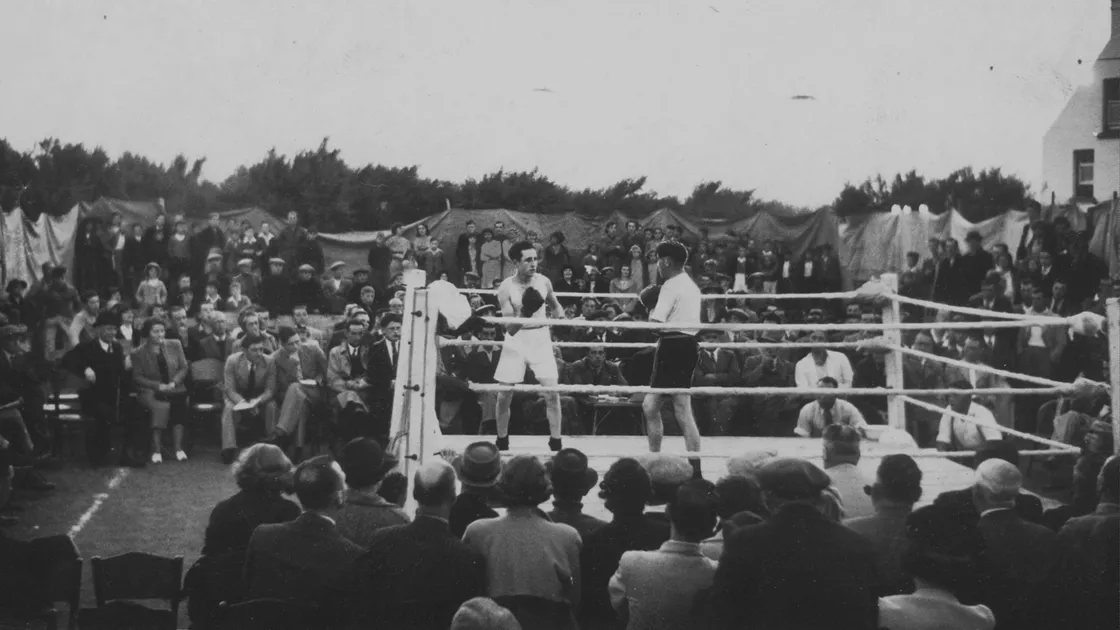
In 1919, he emerged from the 1st Battalion of the Hampshire Regiment with the rank of sergeant and a strong interest in boxing, specifically at feather- and bantamweights.
Six years later he visited the island of his mother’s birth for the first time in the capacity of a professional boxer representing either the Jersey Old Comrades Association, the Jersey Sporting Club and the Jersey Athletic Club, and the ring knowledge gained would be put to use in staging his own open-air tournament in the car park of the L’Eree Hotel.
In 1927, and with his days of fighting in the ring over, he opted to remain in Guernsey and found casual employment around the island.
His jobs included working on building the New Jetty at the White Rock, and living on Lihou Island for a year, scraping a living from the sea by drying and burning vraic which he sold on to iodine manufacturers.
It was about this time he started the L’Eree Boys’ Boxing Club, rounding up the toughest bunch of lads in the area he could find and moulding them into a club.
The club flourished and its driving force was soon making his mark in business via the little shop and buffet he ran at L’Eree. He called it ‘PKS’ for a reason he could not recall when interviewed just a year before his death.
In the late 1930s he could count on friends such as Police Sergeant Charles Le Lievre and Constable Harry Bull who, when off-duty, often visited the coastal boxing club to help out with training.
Picquet’s life was, just for once, running fairly smoothly.
Enter one Adolf Hitler to muck things up again.
By Picquet’s own admission during the Occupation, his boys’ club was transformed into a sort of ‘Fagin’s kitchen’ – less about boxing, more about stealing.
‘We stole what we could from the Germans to feed the civilian population, a fact that locals have conveniently forgotten over the years,’ said an embittered Picquet.
Soon enough the Germans became aware of Picquet’s nefarious activities and, briefly imprisoned, he was beaten up by the Nazis who injured his back to the extent that it hindered him greatly for the rest of his life.
Liberation might have got the Germans off his back, but life hardly got much easier for this lost soul.
One dead-end job after another followed until 1948 when boys from his old boxing club showed a man struggling to find a permanent roof over his head an old German bunker covered by a mound of earth, near the cliffs at Pleinmont.
Picquet was unsure about moving into a ‘house’ that today George Clarke’s Amazing Spaces TV show would reject as sheer madness, but with his boxing lads and some of their fathers keen to help, concrete walls were washed down and glass installed in the loop-holes. Within a month Steve and his two pet dogs, Black-eye and Whiskey, had moved in, and apart from stays in the PEH, would never again move out.
Provided with the most solid of bases to set up home, in quick time the first of the goats arrived.
She was named Belinda and with the help of a billy called Big George, she presented her owner with five more animals before she died.
By 1962 Picquet’s herd had grown to a remarkable 47 and as was the case with fellow goat fan Miss Milbourne out at L’Ancresse, the neighbours were not happy.
The authorities were soon out to get this scruffy grey-haired man out at Pleinmont and from the late 1950s Picquet was fairly regularly appearing in court for failing to tether his herd of goats or register them according to the law.
And when some goats were whisked away to the slaughterhouse, Picquet would rush there himself in an attempt to rescue them from the knife.
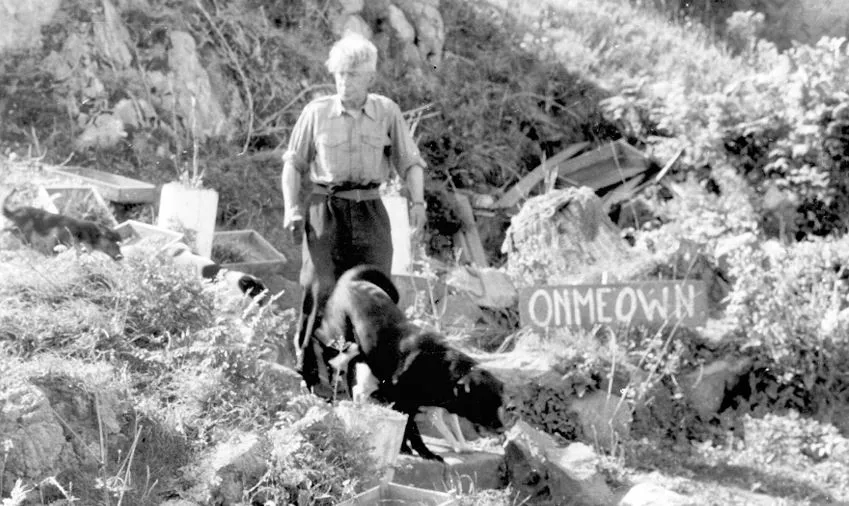
When not tending to the needs of his goats, he would also take on the role of the Guernsey Star’s most undignified correspondent, bashing out columns on his old typewriter at his officially-named bunker Onmeown, in addition to occasionally freelancing for the News of the World and The People.
‘I have done many things for which I am deeply ashamed,’ he told this paper in a late-life interview, before adding ‘but irrespective of what they pitch in the pulpit or at the slaughterhouse, I will not have my animals harmed.’
But to maintain his own idea of a full quota of goats, proved impossible.
By the summer of 1963 his herd had more than halved in size and stood at just 17, a number expected to be soon reduced to 10 by the authorities.
Steve then did the States one big favour.
He died.
A nuisance to them had been removed, and with his death the most unlikely of homes closed its doors, metaphorically speaking, because Onmeown never had a proper front door, and six decades on its entrance is hidden by the natural undergrowth.
But his legend lives on and in one final show that he did have friends, fully 100 different donors, mostly from his adopted parish and St Peter’s, contributed to the costs of both his funeral, burial plot and engraved headstone.
Legends and characters
Coming up with the eight subjects of this new series was the fairly easy part.
The problem lay with who to leave out and what to call it.
As all eight were significant figures in island life over the past 100 years or so, the thought was to name it something along the lines of Forgotten Heroes, Forgotten Lives, Past Lives, Extraordinary People, The Extraordinary Few, Beyond Ordinary and Quiet Giants.
Eventually, I settled on ‘legends and characters’ because, simply, each one falls into either category and each choice fell down on one factor or another.
Without giving the game away, other than today’s subject, we are talking about the brave, the record-breaker, the star of stage and screen, the do-it-all teacher and administrator, the author, the daredevil and the down-right unlucky sport star whose life ended paralysed and in a wheelchair.
All eight led largely wildly contrasting lives and when they died the island became poorer without them.