
Its update to the transport strategy also includes initiatives that will launch in 2020 aimed at reducing dependence on the car.
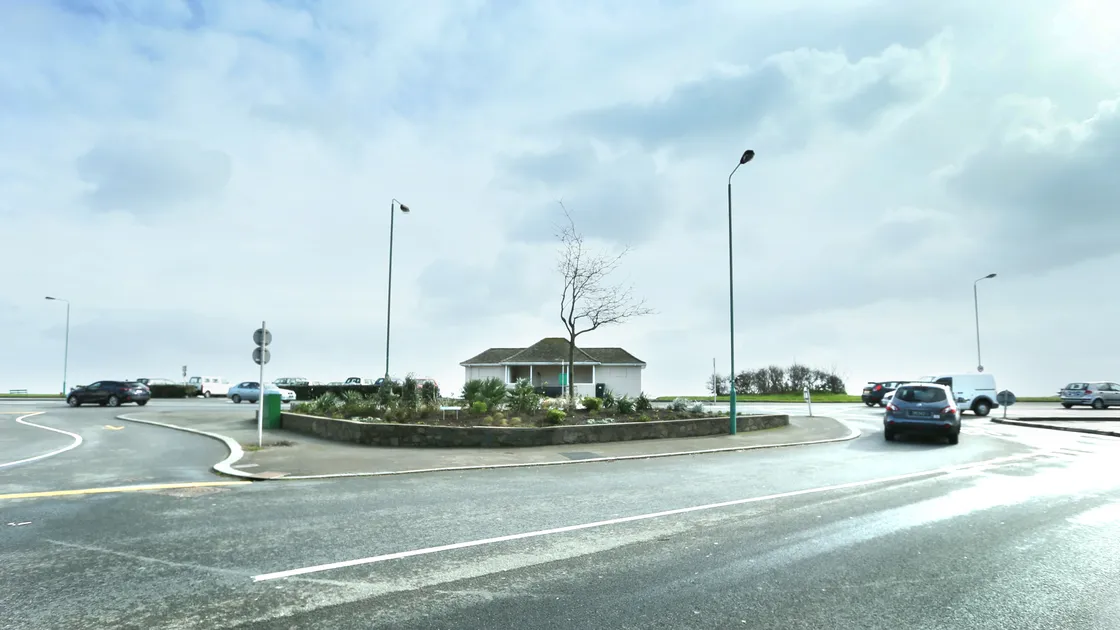
E&I’s report identified signalised junctions that operate at or close to practical capacity – Braye Road/Route Militaire, La Vrangue/Grand Bouet and Admiral Park/Les Banques.
Other busy junctions, especially on Saturdays, include Landes du Marche/Les Rouvets and Grand Fort Road/Route Carre.
‘The filter-in-turn at Les Banques/Vale Road is also exceptionally busy, particularly on weekdays, and is not operating as efficiently as it could if it were signalised,’ its States report says.
The committee intends to review all these junction designs as a priority and investigate potential technological solutions to assist with managing traffic flows.
Until that investigation has taken place, a spokesman said it was not possible to say what measures, if any, would be taken.
The traffic impact assessment for the expansion of St Sampson’s High School looked at the Halfway. It suggests there would be ‘significant average queues and delays’ during the morning peak under all the scenarios being considered, but no mitigation was required as the impact on each motorist was less than 5%.
Average queues go from 16 vehicles today to up to 48.
E&I said that significant reductions in car journey times during school holidays highlighted the potential benefits from reducing dependence on private motorised transport.
It is prioritising several initiatives in 2020 aimed at reducing demand during peak periods:
. Introducing lift sharing technology that can be used in schools, workplaces, and the public sector;
. A trial priority parking initiative for multi-occupancy vehicles;
. Maximising the use of school bus services;
. Progressing measures to make public sector travel plans more effective
. Investigating measures to make corporate travel plans effective, including recommendations on workplace parking levies or benefit in kind, with a view to reporting back to the States.
One of the targets in the 2014 strategy was to reduce peak hour traffic by 10%, cutting the number of car journeys, particularly solo trips.
Vehicle movements during the week day morning commute on key routes into Town have reduced by 4.7%, down from 2,767 to 2,637 on average between 2014 and 2018.
This equates to 130 fewer vehicle movements into Town each weekday, or 33,800 fewer movements per year.
Daily average vehicle movements on key routes into and out of Town have also reduced by 1.6%, down from 53,071 to 52,229 movements on average per weekday between 2014 and 2018. This represents a reduction of about 842 vehicle movements each weekday or 218,920 per year.
There has been a slight decrease in solo occupancy vehicles, from 85% to 80%.
At peak times in the morning commute, more than 1,000 vehicles per hour travel southbound along St George’s Esplanade.
On Saturdays, the road network linking the Bridge to the centre of the island, including Braye Road, Camp du Roi and Landes du Marche is particularly busy. Traffic volumes can exceed 12,000 movements per day.



You need to be logged in to comment.