
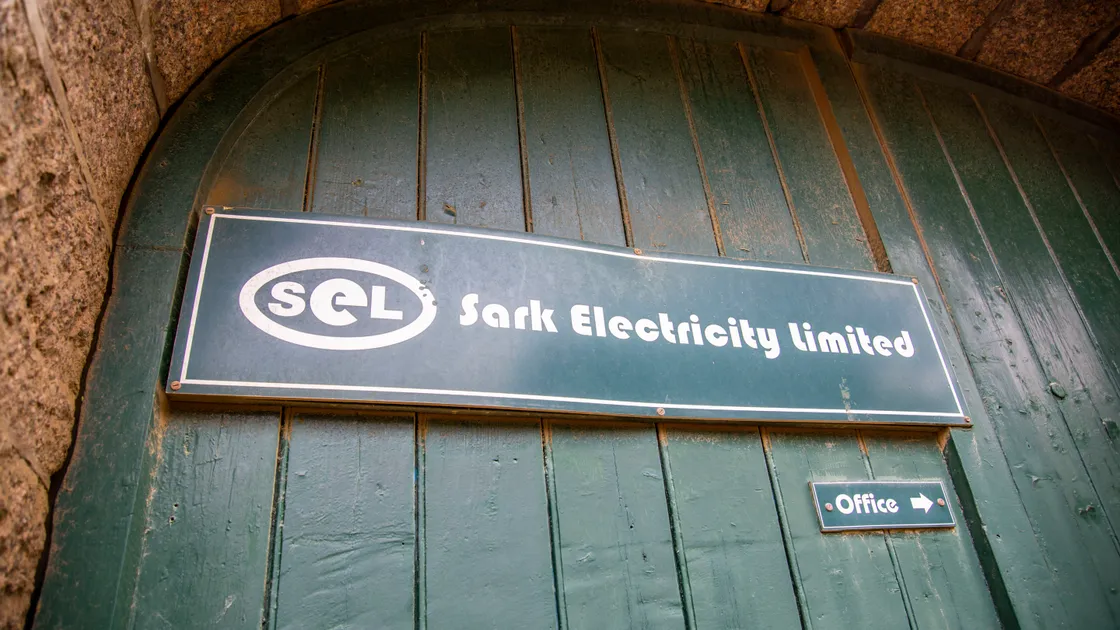
SEL managing director Alan Jackson sent a letter to customers last month in which he said it would be looking to bring more people into discounted tiers as part of its effort to secure long-term demand by ensuring its prices did not encourage more people to look at self-generation.
Its basic tier for between 0-80 units a month is £40, with the standard charge being 50p a unit for between 81 and 2,000 used.
Tier 1 is 38p for between 2,001 and 10,000 units and the prices fall to 30p a unit for 30,001 and over.
There is also a special ‘procurer’ rate of 48p a unit on top of the £40 fee.
In addition, for those who do meet the £40 monthly threshold SEL would credit back the difference to ensure that their bill was not impacted by the change.
Mr Jackson told customers that commissioner Dr Anthony White told him that he had to fund the tariff himself at a cost of about £18,500 after setting a maximum price of 50p per unit flat rate for everyone. ‘This is, to me, an unreasonable approach by the OPC [Office of the Price Commissioner] and a disincentive to economic activity,’ wrote Mr Jackson.
‘This is but one example of where the OPC and I have a different approach.
‘Regrettably, it is likely that these disagreements will result, again, in a costly court case.’
He said while being open to ‘middle ground’ he was not legally entitled to run SEL at a loss. ‘With respect to you all, funding your electric bills out of my own pocket is simply not in my life plan.’
Dr White has issued a statement in which he said that there was nothing to stop SEL offering a tier of prices – with a caveat: ‘If SEL makes a business decision to offer a tiered tariff system for high energy users which means they pay a lower price for their power, the company is free to do so,’ he said.
‘However, SEL may not try to recoup any loss by raising the basic unit price for smaller usage customers.’
He also accepted the minimum £40 a month charge as ‘fair and reasonable’ for all households and businesses connected to the grid.
He said that SEL needed to ‘receive a fair and reasonable return for its business to remain viable’ and as well as being in everyone’s interest, this was recognised in the law governing the control of electricity prices.
But he was resolved that ‘SEL cannot expect unreasonable legal costs to be picked up by its customers through higher bills’.
‘In other words, SEL must take responsibility for its own management decisions.’
Elsewhere in Mr Jackson’s letter to customers, he referred to people who paid their accounts late and said that the OPC had told the company it could start taking deposits, and said that landlords without tenants for short periods could apply for dispensation, as could those who operated seasonally occupied accommodation.
Dr White, however, said that a more sensible option with regard to seasonal businesses would have been for them to reschedule their payments to SEL.
Mr Jackson also put forward suggested buy-back and feed-in tariffs, which were welcomed by Dr White. ‘These will, I hope, discourage “own generators” from disconnecting from SEL’s system,’ he wrote.
But Dr White added that he was aware of errors in SEL’s reported operating and financial data: ‘My preference is to deal with these issues in detail directly with SEL.
‘Above all, I welcome SEL’s stated commitment to Sark’s customers in particular, and to the island’s economic and environmental sustainability in the future.
‘My office looks forward to working with the company this year in order to achieve these goals.’



You need to be logged in to comment. If you had an account on our previous site, you can migrate your old account and comment profile to this site by visiting this page and entering the email address for your old account. We'll then send you an email with a link to follow to complete the process.