

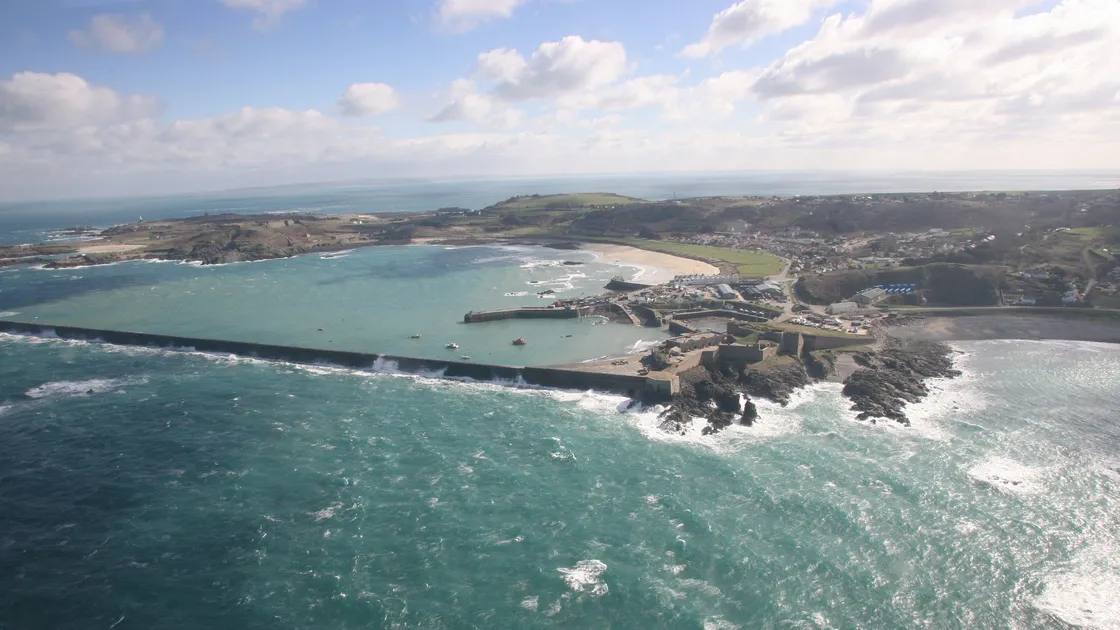
But the company is eager to return to the island following further trials elsewhere.
Spiralis announced plans last year to test the potential of its Axial Skelter power barge device in Alderney’s extreme tidal flow, which can run at up to 12 knots.
But these tests will now be carried out off the Scottish island of Orkney.
Representatives from Spiralis visited Alderney last week, and met new Alderney Electricity managing director Chris MacGregor, who started in his post in June.
Mr MacGregor said Alderney did not have the facilities or infrastructure to test and prove Spiralis’ Axial Skelter power barges, and so this would now happen at the European Marine Energy Centre in Orkney.
He said the move was ‘great’ for both Alderney Electricity and the States of Alderney as it cost them nothing, while it earned Spiralis money to invest.
‘We can monitor their progress carefully and plan for integration accordingly. If all goes well, we’re aiming to see three to five power barges coming back to generate tidal power for Alderney at the end of next year and into 2027.’
Spiralis founder and director Nick Davis said that the decision to move to Orkney was taken recently after reviewing the infrastructure and funding available at various test sites.
‘We remain committed to Alderney’s potential, but the island currently lacks the grid connection and support schemes available in Orkney,' he said.
Orkney will also allow the trial to connect to the grid and generate revenue while de-risking the technology.
He said that the company had spent more than £100,000 readying itself for the Alderney project and had not received any funding from the island’s States.
‘Our long-term vision includes Alderney. Subject to a successful proving phase in Orkney, we would look to deploy an initial three power barges in Alderney waters – delivering around 1.5 MW, enough to meet the island’s primary power demand.
‘Testing at EMEC ensures that when we return to Alderney, the technology is proven, certified, and bankable – reducing risk for both the States of Alderney and Alderney Electricity.’
He said the trial would mean the design was proven before construction starts, faster to market and would give investors and insurers greater confidence.
Installation in Alderney would involve either a direct purchase in the island or a long-term power purchase agreement of 15-20 years. The company expects the project to break even in about nine years with no subsidy.
‘We’ve designed a product that works both technically and commercially – and that’s why we will succeed,’ Mr Davis said.
Alderney States member Alex Snowdon said he understood Spiralis had planned to test the device in Alderney waters from May this year.
Mr Snowdon criticised the lack of openness and transparency from the States’ Policy & Finance Committee in relation to the matter, and questioned how much time and money had been spent in setting the project up.
‘I do wonder what the administrative cost will have been now it’s no longer going ahead.’
He added Alderney needed to keep its options open when it came to renewable energy opportunities, but was ‘very optimistic’ the island would see the benefits of tidal energy in the near future.



You need to be logged in to comment.