

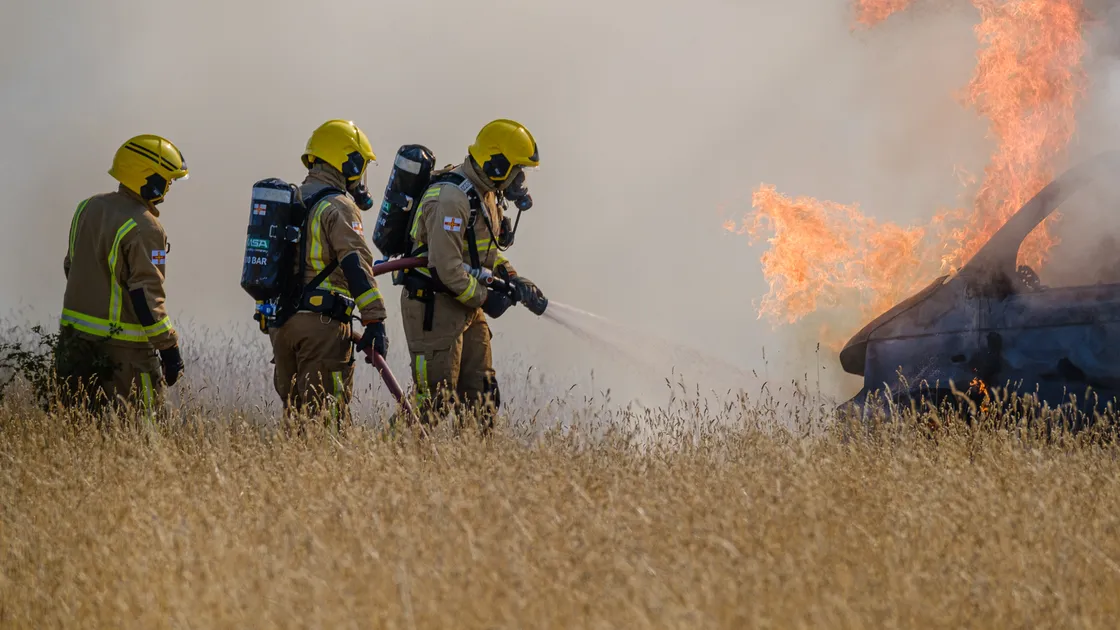
The Committee for Home Affairs has today published a Peer Challenge Report into the Fire Service, which in recognising both its strengths and opportunities for improvement, has highlighted significant underfunding by the States.
The report highlights that the its budget was increased by just £88,000 in the period from 2011 to 2020, significantly below inflation. In 2019 its annual budget was £3.86m., and it actually underspent that year. Budget increases have been closer to the cost of living since 2020.
The report said that the service’s ability to sustain a level of excellence was under significant strain due to long-term under-investment and structural limitations.
‘Constrained budgets and limited management capacity have left the service without the full range of specialist resources needed to meet evolving risks. Its leaders and staff continue to deliver a high-quality response day-to-day, but the organisation’s resilience in the face of major or protracted incidents is at risk without a sustainable investment strategy,’ it said.
‘Put bluntly, there is a risk to life and limb if there is a serious incident.
'It is an additional risk that a serious incident would adversely damage the reputation of States of Guernsey to a worldwide audience.’
The report commends the local service for its strong operational leadership, and positive relationships with partner agencies, it outlines 15 recommendations for development.
The review, which was carried out last October by senior fire and rescue professionals and government officials from the UK and other Crown Dependencies, is largely positive – finding the GFRS to be a ‘highly professional’ and well-respected organisation.
It said it found a service ‘rich in talent, professionalism and goodwill. The men and women of GFRS demonstrate exceptional pride in their role and are united by a clear sense of purpose, to keep the people of Guernsey safe.’
With sustained investment it could evolve into a resilient, innovative and future-ready organisation, it concluded.
‘It is my view that our teams are our greatest asset, and their commitment to public safety is second to none,’ said chief fire officer Les Britzman.
‘It is good to see this reflected in the report. Equally, it is helpful to identify clear areas for us to focus on now, and with the support of the States, I look forward to implementing the recommendations and building on our strong foundations to deliver the best possible service to Guernsey and Herm.’
The report states that more funding from the States is essential for the future of the service, and for it to keep up-to-date with modern standards and practices.
‘The service’s ability to sustain this level of excellence is under significant strain due to long-term under-investment and structural limitations,’ it states.
With no rapid mutual assistance available on a large incident, the service has limited capacity and a broader range of risks and challenges that would be usual for such a service.
‘GFRS does not have enough people with the right skills to effectively manage identified and emerging risks on the States. Its ability to effectively and safely resolve serious or protracted incidents will be severely challenged, unless the necessary level of investment is facilitated.
‘GFRS can provide an effective first-line response to the emergencies it faces on a daily basis, but without a sustainable investment strategy, the response to larger, less regular emergencies or spate conditions linked to risks posed by the failure of major infrastructure facilities or climate change will quickly leave GFRS and the community exposed.’
A clearer distinction of the professional relationship between the chief fire officer and the Home Affairs Committee is also advised. While the chief is recognised as the expert of fire and rescue matters, the report suggests that the current government set-up makes accountability unclear, and disrupts decision-making.
It recommends a more clearly defined arrangement, outlining roles and responsibilities to clarify operational independence for the chief officer.
The report also warns that the legislation is outdated and ‘urgently’ needs updating. It has proposed a plan to identify and prioritise risk, as well as a ‘people strategy’ to promote diversity, succession planning and leadership development. Other recommendations mostly suggest continuing current work practices and its ongoing support with partner agencies.
‘This report is testament to the professionalism and commitment of the Guernsey Fire & Rescue Service, and we should all be grateful as islanders to know they are ready to help us in an emergency,’ said Home Affairs president Marc Leadbeater.
‘I am proud that the service’s reputation and the trust it enjoys across the Bailiwick is highlighted by the LGA, and the recommendations provide a clear direction for strengthening the service further, ensuring it remains resilient, innovative, and ready to meet the challenges of the future.’
The Fire and Rescue Service Peer Challenge is a highly valued improvement and assurance tool that is delivered by the sector for the sector. It involves a team of senior fire and rescue service members and officers undertaking a desktop review of key finance, performance and governance information and then spending three days onsite at a fire and rescue service to provide robust, strategic and operational credible challenge and support.




You need to be logged in to comment.