

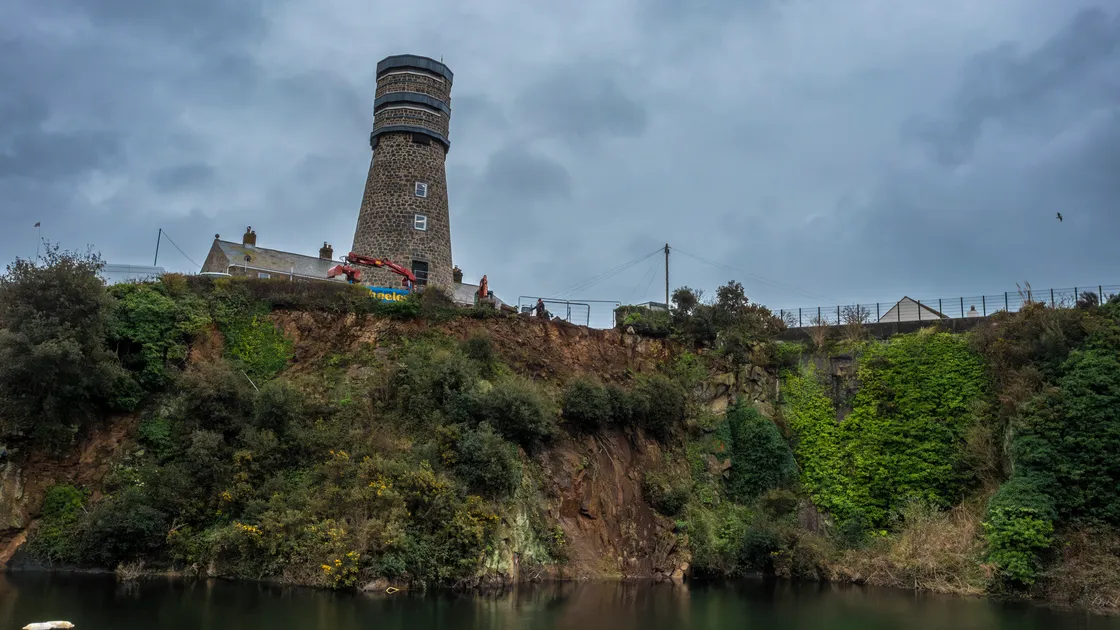
The 19th century tower is the first building approved by the States under new rules agreed last year which allow exceptional properties of historic significance to be added to the open market.
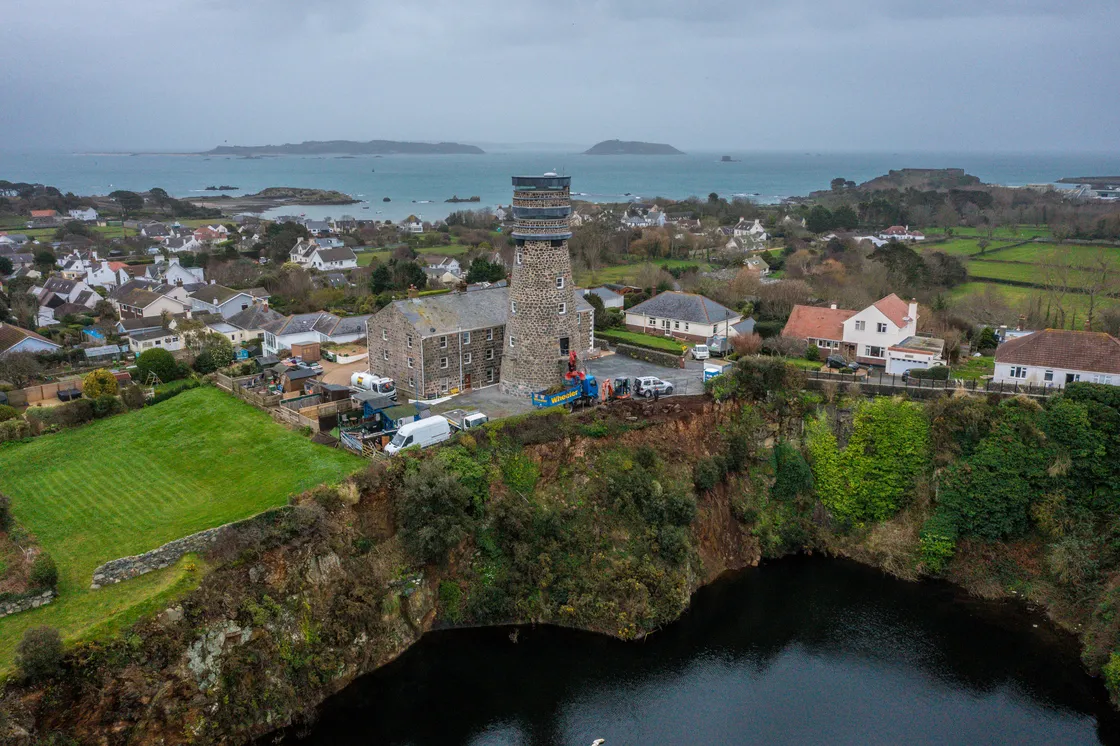
The current owners, who have been restoring the mill and making it habitable, already had permission to turn the property into a six-floor, four-bedroom home with an observation deck and an underground extension leading to cantilever space around the adjoining quarry.
But they said the development could not be completed without open market permission, which is expected to boost its sale value significantly.
‘The part A inscription is an important step in securing the future of what is a hugely important building for Guernsey’s history,’ said Vale Mill Ltd director James Ridout.
‘Without it, further investment was simply unviable, and there was a risk the building would once again fall into disrepair and potentially be permanently lost.
‘We believe the open market listing will attract the level of investment needed to ensure the exciting plans for Vale Mill can come to fruition, safeguarding a historically and culturally important building for future generations and creating a modern, state-of-the-art home of which Guernsey can be proud.’
The 21m-high building at Hougue du Moulin, just inland from Bordeaux, will be marketed for sale in the first half of the year, possibly as soon as the next few weeks. It will be sold with inscription in principle status and fully inscribed on the open market once the development is completed, in line with planning permission.
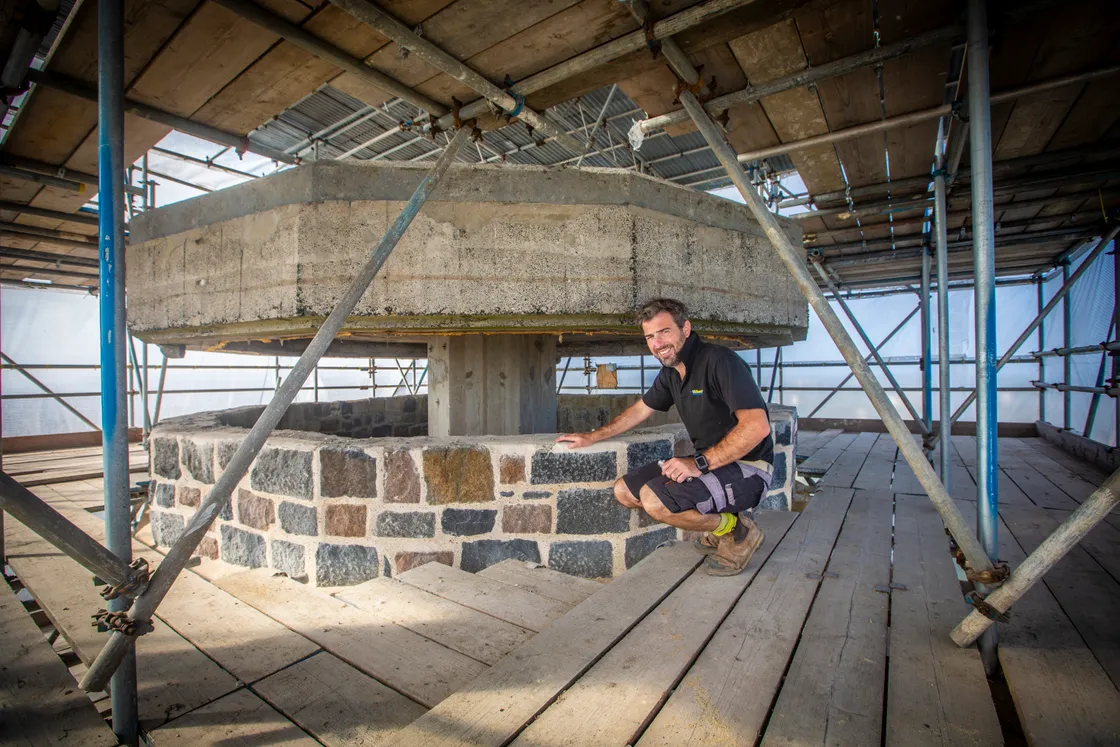
Mr Ridout’s family and the late Roger Perrot bought the mill for £57,000 when it was auctioned by the States in 2008, and since then there has been considerable investment re-pointing the stonework, making the structure wind- and watertight and preparing it for further development.
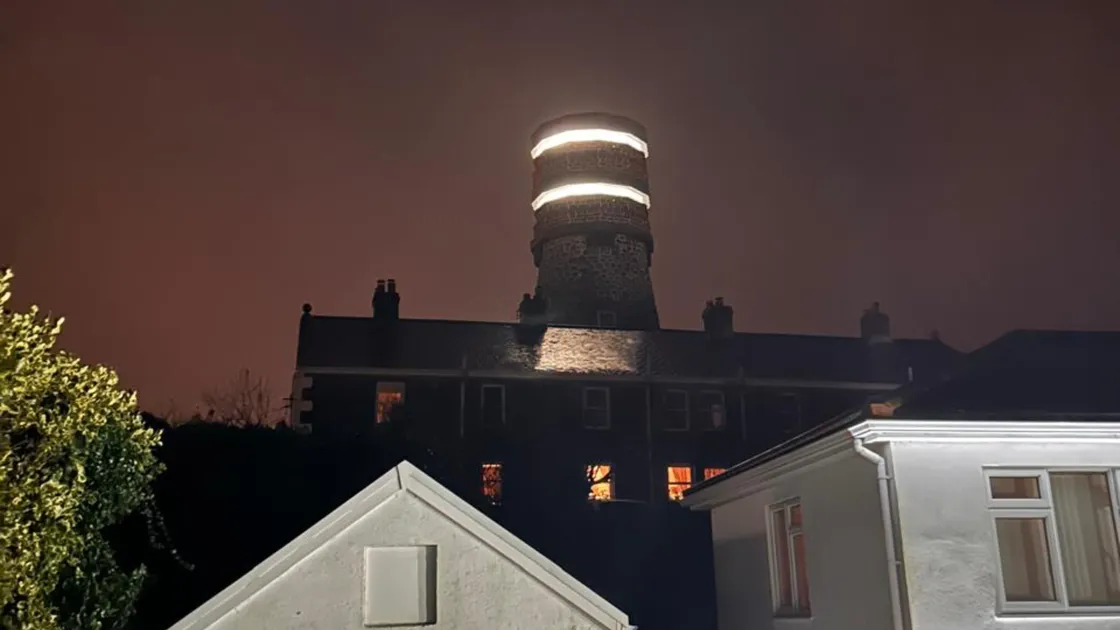
Work is continuing on the site currently, including on staircases inside the mill, which has also been lit from the inside for the first time in recent evenings.
Property agent Savills provided advice during the open market application process and has been instructed to sell the mill.
‘It’s a very exciting instruction and one that we’re delighted to be involved in,’ said residential director Nick Paluch.
‘Vale Mill promises to be a landmark property of the highest quality, something that’s unique to the open market, and offering exactly the sort of diversity that is needed if the island is to continue to attract new investment.’
Inscription on the open market was approved by the Housing Committee, using rule changes which were led through the previous States by the Environment & Infrastructure Committee.
The changes were designed to allow more flexibility in the open market as well as a gradual increase in its size, partly in response to a decline in recent years in the number of properties with part A inscriptions.
‘The recent introduction of the new open market part A inscription policy provides a number of tools to use open market inscriptions to encourage the development of homes and preserve buildings that form part of our historic and cultural heritage,’ said Housing vice-president Deputy Sasha Kazantseva-Miller.
‘The award of this inscription in principle should help bring the significant investment that a property of this unique nature requires.’
The exceptional circumstances section of the new rules states that a building of significant historic or cultural value may be considered for inscription on the open market if its structural integrity is at risk and it cannot be safely occupied without investment. The applicant must demonstrate that such investment would be unviable without an open market inscription, leading to the property becoming obsolete, falling into disrepair and potentially being permanently lost.
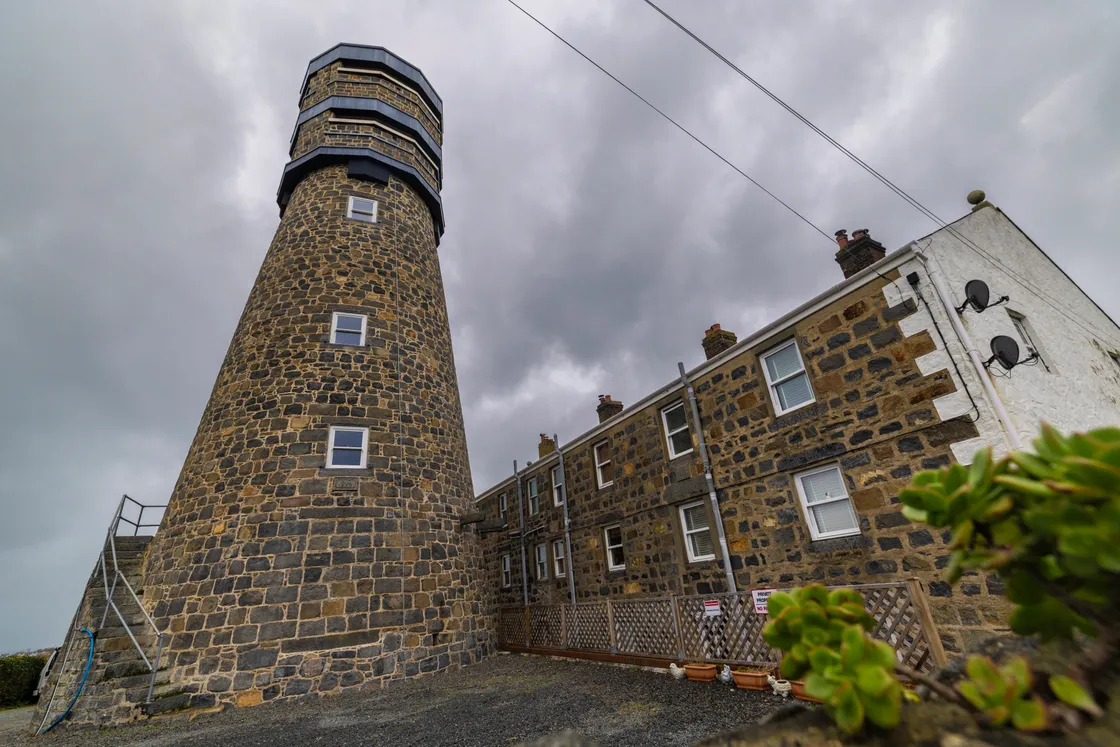
Vale Mill ‘fits the bill’ for the new rules, according to Jason Green, senior partner at law firm Collas Crill, which was also involved in the open market application process.
‘Rightly so, the application process for exceptional circumstance properties imposes a high level of rigour to ensure that only those unique properties are going to obtain the inscription. Vale Mill is a truly remarkable property with an interesting history,’ said Mr Green.
‘I have thoroughly enjoyed working with James and he has done a super job of creating an amazing vision which once developed will see a unique building having a new purpose.’
Vale Mill’s history
The original mill was built in 1770 out of wood. It was rebuilt of granite in the 1850s. It operated as a flour windmill until the German occupation, during which it was used as an observation tower.
Planning permission granted in 2020 envisaged a substantial home in the mill with four bedrooms, a kitchen dining area, utility room and breakfast room, with the top two levels used as office or entertaining areas. An underground extension from the basement would open to a cantilever structure over the water-filled adjoining quarry with large windows opening onto a balcony deck. There would also be a walkway from the mill to a floating summer house.




You need to be logged in to comment.