
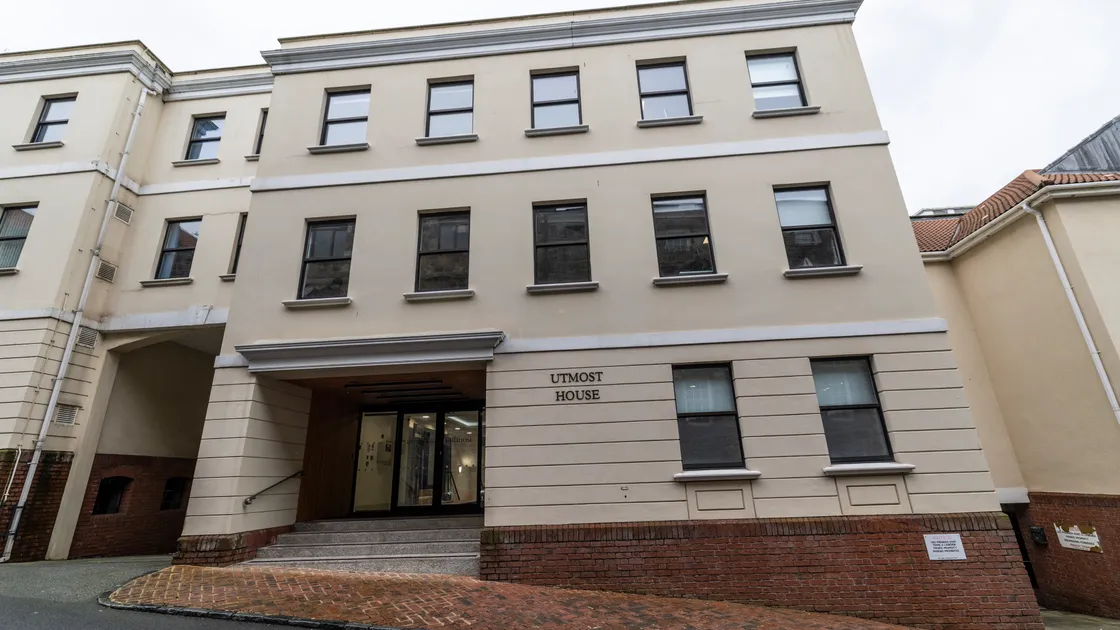
The £1.96m. fine will see other insurance licensees’ fees reduced by some 20% next year, the Guernsey Financial Services Commission said.
Utmost, which was Generali International until it was bought by Utmost at the beginning of 2019, had engagements with commission staff in 2016, 2019, 2021 and 2022 – all of which had resulted in some specific failings being identified. But the company did not act properly on the issues identified until 2023.
‘The regulatory failings in this case were serious and systemic, spanning a minimum of 10 years,’ said the commission.
‘This reflected poorly on the effectiveness of the licensee’s corporate governance.
‘The licensee failed to put in place measures to fully understand the risks posed by its clients, either at the start, during, or end of the client lifecycle. This was of particular concern due to the large volume of high-risk clients.’
From the end of 2023 Utmost International Guernsey CEO Leon Steyn launched a ‘substantial’ remediation programme, which included implementing a new risk assessment methodology and a significant change in the way it reviewed risk assessments of clients. The company has re-rated all clients and will now review on a one, three or five-year cycle according to the allocated risk rating, which the commission has agreed, although it has accepted that this may take a considerable time to complete.
The commission identified failings with the company’s business model from back in Generali days.
It had used brokers unregulated for international business, operating in developing countries, often with a weak financial crime infrastructure, and the business roots stretched back decades when financial crime requirements were less rigorous than today.
It changed its business model to stop using unregulated brokers in 2016 but many historical policies remain in force.
The commission said that multiple controls were required to mitigate risks but Utmost regarded its business model as low risk – although it had nominally rated a large volume of clients as high risk – and rarely contacted or monitored clients until pay-outs were required.
‘At that point, any potential “dirty money” was in the system and the likelihood of catching it was limited to a trigger-event review process, which was not always applied rigorously by the licensee,’ the commission said.
The GFSC identified that the licensee at one point had some 22,500 high risk clients, but on its methodology only reviewed about 800 of them every year.
The high-risk clients who were regularly reviewed included some politically exposed persons.
But the reviews were generally ineffective and issues that arose were often not addressed but deferred.
Utmost was unable to demonstrate a meaningful and up-to-date understanding of the financial crime risks of its clients, which led to widespread failings and systemic breaches of the Bailiwick’s regulatory requirements over risk assessments.
In 2014 it became aware that a third-party broker in South and Central America had identified employees fraudulently altering client due diligence documents for about 1,900 clients.
It recognised the money-laundering risk of this but did not react to remediate this issue immediately, instead relying on trigger events to deal with deficiencies.
As a result, a decade on, some 200 clients had still not been remediated.
The licensee was incorporated in Guernsey in August 1993 as Generali, licensed to conduct general and long-term insurance business, but it predominantly wrote regular premium unit linked savings business.
Utmost Group’s business model is primarily focused on writing single premium policies to high- net worth and ultra-high net worth individuals. As a result very little new business has been written by the licensee since the Utmost takeover and the commission described the company as ‘effectively being in run-off’.
Its worldwide client base has declined from more than 80,000 to fewer than 40,000 clients over the past decade. Many of the clients are still from South and Central America, many of whom are internationally regarded as presenting a higher money-laundering risk.
The commission also fined Mr Steyn £35,000, and money laundering reporting officer James Watchorn £10,500, and banned him from holding such roles for 17 months, having concluded that they had failed to ensure compliance with the regulatory requirements and failed to meet the minimum criteria for licensing.
The commission said that Mr Watchorn had often downplayed money laundering ‘red flags’, including adverse media, identified by employees.
It was noted that both men and the company had assisted the commission fully during the investigation and settled at the earliest opportunity.



You need to be logged in to comment.