

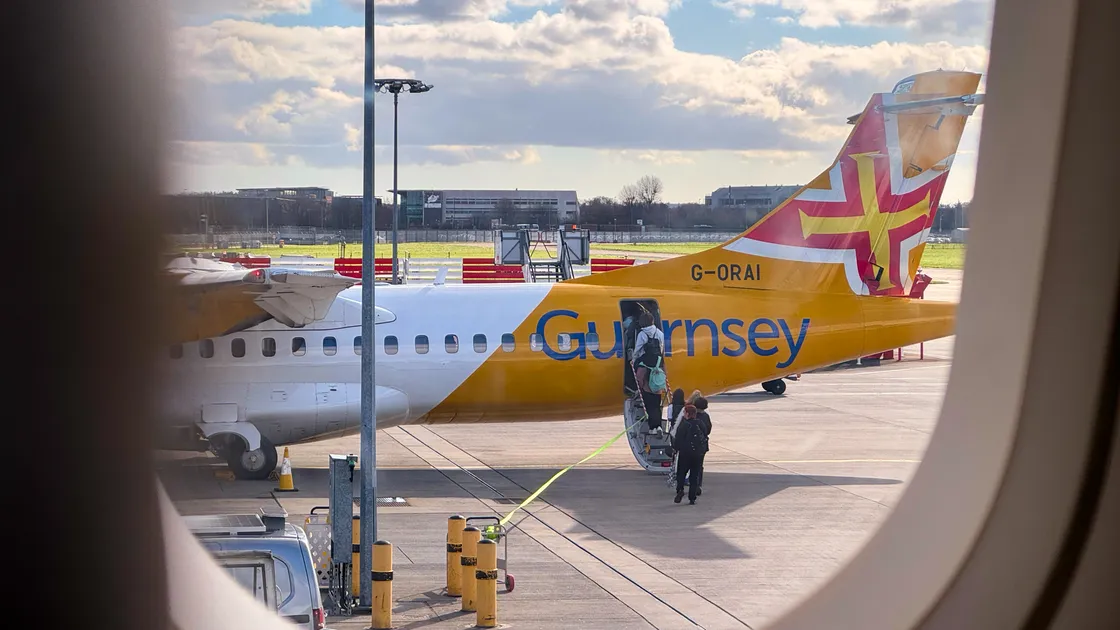
They were surprised to learn that Mr Bezuidenhout, publicly quiet in recent weeks, had come to the island at short notice to address the protest. He answered questions outside the airport terminal for a full hour from 3pm.
The CEO started by apologising to passengers who had been affected by disruptions since the beginning of the year, primarily blaming the adverse weather conditions for delays and cancellations.
One Alderney resident asked whether he was happy with the level of performance from his airline.
‘I don’t think that I am happy with the level of performance seeing as I’m here,’ said Mr Bezuidenhout.
‘When we have weather events, there is nothing we can do about it. What we can take ownership for as an airline is technical reliability and staff shortages if they occurred.’
He said that 1,056 flights had been scheduled to and from Alderney in January and February, and 18 of them were cancelled for non-weather related reasons, making up 1.7% of all flights to and from the island.
88% of flights operated within 15 minutes of their scheduled departure time.
‘I accept that for the people on those 18 flights, that was 100% of their experience and we do not accept that as an acceptable level of service,’ said Mr Bezuidenhout.
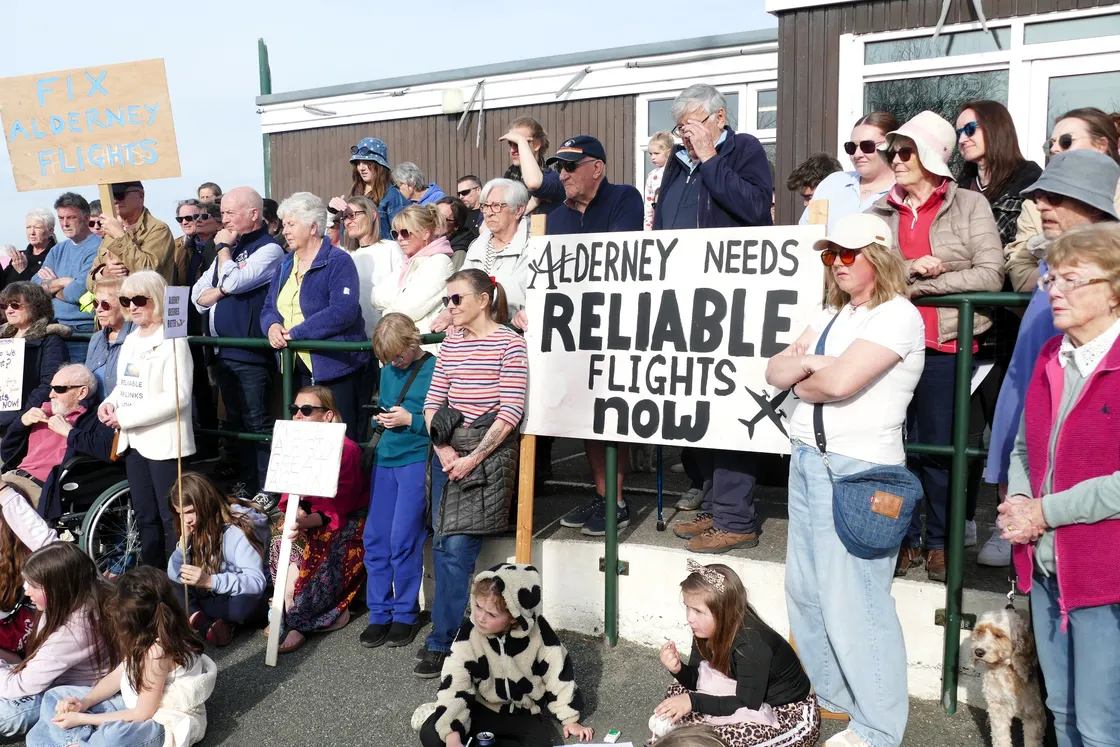
‘I don’t mind taking shots for things that are factually our fault and we should be responsible and accountable for, but someone asked why all the flights are delayed, when 88% departed on time.’
One resident described the delays as ‘absolutely appalling’, and the airline’s switch from Dorniers to Twin Otters was a point raised several times throughout the session.
‘The Twin Otter has got a higher crosswind threshold than the Dornier has. We simply have a situation where fog, visibility and weather has had a substantially bigger impact on flight operations,’ he said.
‘On the other hand, we’ve been going through a process of changing aircraft type. The reason we’re doing that is simply because we’ve had the value of the Public Service Obligation [the States of Guernsey subsidy for Alderney flights] reduced by £1m. this year, with effect from 1 January.’
He added that it was a decision made by the States of Guernsey in the previous government term.
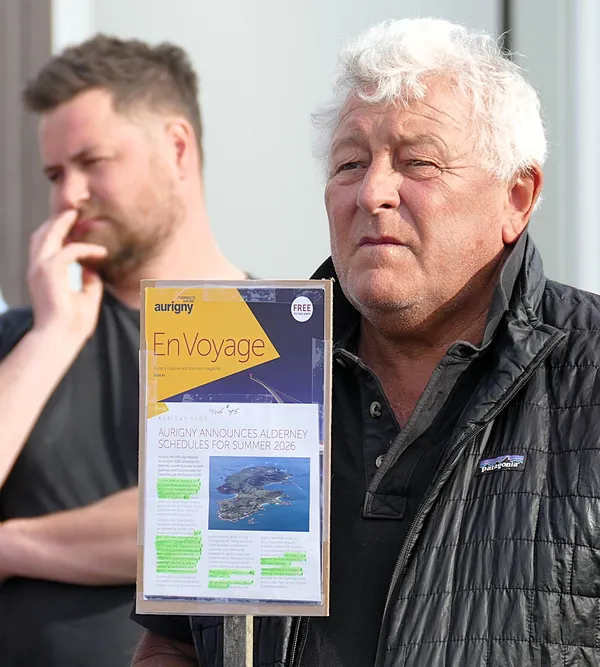
Another resident quoted from En Voyage, Aurigny’s in-flight magazine, stating that, ‘the Twin Otters would be based on the island to provide a more robust and reliable service with full resources in place for scheduled passenger services, as well as backup for air ambulance, mail, delivery, freight and pet travel.’
Mr Bezuidenhout responded that one of the Twin Otters had been flying, while the other was in Lands End doing pilot training.
He said moving away from the Dorniers meant pilots needed to be retrained on the new aircraft. It was a six-month transition process of changing one aircraft type and up until 12 February, the route had been served by one Dornier and one Twin Otter.
The first aircraft was delivered in late October in Lands End, it was a Twin Otter that was specifically rebuilt from scratch, and it needed to go through certification and licensing.
In the interim Aurigny operated one Skybus Twin Otter and one Dornier, he said.
‘Historically every year for about eight to 12 weeks, we would have one aircraft available on the island because the Dornier has to be maintained,’ said Mr Bezuidenhout.
‘Every year this island has received services from one aircraft based here. This year was different, because we had two aircraft based here until 12 February, and onwards had one Twin Otter available on island, while the other is training crews.’
He said he understood why islanders were upset, but had to ask attendees not to shout at him.
Following the meeting, resident Nigel Du Pont said that Mr Bezuidenhout had been ‘a very brave man to come to Alderney to face the music’.
‘I think actions speak louder than words, hopefully he has now grasped the situation that the island is suffering everywhere from business to tourism,’ he said.
‘We can’t go on like this. Hopefully he will go back to Guernsey, talk to his board and actually get the two Otters in the air like it was promised, and get this island back to how it used to function.’