

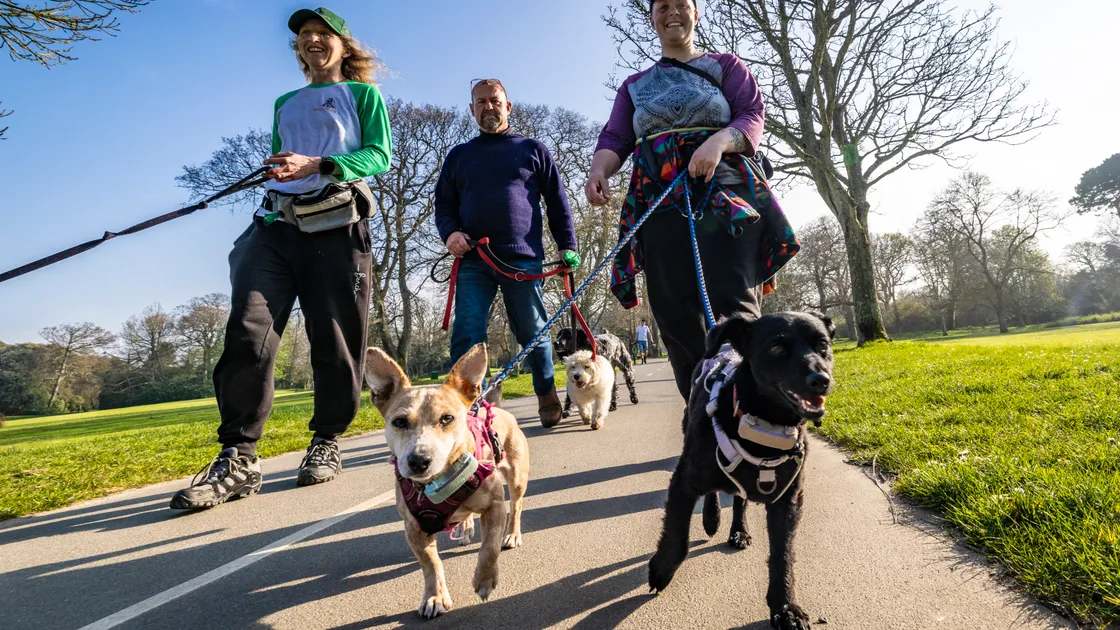
The new legislation was introduced by the Environment & Infrastructure Committee just six weeks ago, but will be cancelled this week if the Assembly backs a proposal submitted last week by Deputy Andy Sloan.
Deputy Sloan has described the rules as an ‘extension of the state by stealth’ and ‘another example of nanny-knows-best government’. Now 30 of the island’s professional dog walkers have come together to say they would support the annulment of the new licensing regulations.
‘Our primary concerns throughout this process have been the lack of meaningful consultation with the people actually doing the work,’ a spokesperson for the group said.
‘We agree with Deputy Sloan that the current approach represents a significant overreach. It is vital for the integrity of the Guernsey business environment that regulations are not changed behind closed doors without industry input.
‘We look forward to a time when the civil service works with local businesses rather than imposing rules upon them without comprehensive and robust consultation in any specific industry.’
One of the areas for concern was that separate annual licences were needed for activities like walking, grooming, training, and boarding, among others.
Fees for some activities are still to be announced.
‘There are also fees for each vehicle and additional staff,’ the spokesperson said. ‘The single dog walker licence fee is £155, but a dog walker who takes on multiple roles would be looking at fees that could run to over £1,000.
‘Ultimately these fees cannot be absorbed and will have to be passed on to customers.’
However, not all dog walkers were against the scheme.
Phil Trouteaud from Doggy Steps said scrapping licensing altogether would send the wrong message.
‘A licensing system isn’t a bad thing, it’s a necessary step forward. Is it perfect? No. Does it need refining? Absolutely,’ he said.
‘But scrapping it altogether sends the wrong message and risks lowering standards at a time when they should be rising.’
Mr Trouteaud started his business two years ago and said he always knew that legislation would be coming.
‘If your business model is not robust enough to take the licence fees, and the welfare benefits they bring, you should be really looking at your business,’ he said.
‘For those of us already operating professionally, safely and responsibly, licensing should not be something to fear, it should be something we stand behind. This isn’t about making things harder for good operators. It’s about protecting dogs, supporting owners, and raising the bar across the industry.’
A public consultation into the licensing of animal businesses was carried out last year which received just over 260 responses.
Respondents to the survey wanted to see primarily licensing of breeders and those importing potentially dangerous animals and restricted dog breeds.
Lowest priority was given to licensing pet shops and pet groomers.
E&I was allowed to make the changes via statutory instrument, the lowest level of legislation, under animal welfare laws originally approved by the States in 2012.
Deputy Sloan said the scheme was an example of a bureaucracy that could not help itself.
‘It defaults to administrative overkill,’ he said.
‘There was a simple approach that could have been taken which I’ll outline this week in the States.’