

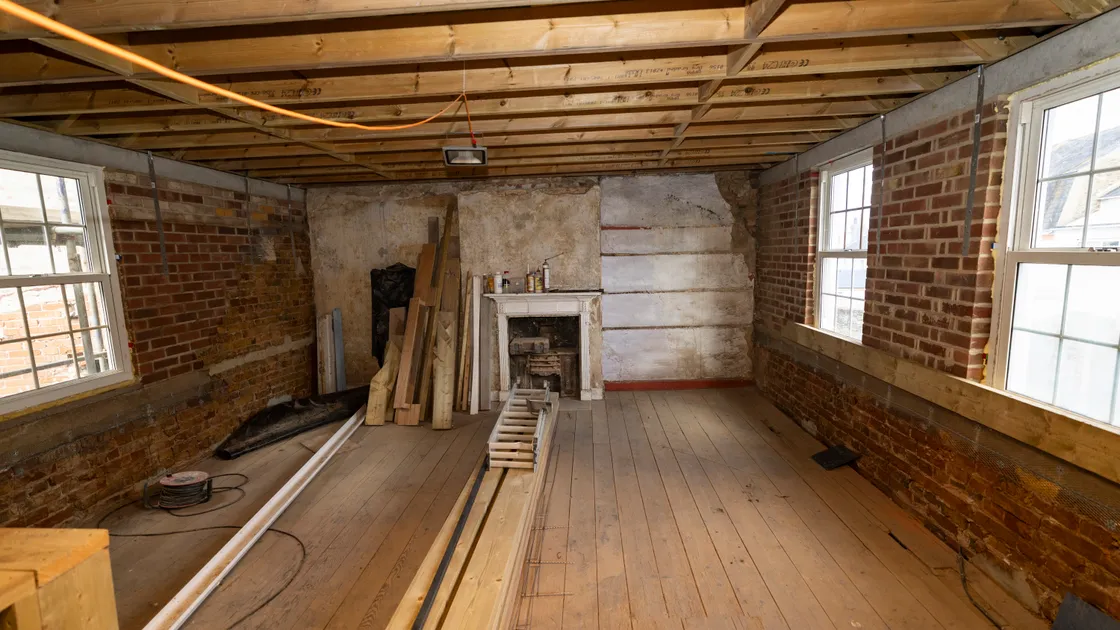
Dozens of planning applications are made each year to change windows and doors in listed properties and refusals are common on conservation grounds.
The introduction of ‘a more enlightened policy’ was announced by Neil Inder in his first update statement to the States since becoming president of the Development & Planning Authority, although it is not yet clear how different the new rules will be.
Conservation guidance issued in 2021 already provides flexibility to replace less important windows and makes some allowance for the use of double glazing and modern manufacturing methods, even where windows are more important to the special character of the listed building.
‘High-quality, double-glazed timber windows will often be allowed,’ said Deputy Inder.
‘This strikes a sensible balance between protecting heritage and allowing people to live in warm, energy-efficient homes.
‘It is neither fair nor reasonable to require owners to live in draughty homes where sensible compromises can be made.’
He said the authority would ‘shortly’ publish new detailed guidance to applicants.
Deputy Inder wants to roll back what he sees as excessive rules governing protected buildings and, since his election in October, planning officials have been instructed not to list additional properties without the approval of the authority’s members. He also used his update statement to announce that the authority was considering introducing planning performance agreements.
‘These agreements set out the timetable, consultation requirements and key milestones for major applications right at the start of the process,’ he said.
‘That gives everyone clarity. It reduces delays. And it helps good developments move forward faster.’
Planning performance agreements are commonly used by UK councils.
They typically cover the period before a large planning application is made until approval is awarded. They act as an understanding between a planning authority and an applicant rather than being legally binding on either party. In the UK, applicants may be required to pay additional fees for planning performance agreements.
The DPA believes they could sit alongside legal changes to streamline the process for amending the Island Development Plan.
Deputy Inder told the States that the streamlining project was now being finalised.
‘Once the new legislation is approved, necessary changes to development plans will be able to happen more quickly and more efficiently,’ he said.
‘That will make the planning system more responsive, something both islanders and developers have been asking for.’
The project was directed during the final weeks of the previous Assembly as a way of rolling back some of the rules which have made it costly and time-consuming to make even minor alterations to the island’s key planning policies.
Another change led by the previous Assembly, land amenity improvement notices, was recently used by the authority for the first time, when it ordered the owners of the former St Margaret’s Lodge Hotel site to clear up the property, which has become an eyesore and a magnet for anti-social behaviour.
Deputy Inder said the authority had its eye on other derelict properties.
‘We will be looking at further locations, including sites in Town such as Upper Mill Street, where these powers can be used to encourage improvement and bring vacant buildings back into use,’ he said.




You need to be logged in to comment.