

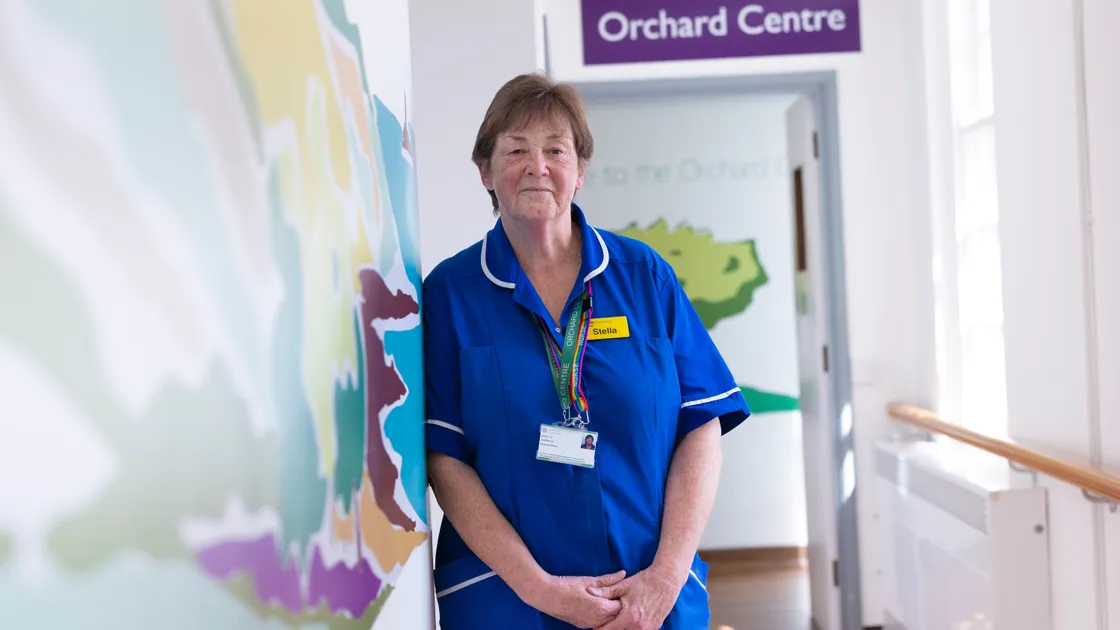
She joined HSC and the island's sexual health service, initially as a chaperone for female patients, when she decided to return to work in 1990 after having children.
Initially working with Dr Nick King, she moved on to Dr Nicola Brink’s clinic 20 years ago, where she has since specialised in support for those living with HIV and hepatitis.
Many of her patients have known her for most of her career, and have relied on her help and utmost discretion through every stage of their diagnosis and treatment.
‘I will miss my patients terribly,’ she said.
Working at the Orchard Centre, the island’s only HIV and hepatitis clinic, Stella said the important and deeply sensitive role has evolved significantly.
With HIV treatments simplifying from complex regimes to a single daily tablet, patients can now have a much improved quality of life.
‘It’s a very private diagnosis,’ she said.
‘If you’ve got cancer, or diabetes, you go home and tell your family. You don’t tell anybody about your HIV.
‘Unfortunately, there’s a stigma and always will be, so there’s a lot of fear around it – especially living in a small island. There’s been several patients where, for 10-15 years, only Nikki and I know their diagnosis. So you get very close to them.
‘It’s really sensitive sitting someone down to tell them they’re HIV positive.
‘We’ve had one person go and blow all his life savings thinking it was a death sentence. It’s not any more.
‘And the change in medication over the years has made a big difference to patients’ lives.
‘People used to live by the clock, setting alarms, taking a cocktail of drugs at different times, day and night. Now it’s just one tablet a day for HIV, with very little side effects.
‘They can live a long and normal, healthy life.’
Cases of HIV in the island have risen, particularly since Covid, when many people moved to Guernsey.
Stella said that in the past, there have been about 20 cases, though she now estimates the total to be in the high 60s or low 70s, affecting people from as young as 30 to 85.
Transmission is rare, but she said that increased travel has contributed to the rise, with islanders now having sexual partners from all over the world, including high-risk countries.
‘It can affect all walks of life,’ she said.
‘You’ve got to give empathy, and just treat them as humans. I’ve loved my career, and I’m going to miss it.
‘You become part of people’s family, and sometimes they want to include you in their special events, which is always an honour – we never expect invites anywhere, sadly not even to funerals.’
Stella has been careful to never out her patients or make them feel uncomfortable at chance, public encounters.
‘I always say to new patients “if you see me out and about, don’t feel you’ve got to say hello”,’ she said. ‘And if I spot someone first, I’ll often just go the other way.
‘My children have learned that too, they never ask questions.’
Patients and consultants who have come from England are often amazed that the local clinic has only two staff members, and yet sees its patients every three months, compared to every six in the UK.
‘I’m not a counsellor but I can sit, listen and chat,’ she said.
‘Because it’s only a small team, and we’ve only got limited hours, sometimes I’ve met patients outside of clinic as well, just to give them a bit of support.’
Since hearing of her retirement, Stella has heard how valuable she has been.
‘People have been very generous,’ she said.
‘One person engraved a keyring for me, with the words “never underestimate the difference you’ve made and the lives you’ve touched. You are my go-to person.” That means a lot. It’s been an absolutely fascinating career, and it’s been a real privilege.’
Stella works her final shift today, passing the baton on to the current manager of the clinic, Laura Brouard who she has worked with for 12 years and has been handing over to for the past four months. Dr Brink has also finished working in HIV, moving more into the public health sphere.
Over more than two decades, the colleagues have never fallen out.
‘We’ve become very good friends.’
Stella hangs up her scrubs, confident in the knowledge that there will one day be a cure for HIV, and with a message for islanders to get tested.
‘The sooner you know you’ve got it, the better your prognosis.’
In the meantime, she looks forward to enjoying retired life with her husband.
‘I’ve got two children on island, three grandchildren and my husband is now also retired,’ she said.
‘We’ve got lots of holidays booked.’