

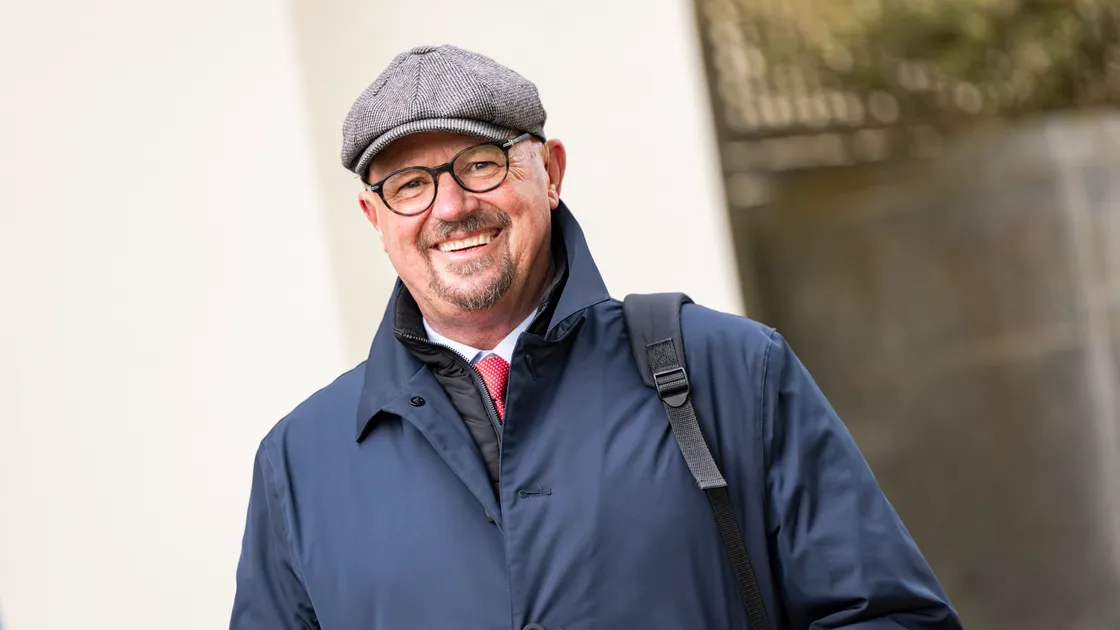
David Dorrity made a resignation statement in the States ahead of his replacement by Ross Le Brun, the island’s newest deputy.
He told the Assembly that other members of ESS had made decisions he disagreed with for which he did not wish to appear partly responsible.
‘The tipping point which prompted my resignation relates to a recent funding decision,’ he said.
‘I felt that approving a substantial increase in funding at this time was not the right course of action, given the broader financial pressures facing the island.
‘I supported an option which would have maintained funding at broadly its existing level while others supported a significantly larger increase.
‘While I respect that decision and the motivation behind it, it served to reinforce my view that the committee was making decisions for which I could no longer in good conscience share collective responsibility.’
The funding request had come from an external organisation which receives a grant from ESS.
The name of the organisation was not disclosed but Deputy Dorrity said there was no doubt in his mind that its work was important.
‘Many people have encouraged me to remain and continue arguing my position from within the committee,’ he said.
‘However, I have concluded that I may be able to contribute more effectively outside it, and I hope that my resignation may encourage broader reflection on the difficult financial decisions that lie ahead.’
Deputy Dorrity said that he and another member of ESS, Deputy Garry Collins, had set up a working party to review the committee’s finances after the States directed that budgets should be cut by 1% in real terms in each of the next three years.
But he soon became concerned that other members of the committee did not share his enthusiasm for savings.
‘I would caution them, and indeed all members of this Assembly, that it’s not enough simply to oppose new revenue-raising measures without proposing viable alternatives, nor is it enough to vote through a savings amendment and behave as if that’s job done,’ he said.
‘The real work comes after the vote and requires difficult and most likely unpopular decisions to be taken.’
Other members of ESS believed that declining the funding request which prompted Deputy Dorrity’s resignation could in time have increased cost pressures on the committee’s budget.
He said he would miss sitting on the committee with members who he described as ‘good and caring people’ and officials who he said ‘work hard to ensure that a huge case load is handled effectively and in a timely manner’.
Earlier in the States meeting, Deputy Dorrity asked Health & Social Care president George Oswald if his committee had looked further into changing the subsidy it provides for all appointments with doctors and nurses at GP surgeries.
Deputy Dorrity suggested removing the flat £12 grant from patients covered by insurance policies and reallocating the money saved to reduce appointment costs for less well-off patients.
‘If we were to stop the £12 grant now and bring it back into general revenue to be spent appropriately elsewhere, the actual amount of money we would get from that, after the bureaucratic processes involved, is remarkably small,’ said Deputy Oswald.
‘Unfortunately, the reality is that there is not a lot of money in it.
‘Even if we were to do as you say, particularly if it applied only to those with insurance, there wouldn’t be very much to distribute.’