

A new housing framework is expected to hold people to account on progress in developing more new homes.
The Housing Site Availability Framework was published last week, listing sites where more than 500 houses are being built or already have planning permission to be developed.
The States’ annual residential housing stock update was also published this week, revealing that 127 new units were created last year and 65 removed from the market. 106 were newly-built homes, but none of them were classed as affordable.
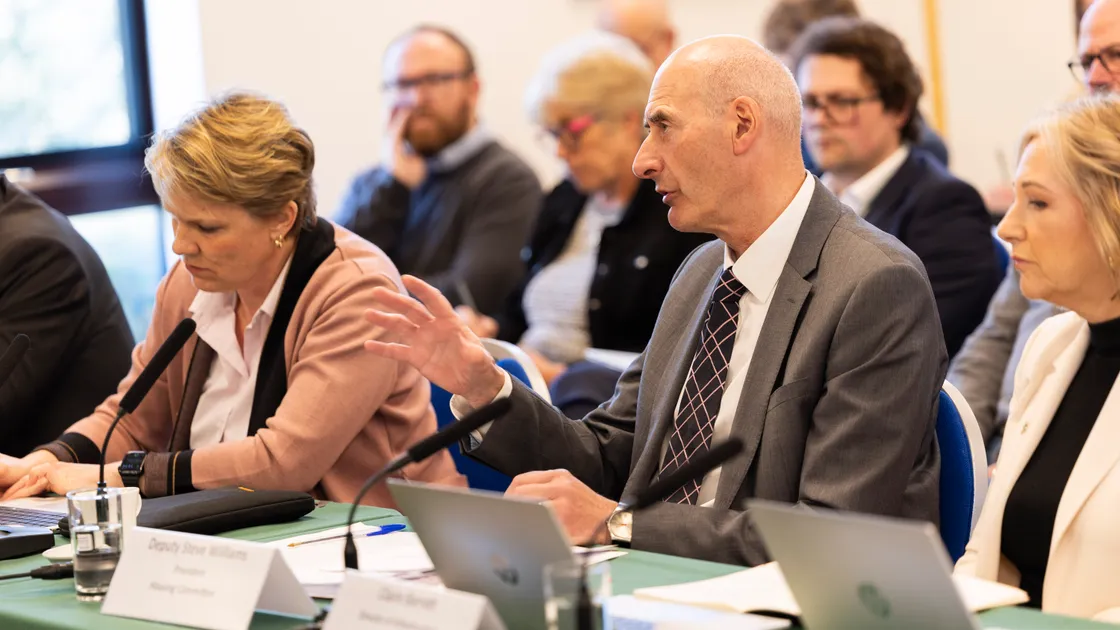
‘It’s not sorted, there’s no magic wand, it takes time to get these built and people will be disappointed with the statistics, I am disappointed as well,’ admitted Housing Committee president Steve Williams.
‘But realistically it is a four-to-five-year timeline and traditionally we’ve built through block work, which is a slow build process.
‘We are trying to incentivise people, but ultimately we will also have to start looking at penalties for those who are reluctant to do anything, whether that be compulsory purchase powers, a financial penalty or ramping up TRP on derelict sites.
‘There are all sorts of areas that we could try to incentivise people to bring them forward.’
The framework was built on the work of the Environment & Infrastructure Committee during the last political term, said Deputy Williams.
This has meant that the new Housing Committee had all of the information in the public domain. It has worked with the construction industry to collate it to create a bigger picture of housing developments in Guernsey, and to properly identify and target those sites that have not yet been developed.
Since March last year, 22 meetings with developers and landowners have taken place to discuss plans and identify what any hold-ups might be.
‘It’s a whole range of issues,’ said Deputy Williams.
‘Sometimes there are planning matters where there are misunderstandings about what the problem is rather than an obstacle which we’ve been able to overcome, sometimes it’s a viability matter, which is more of a challenge.
‘Other times they’re saying that they’ve just been held up. We are getting some positive news about things happening, people are going to see more action around the island.’
There is currently a five-year high for the number of properties under construction at 350. Deputy Williams said this was good news, but it would take time for them to be completed and to have people living in them.
The framework also indicates the volume of work available for the building industry and materials suppliers.
‘People can see there is a volume of business there. The information has always been in the public domain, but it was spread across dozens and dozens of planning applications and you don’t always see what permissions get granted and the bigger picture.
‘The last statistics I saw there were 439 plots that had planning permission but had nothing built. Permission doesn’t always transpose into deliverable homes.’
The States is also prepared to work with developers to buy properties on a pre-agreed basis, he added.
Deputy Williams said he wanted to ‘fine tune’ the framework further, to include timescales of the likely delivery of the home.
The aim is to renew the framework every six months, to create a focus on sites which are not progressing.
‘It’s not meant to be a name and shame, but there will be an element of wider knowledge now among the public and wider industry,’ he said.
‘Greater public awareness is good because some people have bought land and they’ve sat on it and are only steadily working through it.
‘For affordable housing sites, if they’re approved by the States and Island Development Plan review, there will be a time limit by which they should be developed, and if they’re not, that zoning will go away.’
One example of a site which has already been pushed through is Cleveleys Vinery in the Vale, which has planning approval for 42 new homes.
Developers and planners had been back and forward with planning over timings and designs, but during a meeting it was established that both sides thought they were waiting on the other.
‘It was a communication matter which was resolved and that was progressed very quickly and they are hoping to start soon,’ said Deputy Williams.
He added he wanted to reassure islanders that there will be more homes coming through.
‘I want to give people hope that things are happening,’ he said.
‘The GHA has been working hard on affordable housing, they are 15 properties near Sandy Hook which are near completion, there’s 15 being built by the Oberlands and will be entering contracts this summer, the CI Tyres site is programmed for 70 apartments and then there’s the Mallard development too, which should be starting this summer.
‘The framework has just come out and it’s still early days, but it will be interesting to focus on where the blockages might be, and if there is anything we can do.’