

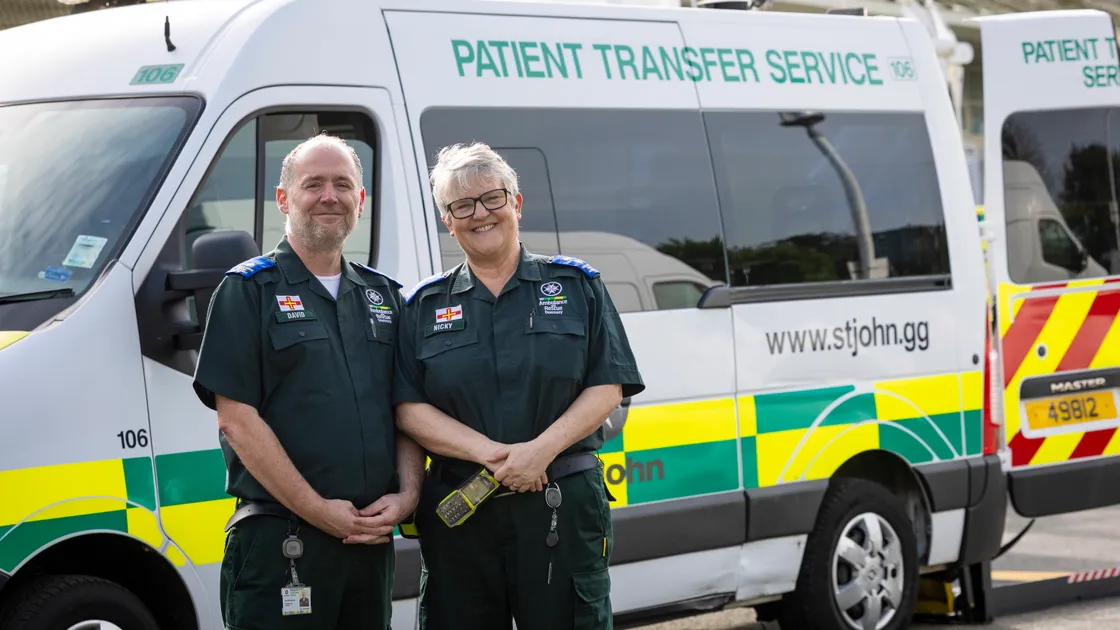
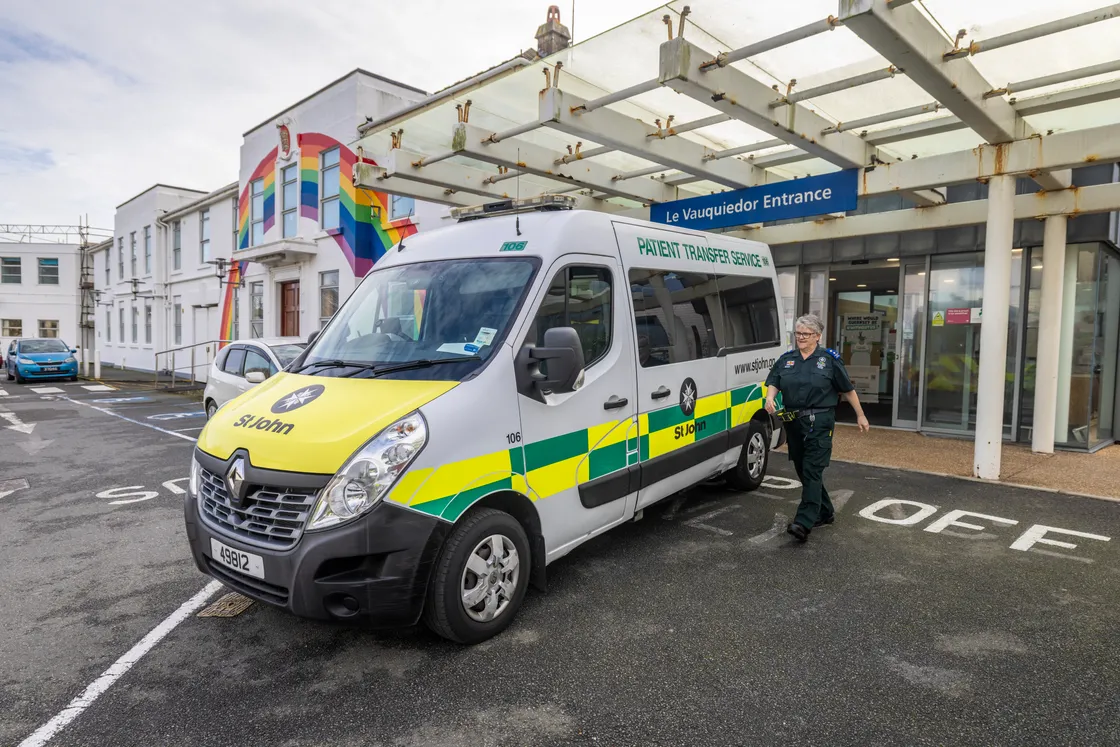
Alongside her deputy Dave Edwards, team leader Nicky Strong clocks up to a 1,000 miles a month in their white ambulance.
‘We are a bit of a lifeline, because, as you probably can imagine, a lot of the people that we deal with have severe mobility issues, and some will have mental health issues as well,’ she said.
‘Sometimes we go to patients who maybe haven’t even been out of their house for weeks, and they struggle if they’ve got a couple of steps.’
It is immediately obvious that care and compassion is at the core of their working day, bringing a little sunshine to what can be an apprehensive journey.
‘Dealing with medically-related appointments, sometimes patients can be a bit anxious,’ said Dave.
‘But once they’ve built that relationship with you, they feel really secure with you.’
And that is what Nicky and Dave do, establishing trust and friendship with clients who they often transport many times on their own medical journeys. The team carries out 3,000 transfers a year.
‘A lot of our patients are regulars. We do a lot with dialysis patients who have to go for renal treatment, and they’re going up to three times a week. Once they’ve built that relationship with you, they feel really secure with you.
‘If we’ve got time, though it’s not always the case, and they haven’t been outside, we say, we’ll take you to hospital, but we’re going to drive along the front, and we have a little chat with them. If we can make them feel good, that makes our day feel good. And when we finish, we just feel like we’ve made a difference, and that’s important.’
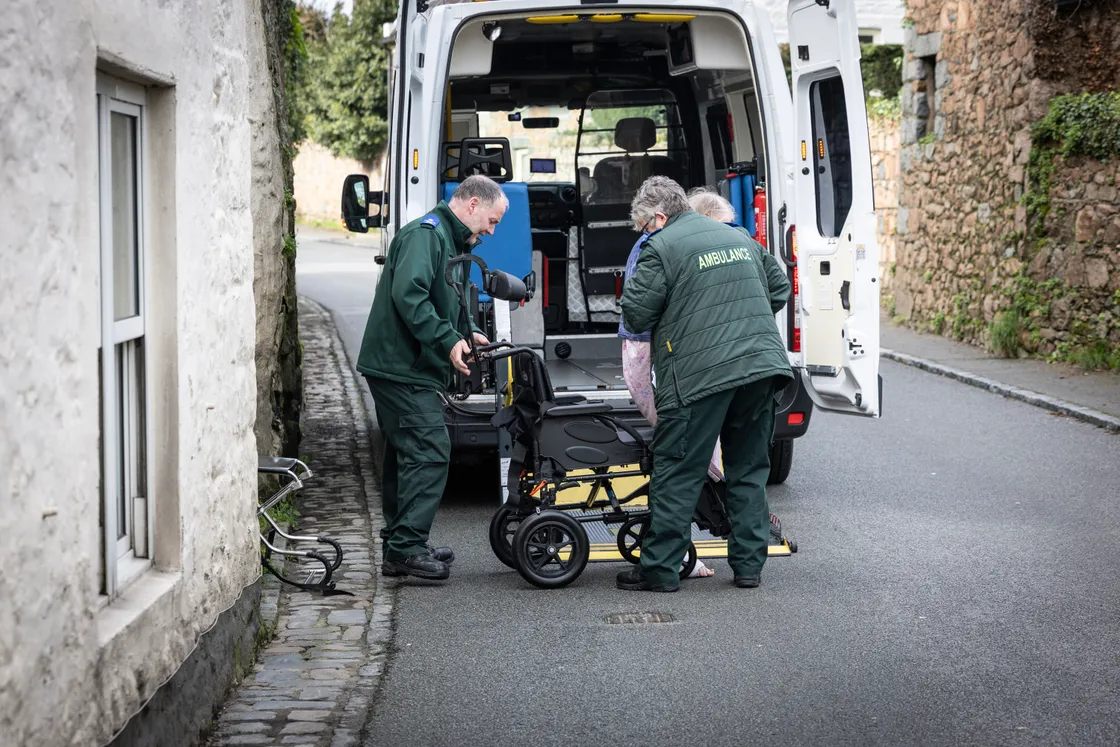
The two vehicles and three core staff from the Patient Transfer Service do around 40 trips a day, picking up from houses and care homes across the island and delivering patients wherever they need to go.
The service is funded through a contract with the Committee for Health & Social Care, with the remaining costs being met in a variety of ways, including the subscription scheme and charges.
All bookings are made by a medical professional rather than by patients or family.
One of our first pick-ups of the day was for Jocelyn Kendall-Tobias, who needed to get from her home in Kings Mills to the hospital for an x-ray after a recent operation.
Like many of their clients, she requires a wheelchair and careful transfer to the vehicle.
A regular, she is effusive in her endorsement of the service and has a particular soft spot for Dave.
‘The service I receive is fantastic – I could not praise them more highly, ‘she said.
‘They are always so cheerful and helpful. I can’t walk anywhere and without the service I would not be able to make my appointments – and they will be there when I need to go home too.’
Other patients are similarly enthusiastic and grateful to get where they need to go with the minimum of fuss.
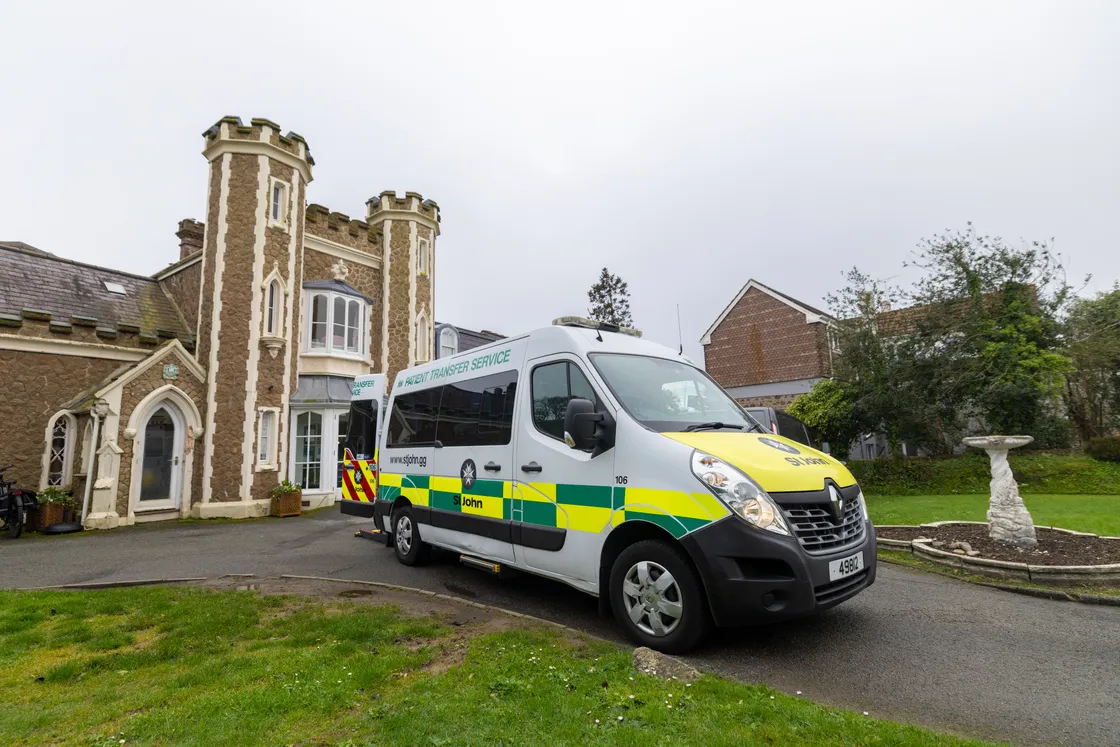
Dialysis patient Sharon Booth said she had been very lucky to have been using the service for almost two years.
‘I have kidney dialysis three times per week at the PEH. The service is absolutely first class. The drivers are amazing in their care and kindness, have never ever let me down, and help me to feel safe and secure at all times.’
Fellow dialysis patient Jane Rider agreed.
‘The patient transfer service has been a life saver to me since starting dialysis in October. It has taken another worry away. They come three times a week, come rain or shine, to take me to the renal unit, for which I’m eternally grateful, they are kind and compassionate and so professional.’
Neither Dave or Nicky have any medical background, Nicky joined after a career in finance and Dave spent more than 25 years in hospitality.
‘I was in advertising sales, and I did that for 17 years, and you start to feel like there’s something more to life than just doing that, which is why I took this job,’ said Nicky. ‘I started here doing a part-time role and I’m now leading the team.
‘Dave and I are like the work hubby and wife. We’ve been together now a long time. We know our strengths, we know our weaknesses, and we work really well as a team. And that is really important. You need to be able to rely on your team members.’
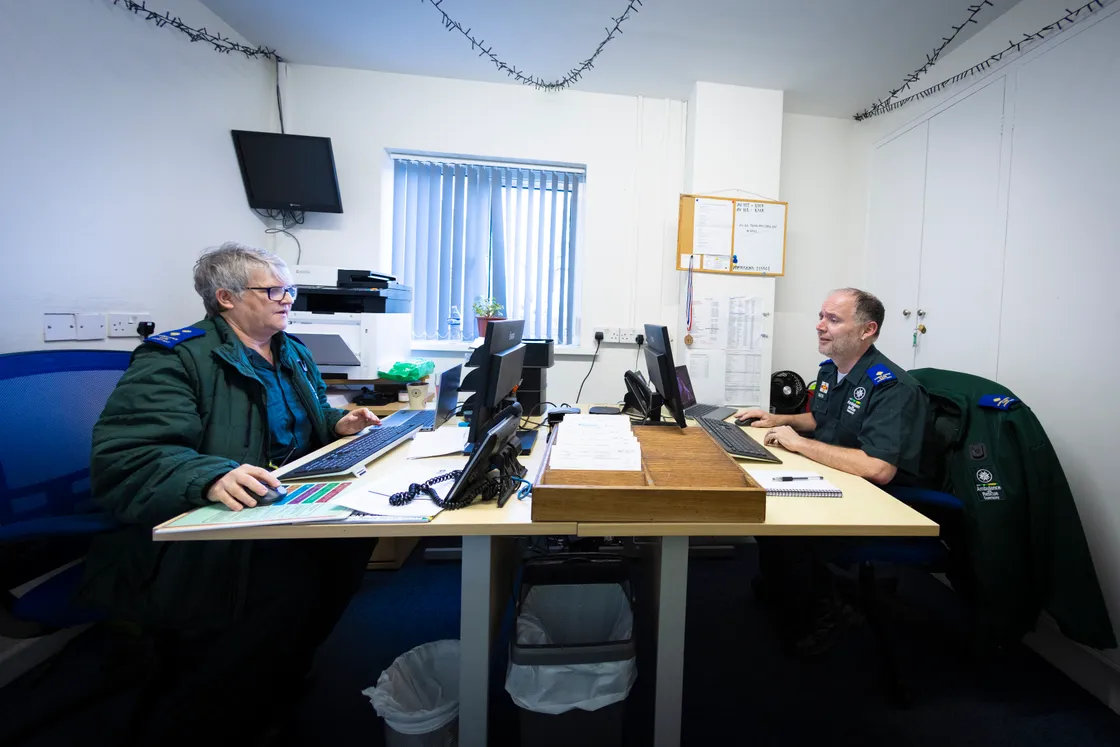
Neither have ambitions to progress to the more ‘exciting’ side of the ambulance station, although patient transfer is where many current paramedics started, including paramedic station officer Sonia Guille, who was Guernsey’s first female paramedic, head of operations Dean de la Mare and current chief ambulance officer Mark Mapp.
When recruitment opportunities emerge, Nicky said they were just as happy to hear from people wanting to take that first step to being a paramedic, as those looking for a change of career.
‘It’s really about being able to communicate with people and build up relationships,’ she said.
‘However patient transport gives you that ability to see how an ambulance service runs – it’s a fantastic grounding if you want to progress to the emergency side. You also need to like driving, because you are going to spend a lot of time behind the wheel.’
Beyond the day-to-day transfers, the team have shown they are prepared to go the extra mile and were were recently recognised at the ambulance service awards for stepping in to what could have been a life or death situation.
One Monday morning, the team found a number of odd messages from an elderly lady they regularly took to a wellbeing centre.
‘I know her quite well and she sounded quite confused, which is completely out of character,’ said Nicky. ‘I rang her on the phone, and even though she sounded completely okay, there was still something that wasn’t quite right.
‘So as a team, we decided that we needed to go and do a wellbeing check,’ Dave explained.
‘It turned out she had hypothermia, she hadn’t put her heating on at home. She was so cold that when will tried to get her temperature we couldn’t get a reading. We called back-up and she was blue-lighted into hospital, where she spent about two weeks recovering.
‘She was so cold she had delirium. That’s why she’d been phoning us all weekend, because she was so confused she didn’t know what was going on. Now every time we pick her up, we make sure she’s got heating on and she’s got food in the cupboard.’
While most journeys are back and forth to the hospital, one journey the team help with most often includes no return.
‘We take a lot of people to Les Bourgs Hospice for their end-of-life care, so we are the last transport they’re ever going to receive. That’s very sad, and there can be a lot of emotion involved, especially with the family,’ said Dave.
‘It’s just trying to make sure that they’re absolutely comfortable with everything you’re doing, because it’s important they’re not stressed by it all.’
‘We treat everybody with complete dignity and respect,’ said Nicky.
‘We’ve seen people in very vulnerable situations, and you just try and make them as comfortable as you possibly can.’