
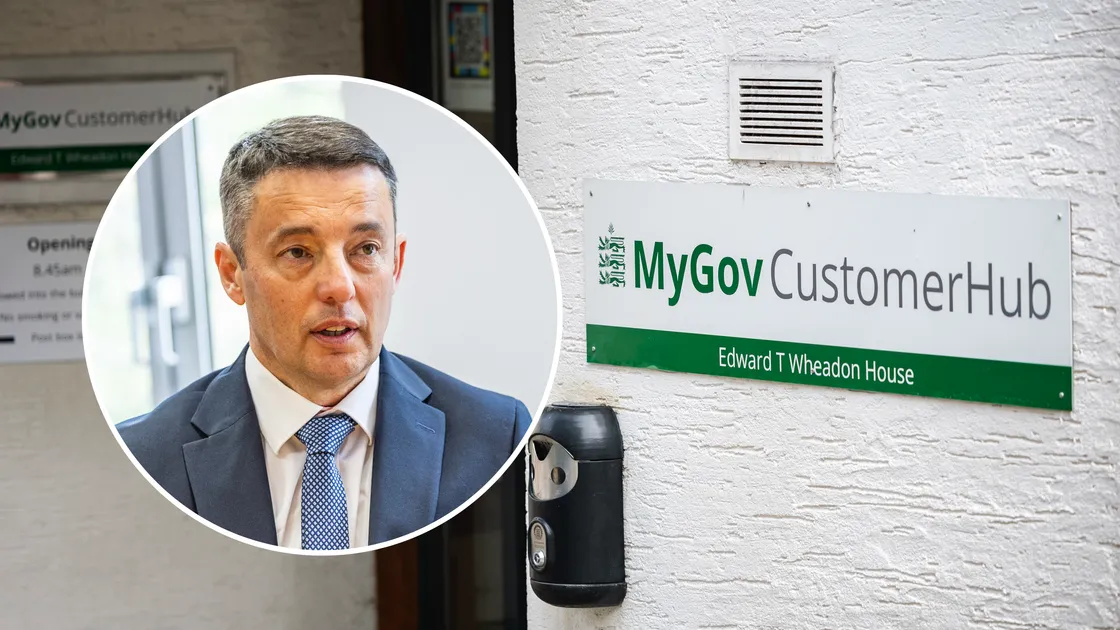
The original MyGov project did not deliver what the people of Guernsey were promised, nor what they deserved.
When the review was announced in November 2025, I stated that £18m. had been invested. However, it is clear due to the way other projects were consumed into the MyGov programme, and the complex way funding was drawn from multiple sources, that the total cost was over £21m.
Alongside this level of investment, the programme committed publicly to delivering modern, efficient, user-centred digital services and significant financial savings. Those expectations were not met.
This review has required me to look squarely at a programme that went wrong on multiple levels. What I found was a programme that changed shape repeatedly, almost certainly because it was an easier choice than addressing the complex underlying issues.
Individual workstreams were rebranded, governance arrangements revised, and services repeatedly rescoped. Each change added complexity and made it harder to maintain a clear understanding of what MyGov was and what it was trying to achieve.
This constant movement diluted focus and blurred accountability. The cumulative impact was significant – costs increased, while the benefits and savings originally promised were not realised. The issues were serious and persisted long enough to require earlier and more decisive leadership intervention. There were clear opportunities to formally challenge the programme’s direction and continuation, but these were not taken.
We need to be clear about what this means. It means that the leadership did not sufficiently equip or prepare the organisation to deliver a programme of this scale and complexity. Our internal controls were not strong enough to manage suppliers effectively or slow the programme when warning signs emerged. Too much reliance was placed on supplier assurances and crucially concerns raised by our own staff were not given sufficient weight. Optimism was allowed to take precedence over evidence, with the programme continuing in the expectation that delivery would eventually align with ambition. It never did.
There is no evidence of intentional wrongdoing; rather, the programme was characterised by poor leadership and an overestimation of the organisation’s ability to recover delivery and realise benefits.
There were many opportunities to stop, or at the very least slow the rate of expenditure, but the programme pressed on regardless. At key points, decisions were deferred or discussed outside established governance arrangements rather than through formal channels, and opportunities for appropriate intervention were not taken.
This all had implications for political oversight. Deputies rely on clear and complete information to make informed decisions. In my experience, civil servants take pride in presenting information accurately and they do so very well.
That standard was not always met in the case of MyGov. The organisation did not maintain sufficient control over its reporting. An over-reliance on Agilisys influenced how information was presented, and reporting did not consistently provide a clear or complete picture. As a result, the full extent of risks and delivery challenges was not always visible, limiting the opportunity for intervention.
The programme was brought to a close following intervention by my predecessor and the Policy & Resources Committee in August 2023. This was the right decision – it could not have been recovered at that stage.
As an organisation, we must reform how we approach leadership. Several of the issues seen in MyGov have been repeated across other transformational programmes.
We require a more disciplined approach to design and delivery, with meaningful governance, accountability, and consistent challenge at every stage. It also means strengthening how we listen to and act on feedback from staff, ensuring that concerns are raised early and addressed constructively.
The failings in this programme have been exposed clearly and transparently, as promised. This review leaves no ambiguity about what went wrong. The time for analysis has passed – the focus now is on action. Some changes have already been implemented and others are underway.
I will keep the organisation, States members and the community updated on progress.
Eight ways Boley Smillie intends to make big projects work better for you in the future
Annual update reports
In a new annual report, published for the first time this year, the States, or Mr Smillie himself, will provide ‘clear and transparent information on organisational performance’, including updates on major change programmes and the use of external contractors.
The report will include progress against objectives, confidence in delivery, and the actions being taken where delivery has fallen short.
Return of chief officers
The civil service will return to a model where senior officers are more closely aligned to their individual committees than to ‘the centre’.
This is intended to ensure clear, named accountability for advice, decisions and delivery, strengthening leadership responsibility across the organisation and removing ambiguity about who takes responsibility for outcomes. Staff will have a clearer route to raise concerns.
Develop a properly-resourced change function
The change function within the States will be enhanced with a defined budget and clear accountability for delivery. ‘This isn’t new spend, this will bring together the current fragmented spend on internal support and external contractors, ensuring that the full cost of change is visible, and aligned with those responsible for outcomes,’ said Mr Smillie.
Strengthen leadership accountability and behaviour
‘Leadership will be strengthened,’ Mr Smillie said. ‘It will focus on how people are led, supported and developed. Leaders will be expected to listen to challenge, act on it, and show clear evidence of how concerns are addressed. Performance will be assessed on this behaviour.’
Investing in ‘our people’
The States must do more to improve its own people and build its own capability.
‘Sustainable change cannot be delivered through external support alone,’ said Mr Smillie.
Developing internal expertise will be prioritised, retained and strengthened over time, so the States can reduce reliance on external help.
‘We will be clear about the cost of delivering change well. Investment will be visible, and linked directly to outcomes.’
Moving to outcome-based contracting
Commercial arrangements with external contractors must be based on clearly defined outcomes and deliverables. The States intends to move away from open-ended ‘time and materials’ contracts except when there is a clear and justified need. Contracts will include clear expectations, measurable outputs, and defined mechanisms for managing performance and holding suppliers to account.
Stronger financial oversight and control and stronger links between funding and delivery of outcomes
Funding will be tied to delivery. Where possible, investment will be released in stages, based on clearly-defined milestones and evidence of progress. Where delivery does not meet expectations, funding will be paused or stopped. There will be no investment in absence of delivery.
Strengthening accountability at senior leadership level
Mr Boley said that accountability must apply at every level of the organisation, including its most senior leadership. A formal capability and disciplinary policy for senior leaders will be introduced, setting clear and consistent standards for performance, conduct and capability, with defined mechanisms to address underperformance in a structured and transparent way. Mr Smillie will publish his own objectives, and other senior leaders will have the same in the future.