

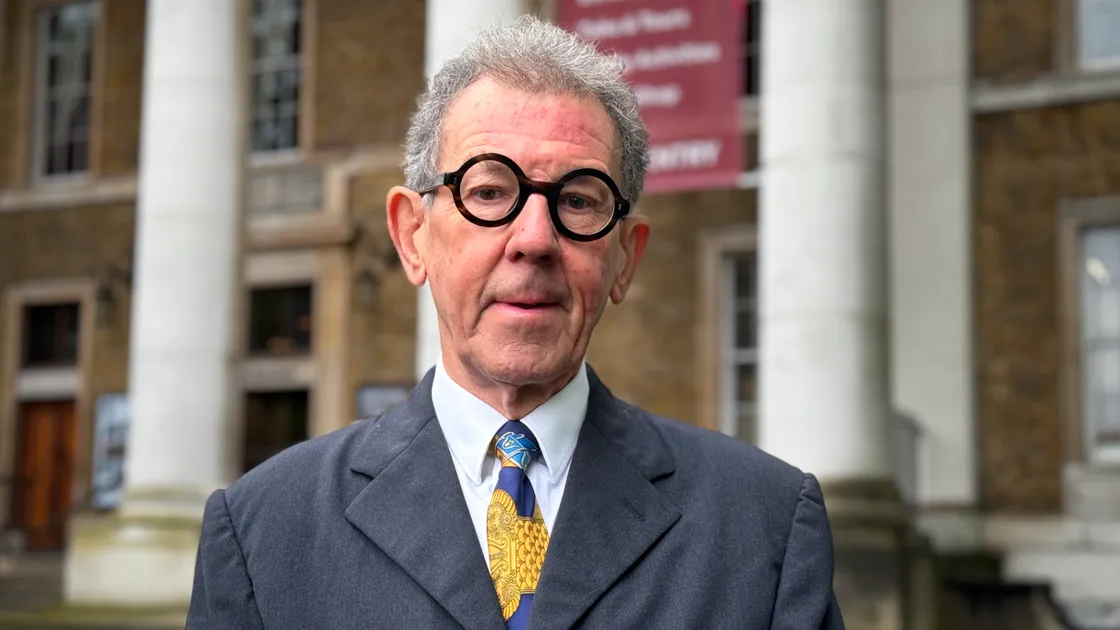
Alderney States member Stuart Clark has launched the extraordinary broadside after a disagreement with the presiding officer in a recent States meeting.
Unlike Guernsey, the Alderney States is presided over by a publicly elected president, not a Crown appointment. The current office holder, William Tate, has held the position since 2019.
The spark that set off Mr Clark’s attack on Mr Tate came in last week’s States meeting.
He had wanted to ask fellow States member Alex Snowden questions concerning his views on public confidence and good governance.
President Tate intervened, deeming them to be unrelated to States business and therefore ruling them out of order. That in turn caused Mr Clark to walk out of the Chamber before he was due to answer questions from Mr Snowden on behalf of the Economic Development Committee.
Mr Clark told the Guernsey Press the reason for his dramatic exit was because he ‘could not lend legitimacy to that part of the proceedings [question time] where he felt his reasonable questions on matters of public accountability had been ruled out.’
He added that anybody wanting to know the full story would have to wait for the next edition of the Alderney Journal, but now he has published a lengthy narrative concerning the incident online.
In it he pulls no punches: ‘I was told at the last moment that they were out of order. No proper chance to amend them. No serious attempt to find a version that could be asked. Just a late ruling which meant that Mr Snowden did not have to answer awkward questions in public. I do not believe that was fair.’
The Economic Development chairman also accused Mr Tate of a pattern of bias.
‘Over the last 18 months, I have found it harder and harder to believe that the rules are being applied evenly. Some members are given a long leash. Others are pulled up sharply. Some questions are allowed from one direction but not from the other,’ he said.
‘We are lectured like naughty school children... The comparison which comes to mind is John Bercow... Once the Chair stops being the neutral guardian of the rules and starts shaping the outcome, confidence in the fairness of proceedings begins to collapse.’
Mr Tate declined to comment on the basis that, as presiding officer, he has to stay detached from political debate.