

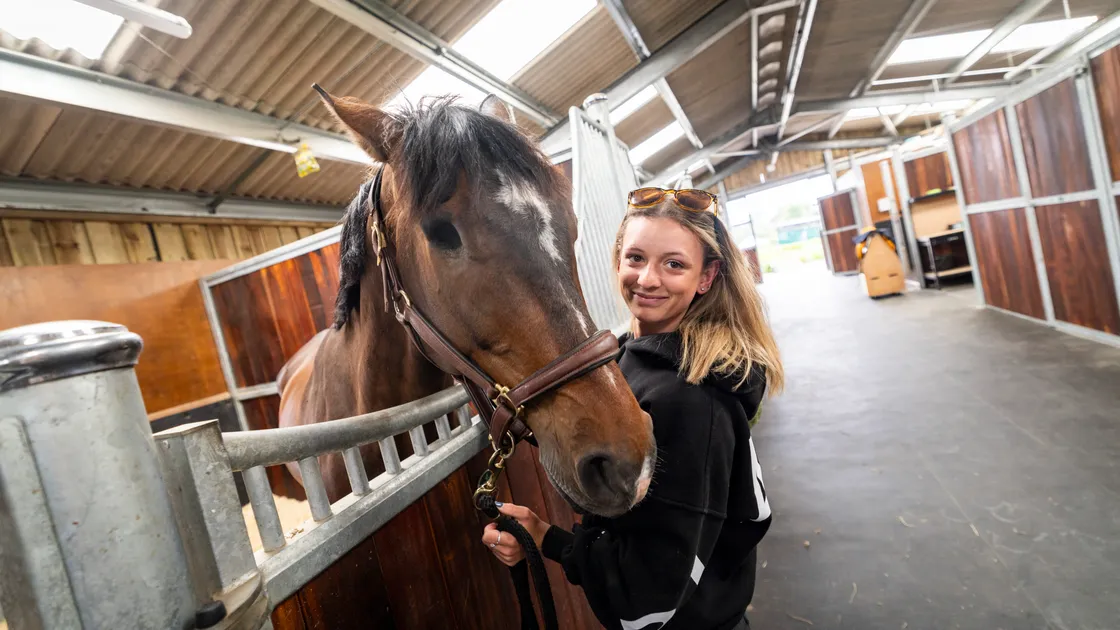
As often seems to be the case in Guernsey, almost every development has its detractors and the stables at Fort Road are no exception.
The controversy started when the previous owner of the two fields was given permission for a public indoor riding facility, but eventually found that the road to construction was paved with so many challenges that they decided to sell them off.
But even after the new owner dropped the idea of a public facility and got permission for a private stable, there were still plenty of naysayers.
Today, while there may still be those who would rather there be two empty fields, many people, including neighbours, have told the owner and staff how much they like the stables.
‘One neighbour told me the value of his property had increased,’ said Grace Stables’ yard manager Dave Leatham.
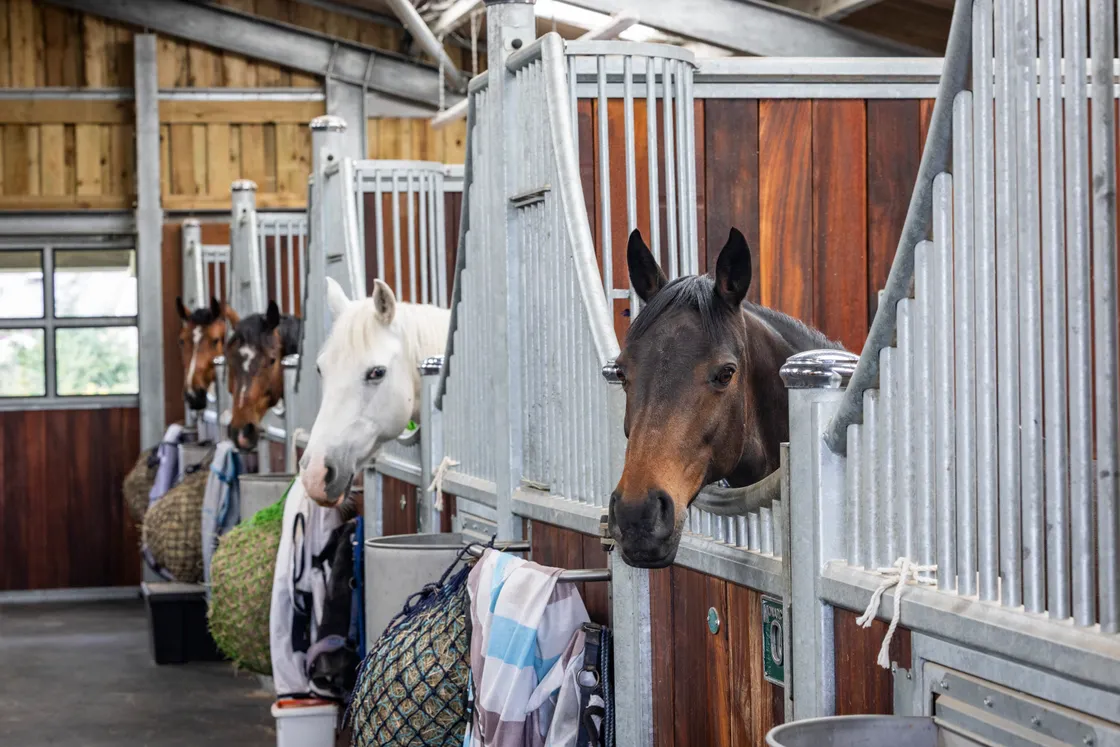
On the day the Guernsey Press visited there were 10 horses and ponies in residence with two more due to join them shortly, making up the 12 that can reside there.
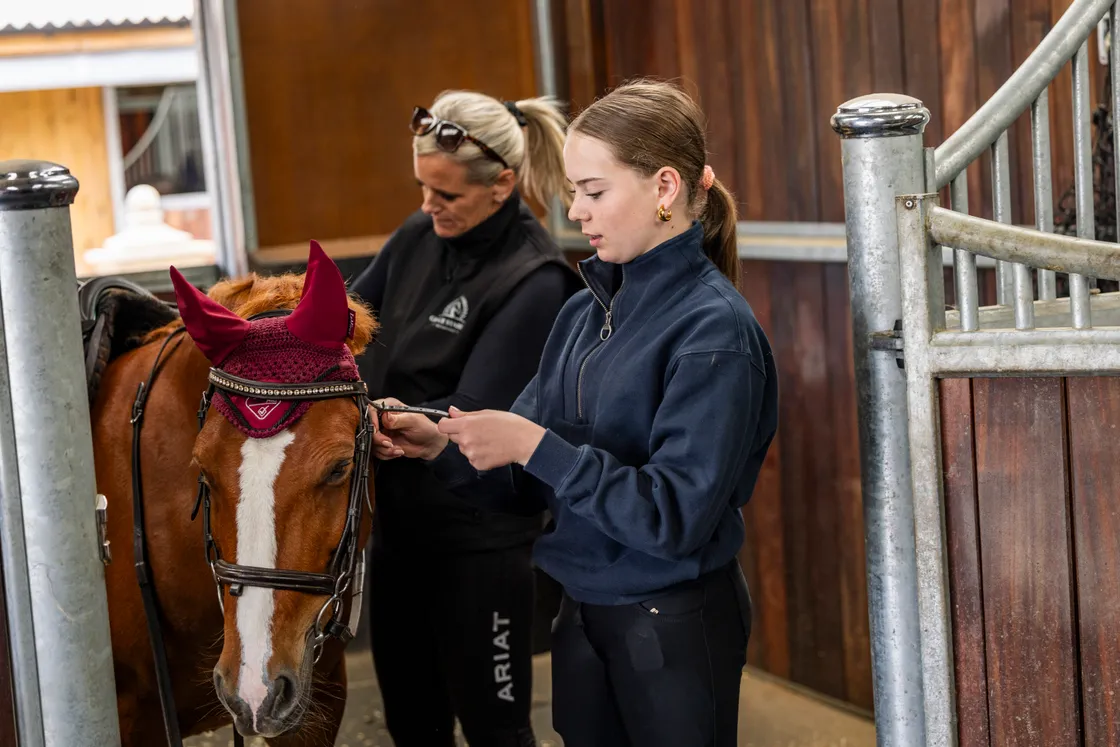
They are looked after most of the time by stablehand Ellie Saunders, who is mainly responsible for one set of six stalls, and Paulette King, who cares for the other six.
For Miss King, this is not a full-time job, since by day she works at Butterfield, but comes to the stables to see her charges before and after work.
Mr Leatham is responsible for the grounds and day-to-day running of the stables and has been for about two years.
The stables do not employ any full-time staff, but he said there were people on the site daily from about 6am to 8pm, looking after the horses or getting things ready for the day.
While most of the major work on the site is completed, it is still not totally finished, with the line of blackthorn and roses on the eastern border next to the sand school set to be continued past the paddocks.
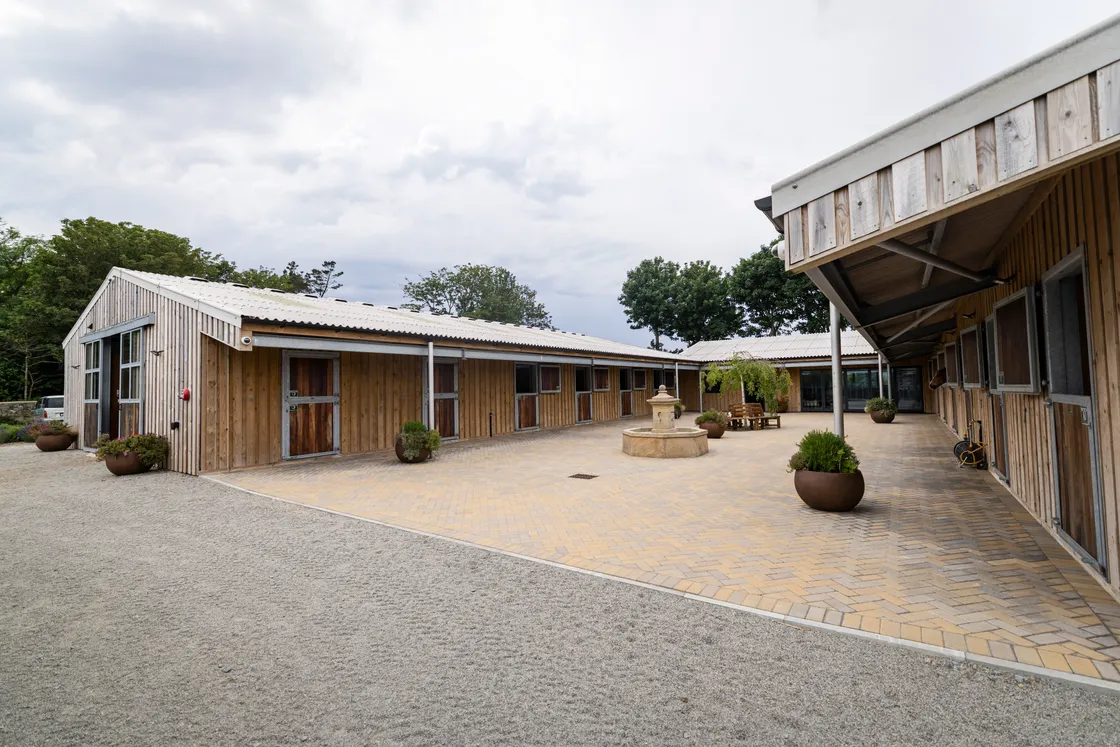
‘We took about 87 one-tonne bags of rubbish out of the southern border,’ said Mr Leatham.
When it was cleared, a piece of island history even turned up – the first in the series of granite milestones that run from town out to the other parishes.
The southern field has been turned into paddocks where the horses can go for a few hours each day, usually from about 6.30 until about 3pm, he said.
One of the stables’ regular visitors is Daisy Gilliland, 15, whose family owns four of the current residents. She said she has been riding since the age of three and had always been around horses.
Her animals were separated across different stables previously and she was pleased that now they were all in one place.
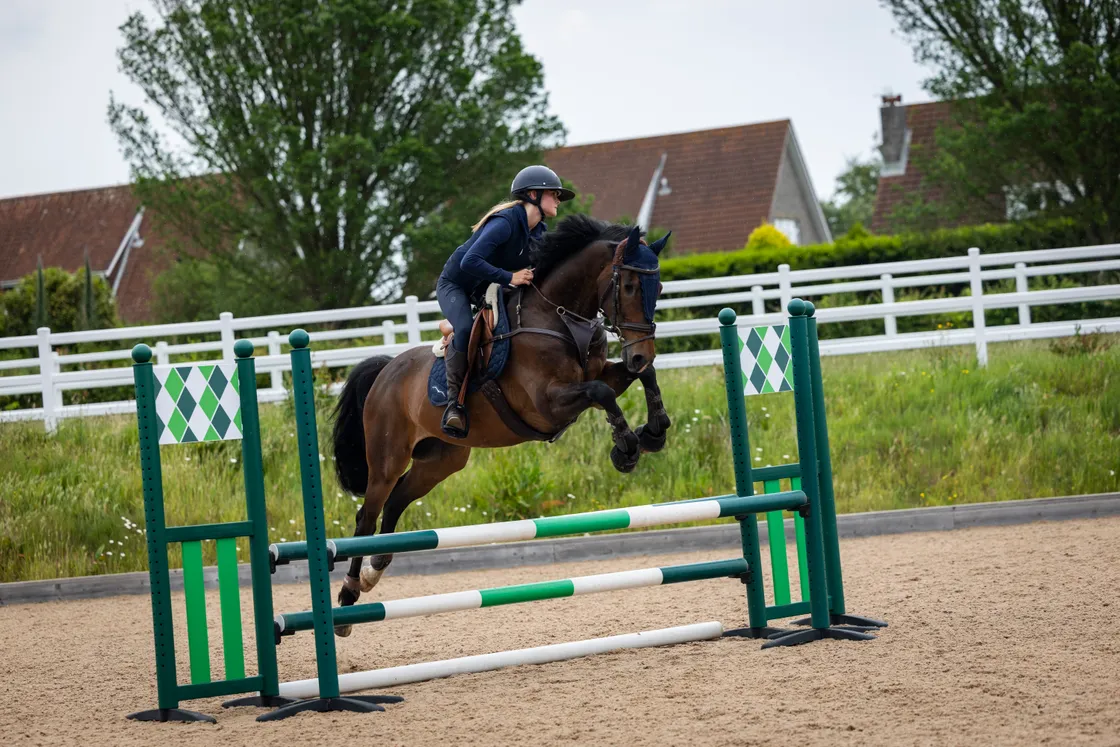
‘I’m hoping to ride them competitively in the summer,’ she said, ‘I’m just schooling them now.’
She has seen stables in the UK which she said were lovely.
‘But they don’t compare to this. Up here is always tidy and it’s always kept really clean.’
As well as caring for the animals, Miss King helps some of the younger owners with their riding, including 13-year-old Lily-May Fortin, whose pony Friend is a resident.
‘I’ve had him since last April,’ she said, ‘but I rode for a few months before I got him.’
Riders can use the sand school to train their animals in basic riding, dressage, and jumping.
Mr Leatham mentioned that there is hope for permission to extend the hours during which the area’s lights can be used from 8pm to 9pm, allowing riders to continue later in the winter months.
‘It’s lovely watching the horses jump about. We’re very happy to have it there’
Neighbours of the new stables have said the development was an improvement on the previous plans and what was there before. Sharon Le Galloudec moved to her home in Croutes Havilland about eight years ago, at a time when some neighbours were protesting about the plans for the public arena, but although writing a letter about the plans she said she was not as concerned as others.
Her back garden overlooks the stables which has meant that the view has changed, but she said she is happy with what’s there.
‘I think they’re absolutely beautiful. They’ve been fabulous neighbours.’
Having horses rather than cows in the field next to his home has pleased Rob Steen, who has lived in Les Damouettes for about 15 years. When he bought the property he was told that the field was ‘Queen’s land’ and would never be built on, but he later found out that this was not correct and the land was simply called ‘The Queen’s Field’ because of the hundreds of islanders who gathered there to watch Queen Victoria pass by during her visit to the island.
But he prefers the stables and horses to the cows that were there before.
‘They were pooping all the time and then the flies would come. And we thought the plans for the public arena wouldn’t be much fun because of all the events.
‘I love it now. It’s enhanced the whole area and there are ladies there every day picking up the horse poo so there are fewer flies. It’s lovely watching the horses jump about. We’re very happy to have it there.’