

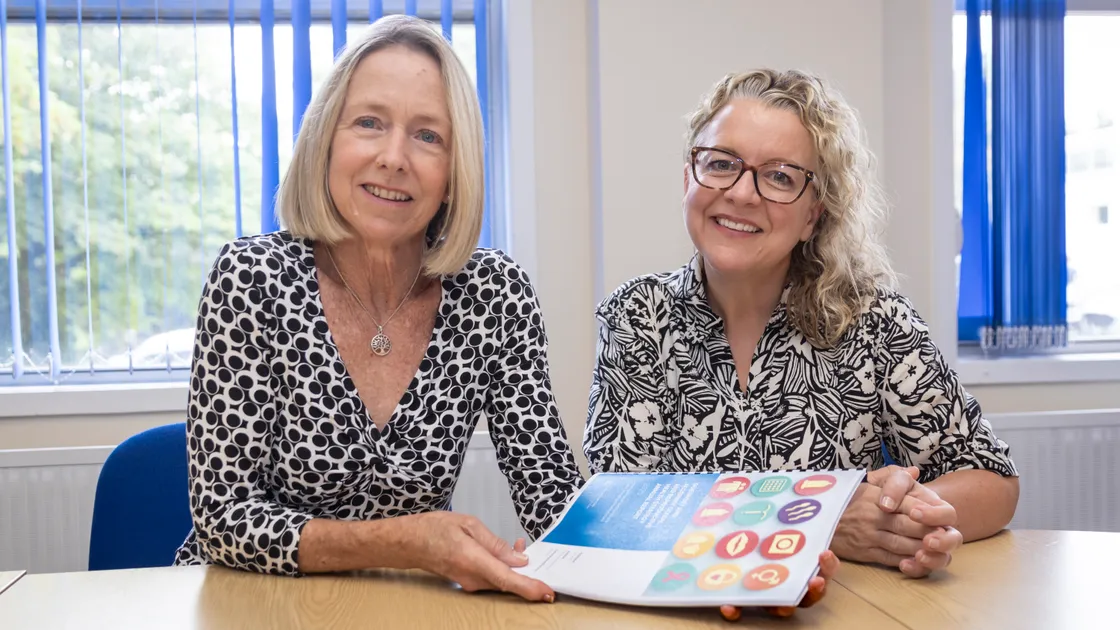
The island’s first sexual health strategy, which ran from 2017 to 2023, has been updated to include reproductive health and a focus on online and digital harm to children and young people.
The first annual report for the new strategy highlights the progress made so far and identifies areas where further work is needed.
The holistic, multi-agency approach aims to bring data across all ages under one umbrella.
It is being led by Public Health associate specialist Dr Jenny Rivers-Moore, who worked to align the dataset with the UK Public Health Outcomes Framework – with specific focus on sexually transmitted infections, HIV, conceptions and abortions – so that local data can be compared to national trends.
‘The UK doesn’t yet have a sexual health strategy,’ she said.
‘They’ve just recently produced a women’s strategy, so we feel that we’re ahead of the game here.
‘The previous sexual health strategy in Guernsey was out of date. The way people access sexual health consultations is very different now, with a lot more remote and online access. Information is assessed differently and we’ve had a lot more concern about digital and online harms to children, so a multi-agency focus on safeguarding those areas to be put in place. We’ve structured things a lot better.
‘We’ve now got clear pillars of sexual health prevention, promotion and education. Providing really good comprehensive sexual health services, which are free, open-access.’
For the first time, data relating to STIs, HIV, contraception, HPV vaccination, cervical screening, abortions, young conceptions and sexual offences has been established.
The findings in the new report include the fact that the number of people living with HIV in Guernsey, and receiving care from the Orchard Centre, increased from 63 in 2024 to 72 in 2025.
Clinical pathways for abortions have been developed to support women at early gestations to complete a termination at home. Figures show a large increase in at-home terminations – from 8% in 2022 to 43% in 2024. Over that time, 97% of terminations had no complications.
The report also highlights a number of positive developments, including improvements to services at the Orchard Centre, and excellent service user feedback for both the Orchard Centre and Choices.
There has been a reduction in cases of syphilis and gonorrhoea, which aligns with UK reports.
In terms of sexual offences, more than 30 venues signed up for the ‘Safe Place’ project last year, as a concerning 258 sexual offences were reported through the police – up 9% from 2024.
However, Dr Rivers-Moore said that might reflect heightened awareness, better reporting and better coordination of services. Twenty cases of child sexual exploitation, 96 cases of sexual abuse, and 72 cases of sexually harmful behaviour were referred to the multi-agency support hub Mash.
Chlamydia screening and detection rates remain lower than expected. Further investigation is ongoing to ensure everyone – especially young women between the ages of 15 and 24 – are getting tested.
Access to affordable contraception for some adults is being explored as a priority.
‘We want to make sexual health something that people talk about,’said Dr Rivers-Moore.
‘It’s so integral to health and wellbeing. Every adult, just about, has sex.
‘So getting regular check-ups should be something that’s so much more accessible and talked about – just like going for a dental check.’
An ongoing challenge has been finding a new sexual health outreach nurse.
Despite advertising for the role several times, there is a limited availability of specialist expertise on the island in sexual health, contraception and outreach.
Dr Rivers-Moore said the first report provided ‘an important baseline against which we can measure future progress and continue to ensure that services meet the needs of our community’.
More coverage of the report’s findings to follow.



You need to be logged in to comment.