
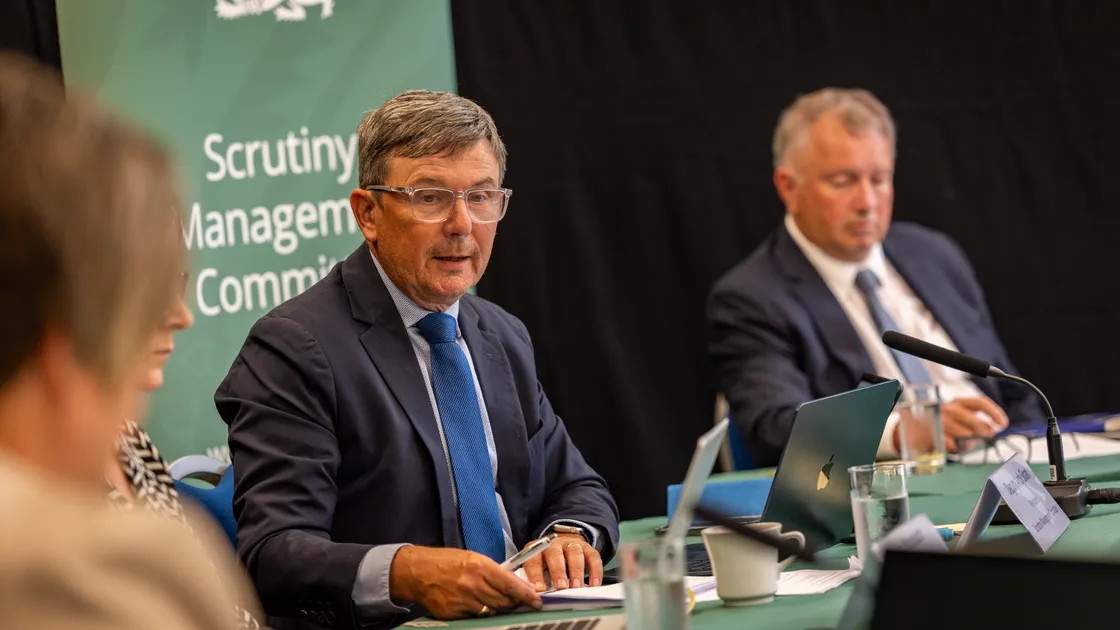
Deputy Andy Sloan tabled the amendment for last week’s States meeting, but was absent on compassionate grounds when the debate was held on Friday, and Deputy Mark Helyar led the amendment in his absence.
To some surprise, it was supported by 15 votes to 12, despite opposition from two of the largest-spending committees.
In an article written in the aftermath of the debate, Deputy Sloan said that the States needed to be asking several different questions of itself in the light of the amendment.
‘For too long, when government faces financial pressure, the default has too often been to ask taxpayers for more money. I believe the first instinct should be to ask a different question,’ he said.
‘Ultimately, this debate is not really about GST. Nor is it really about my amendment. It is about trust. If government is asking islanders to accept the biggest change to our tax system in decades, it should also demonstrate that it is prepared to change the way it approaches public spending.’
Deputy Sloan said that his amendment, which would limit the growth in overall expenditure, with no specific cuts aimed at any particular areas, was not intended to solve all of the island’s long-term fiscal challenges, but for the States to demonstrate a change in behaviour.
Watch: Matt Fallaize spoke to Deputy Haley Camp, who seconded the amendment, at the end of last week’s meeting
‘A permanent shift in taxation should be matched by a permanent change in the culture of public spending. Tax reform must be a two-way bargain,’ he said.
The amendment met its most stern opposition from the presidents of Health & Social Care and Employment & Social Security over the threat it posed to the States pension and spending on healthcare services.
Deputy Sloan said he was not proposing cuts in the old age pension, although he had purposely not excluded social security spending from his ‘freeze’ proposal, but questioned why demographic pressures should allow public spending to grow ahead of inflation, or whether those pressures should be better managed.
He said he would also challenge the approach that social security was effectively sitting outside of normal fiscal discipline, saying it was more like a tax nowadays.
‘Demographics may be real. But it is not a blank cheque. The answer cannot always be total spending just goes up,’ he said.

You need to be logged in to comment.