

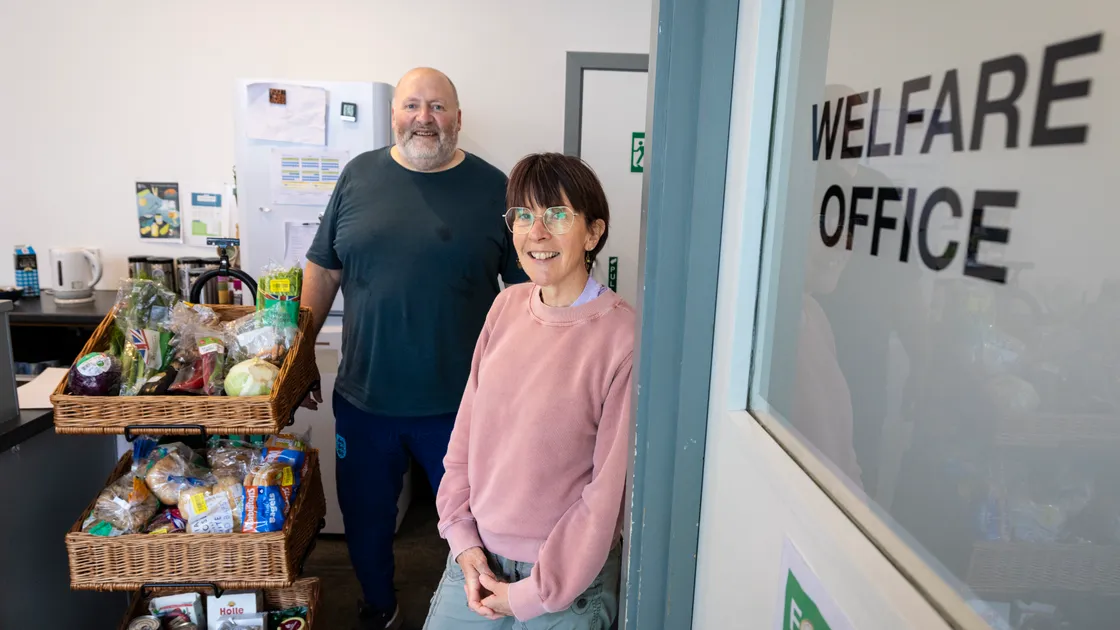
A year at the helm of the Guernsey Welfare Service has shown Simon Fairclough two very different sides of island life – growing hardship, but also a community determined to look after its own.
Since becoming manager, he has seen people walk through the doors who never imagined they would need to ask for help, heard stories that have left him emotionally exhausted, and watched former clients return as donors.
But one year on, the figures provide a poignant indication of just how many islanders are struggling.
‘It’s been a huge eye-opener,’ said Mr Fairclough.
By the end of August, the charity had helped 678 households, compared with 600 at the same point last year. Each week around three people who have never previously used the service are now approaching it for help.
On average, between 75 and 80 households are being supported every week.
‘I would say probably the need now is greater than it’s ever been,’ said Mr Fairclough.
‘We were working from over the road, and got these premises about three years ago. Already, we look at it and think: “Are we outgrowing even this place now?”’
Cost-of-living pressures and the cost of housing remain the principal reasons people seek support.
Mr Fairclough said one of the biggest lessons of his first year had been discovering just how broad a cross-section of the community can find themselves needing help.
‘We see the spectrum of society,’ he said.
‘People who are working in finance, who’ve had a relationship break-up, who can no longer afford to pay the rent, and they’re coming in to ask for a bag of food. We’ve got clients who are working three or four jobs, and they can’t even find the time to come in here to get some food because they’re working so hard.’
The service was aware of the courage it takes to admit the need for help.
‘It takes a lot to even drive down or walk here, let alone actually stepping through the door. We understand that,’ said Mr Fairclough.
‘There’s a lot of stigma attached to it, and I think that’s even greater in a small community, because people are worried about someone they know seeing them going in.’
Maintaining the welcoming atmosphere he encountered when he first visited the service has therefore been one of his priorities.
The service operates largely on trust.
Rather than judging those who come through its doors, or demanding extensive evidence of their circumstances, the charity listens to their stories and tries to respond to individual need.
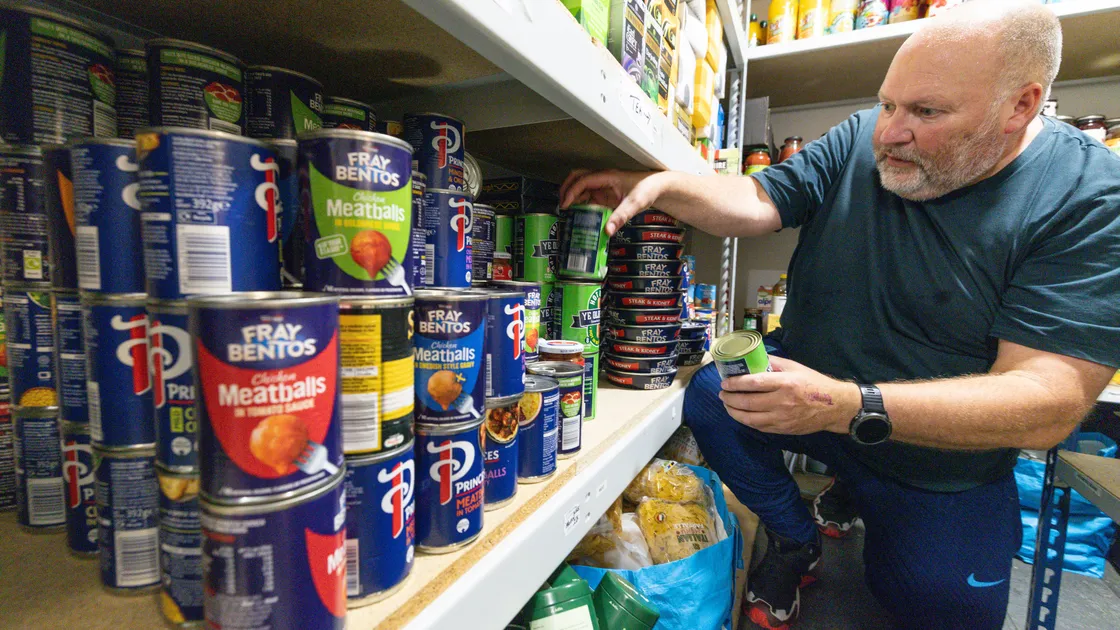
‘I always say to people, “look, all of us in our lives go through times of need and crisis. It’s life’s ups and downs”,’ said Mr Fairclough.
He had witnessed that movement in both directions during his first year. People who once donated to the charity have found themselves needing its help, and vice versa.
‘A former client recently knocked on the door, came into my office, and gave me £200. He said: “You helped me through the tough times. I’m going to start giving back now”.’
The Welfare Service has become far more than a traditional food bank.
Alongside groceries, it provides furniture where possible, and opportunities for people to socialise, including its Linking Lives scheme for elderly islanders experiencing loneliness.
It is also currently seeing a number of homeless people, providing showers, laundry facilities and packed lunches, while trying to supply food suitable for those with little or no cooking or refrigeration facilities.
Meeting so many different needs can take its toll.
‘Some days I come out of that office and I’m emotionally exhausted,’ said Mr Fairclough.
‘I’m not going to lie. Because you’re hearing tales of woe. You hear some really, really sad stories in here. Sometimes you can see more than 20 clients a day, with a queue of seven or eight out front waiting to speak to you. You get people getting very emotional for lots of very good reasons. You’re almost taking away the world on your shoulders. And that’s not just me, that’s our welfare officers. It’s the staff that regularly work here, and the army of volunteers.’
The service has six part-time members of staff, amounting to around two-and-a-half full-time equivalent posts. They are supported by about 80 volunteers, and the wider island community.
‘The thing that has really overwhelmed me is just the generosity of the community,’ said Mr Fairclough.
A recent online appeal for meat products was promptly answered, with donations transforming near-empty shelves to fully stocked within a matter of days.
Businesses, organisations and individuals also provide regular support, from fresh produce and food donations to fundraising events.
‘There are too many people to thank individually,’ he said.
‘We do live in an amazing community. You’ve got this kind of dichotomy of the amazing generosity, but also this real desperate need.
‘We see ourselves as the conduit that comes between the two, to try and marry up, as fairly as we can, the need with that generosity.’
There are reminders of that generosity throughout the service, he said.
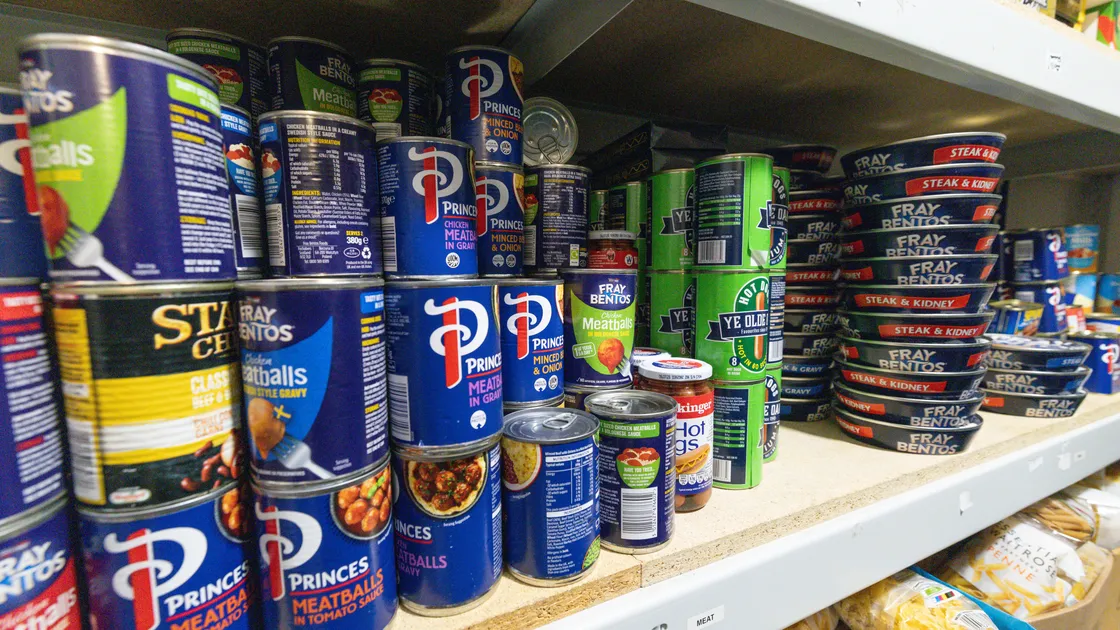
And those receiving it remain conscious of others who may be worse off. Mr Fairclough regularly hears clients turn down items they do not need.
‘You’re constantly hearing, “No, I won’t take those because we’ve got some, and there’ll be people that need them more than I do.”’
Mr Fairclough came into the role at the Welfare Service last August.
He said he deliberately spent much of his first year understanding the organisation rather than immediately trying to change it.
Now, with demand increasing, and some experience under his belt, he and the charity’s directors are beginning to consider what comes next.
Space is already becoming an issue.
The service would like to do more with donated furniture if it had the premises, transport and resources to make that possible.
For Mr Fairclough, who became manager after losing his seat as a States deputy at the 2025 election, the role has also provided a new perspective on many of the pressures facing islanders.
‘It’s the sort of role that almost nothing can prepare you for,’ he said.
‘Being a deputy was quite a good introduction to it.
‘I just wish that I’d done it the other way round – done this before becoming a deputy – because you can just see a lot of the problems that are causing people to come here.’
Mr Fairclough is committed to remaining a part of the team supporting the service.
‘I’m inviting deputies down – we’ve had whole committees come in to chat about its future,’ he said.
‘That’s the nice thing about Guernsey, you can just pick up a phone and invite a political committee down. Everyone’s welcome here.
‘This charity isn’t about me. It’s the staff. It’s a team of people, it’s the whole community.
‘We can only do what we do because of the volunteers and because of the community support we get.’