
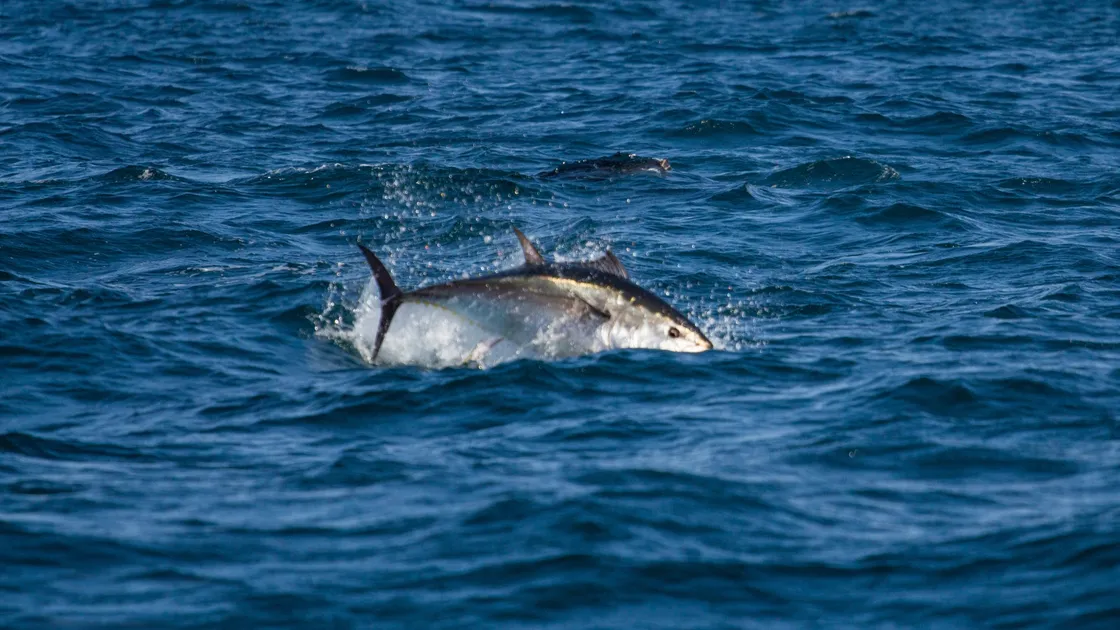
The population of the fish in waters around the islands and the UK fell dramatically due to overfishing by the middle of the 1960s but recent reports suggest that it is now thriving again and permits are being issued across the country to fishermen.
While Jersey has licences for both commercial and recreational fishermen, Guernsey is still waiting to become a member of ICCAT (the International Commission for the Conservation of Atlantic Tunas), said senior fisheries officer David Wilkinson.
A total of six licences have been granted to Jersey fishermen to catch and kill the fish as part of commercial and scientific trials taking place in Wales, Scotland and Jersey.
This will use 26 tonnes of the UK’s allocation of bluefin tuna for 2026 in an effort to find out more about the fish’s distribution, behaviour and ecology in the UK.
There are also up to 25 ‘catch and release’ permits, priced £500 each, for recreational fishermen.
Mr Wilkinson said officers in Guernsey were continuing to work with the UK Department for Environment, Food and Rural Affairs to enable the UK’s ICCAT membership to be extended to the island.
‘There have been a number of legislative gaps identified, for example around illegal unreported and unregulated fishing, specific protections for associated ICCAT species such as bluewater shark species and some technical gaps around trade and transhipment rules,’ said Mr Wilkinson.
‘A separate MOU with additional technical and working arrangements is also being agreed between the Bailiwick and Defra.’
Any changes to the legislation will need to be approved by the States and enacted in each of the islands of the Bailiwick before ICCAT can be extended here and any fishing for bluefin tuna is allowed in Bailiwick waters.