

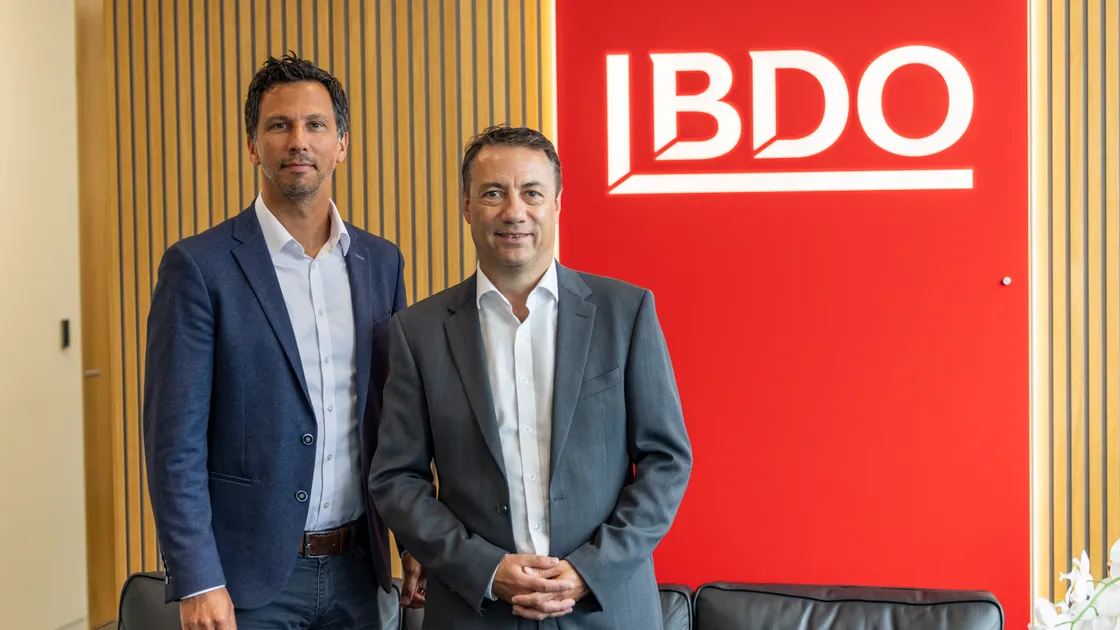
Let’s start with the story behind the move. What was the original vision behind bringing BDO and C5 Alliance together, and how has that evolved over time?
Richard Searle: The story really starts back in 2018. Matthew Corbin, Group CEO, recognised an opportunity to bring together the traditional assurance and advisory strengths of BDO with the technology capabilities that existed within what is now C5 Alliance. At the time, it was about creating something that was slightly different in the marketplace.
When you look at what’s happened since then, with technology becoming increasingly important in every aspect of business, it’s clear there was quite a lot of foresight in that vision. The combination of professional services and technology expertise has become even more relevant than anyone could have predicted at the time.
Chris Ash: I joined shortly after that acquisition, so I’ve been able to see that journey from fairly early on. BDO already had strong assurance capabilities and was developing its advisory practice. We brought the technology component that complemented those service lines.
What attracted me then, and still excites me today, was the fact that these services were being driven and led locally. We weren’t simply importing expertise from elsewhere. We were building a business that could provide assurance, advisory and technology services from within the Channel Islands, and that was a powerful proposition.
Why was now the right time to bring everyone together under one roof?
Richard: Earlier this year, BDO Jersey, BDO Guernsey and C5 Alliance formally came together as one group. We’ve always worked very closely across the islands, so formalising that relationship was a natural progression.
The office move is really an extension of that. BDO moved into Plaza House in 2024, and C5 Alliance was literally just across the courtyard. Bringing everyone into one building felt like the obvious next step.
When we looked at this space in 2022, we spent a lot of time discussing how much room we would need. Post-Covid, many organisations were reducing their office footprints and working on assumptions that occupancy levels would be significantly lower in the future.
We took a different view. We felt strongly that professional services remains a people business. We recruit and train a lot of young professionals, and the learning that happens when you’re sitting alongside colleagues simply can’t be replicated entirely online.
As a result, we made the decision to take the whole floor rather than a smaller space. It was a significant long-term investment and a statement of confidence in both our business and the island. Looking back now, we’re very pleased we made that decision.
Today, we have over 110 people in the Guernsey office alone, and we still have room to grow.
Chris: The move happened quite quickly from our side. We’d been in our previous office for around three years and had really enjoyed being there. Then the opportunity arose to bring the teams together and we moved across very recently.
What’s interesting is that physically we’ve only been located together for a short period, but in reality we’ve been working towards this for years. Richard and I have been discussing it for a long time, and the wider leadership teams have been working closely together even longer. The office move is simply the visible outcome of that process.
Was there a defining moment when you realised working under one roof would create real value?
Richard: I don’t think there was a single eureka moment. We had already seen the model working successfully in Jersey, where BDO and C5 Alliance have operated together under one roof for many years.
What has struck me, even in the first few days, is how naturally people have connected. There was a real buzz around the office immediately. People were having conversations with colleagues they had never met before, yet it felt as though they’d been working together for years.
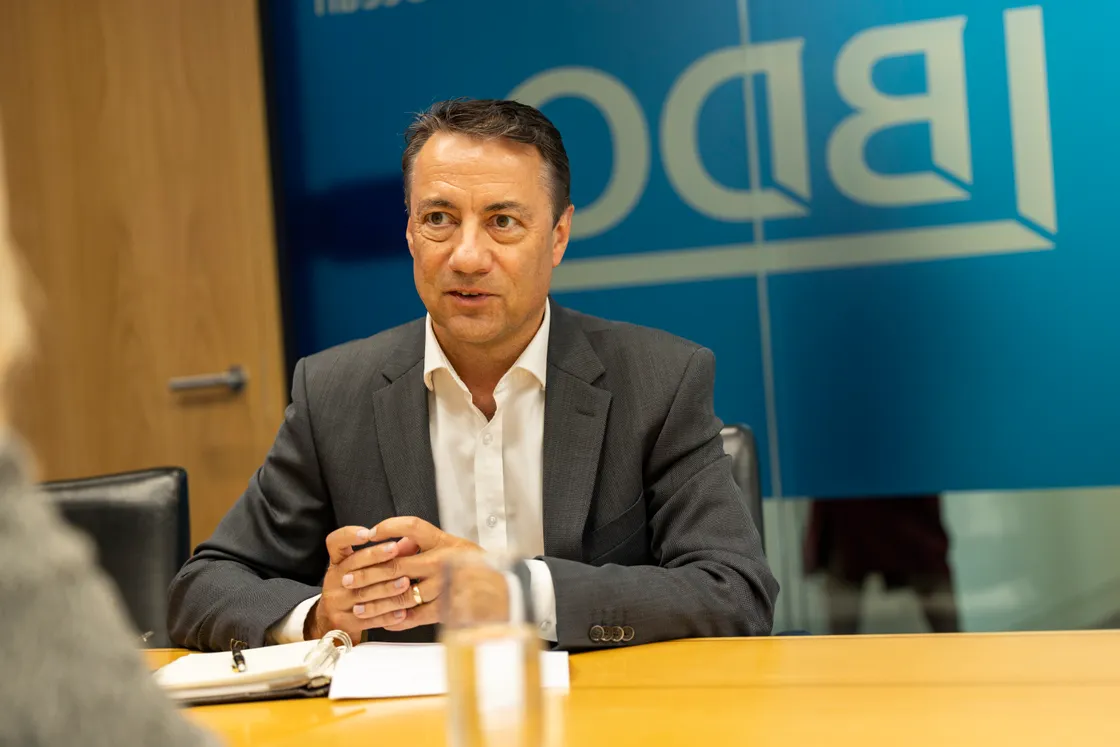
A lot of opportunities come from informal conversations. Previously, you might have thought of something, made a note to call somebody later and then become distracted. Now those discussions happen naturally throughout the day.
It sounds like a small thing, but those interactions can create tremendous value for both our people and our clients.
Both businesses place a strong emphasis on people and relationships. How do you maintain culture while building something larger?
Chris: From my perspective, we’ve never really been dealing with two separate cultures. Since joining the BDO Group in 2018, we’ve already been operating in a very similar way.
The values have always been aligned. We serve many of the same clients, work in similar sectors and share the same focus on people and relationships. That has made integration much easier than it might otherwise have been.
What’s important is that this isn’t just about office space. It’s about how people work together.
A lot of thought went into where teams would sit. We didn’t want the technology team isolated in one corner of the office. Instead, we’ve integrated people across different departments. Technology specialists sit alongside colleagues from tax, compliance and advisory teams, while C5 advisory specialists are embedded with their BDO counterparts.
The goal is simple: encourage conversations, encourage learning and create opportunities for collaboration.
Richard: We’ve also been very conscious of the importance of integrating quickly. Sometimes businesses merge, adopt a single brand and then continue operating as separate entities for years.
We wanted to avoid that.
Whether it’s technology platforms, HR systems, policies or communications, we’ve been focused on alignment from the outset because that’s how you create the most value for clients and employees.
What has the reaction from colleagues been like?
Chris: Very positive.
One of the things that helped was the amount of work that happened before the move. For example, we brought together around 40 directors from across the group for a strategic away day in Jersey. That was one of the first major opportunities for people from across the organisation to sit down together and discuss the future, identify opportunities and align around a common vision.
The physical move has simply accelerated that process.
There’s a lot of energy in the business right now. People are discovering expertise they didn’t know existed, meeting new colleagues and identifying opportunities to work together in ways they couldn’t before.
What are your clients asking for today that they weren’t asking for five years ago?
Chris: Five years ago takes us almost directly back to Covid, and one of the biggest changes I’ve noticed since then is that clients have become much less focused on geography.
Historically, clients often wanted someone physically based in their jurisdiction. Today, they’re far more interested in having the best person for the job, whether that expertise sits in Guernsey, Jersey or elsewhere in the group.
From a technology perspective, the conversations have changed dramatically.
Years ago, we spent a lot of time discussing hosted services, business continuity and infrastructure. Those services were important, but today’s discussions are very different. We’re talking about cloud migration, data strategy, digital transformation and artificial intelligence.
Clients want to know how technology can help them become more efficient, more resilient and more competitive. They also want to understand how to maximise the value of the platforms they’ve already invested in.
The Microsoft ecosystem is a good example. Many organisations have access to incredibly powerful tools, but often they aren’t using them to their full potential. That’s why training and adoption have become such important parts of what we do.
Richard: From an assurance perspective, we’re seeing increasing complexity.
Clients are larger, more international and often operating across multiple jurisdictions. That creates additional regulatory requirements and greater operational complexity.
At the same time, clients still expect strong local relationships. They want access to global expertise when required, but they also want someone local who deeply understands their business and is accountable for the relationship.
Can you provide a practical example of professional services and technology teams working together?
Chris: Absolutely.
A good example would be an organisation implementing a major new platform or operating model.
Our technology team might be responsible for system design, integrations, data migration and technical delivery. Alongside that, our advisory specialists may be leading project management, business analysis and change management activities.
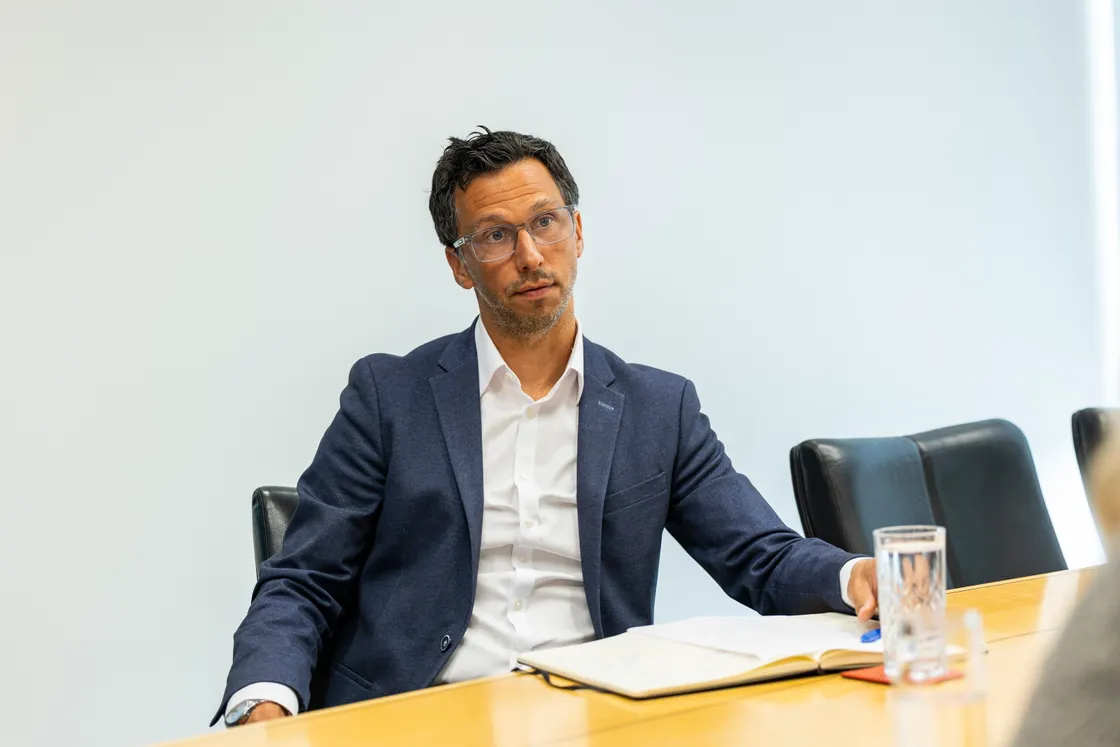
Technology implementation alone doesn’t guarantee success. People need to understand the changes taking place, governance needs to be established, and businesses need support throughout the transition.
That’s where multidisciplinary teams become so valuable. We can bring together the right specialists around a client’s challenge rather than forcing them to manage multiple suppliers independently.
What makes your combined offering particularly powerful?
Chris: This is the part that really excites me because it’s about end-to-end capability.
As a group, we can support a client from the earliest strategic discussions all the way through to implementation and ongoing support.
A board might approach us with a particular challenge. We can help assess the options, shape the strategy, design a solution, deliver the technology, manage the project, oversee change management, support training and then remain involved afterwards.
There are very few organisations in the islands that can offer that complete journey.
The important thing is that clients can choose whichever elements they need. Some want a single trusted adviser from beginning to end, while others only require support with one specific component. We can do either.
Richard: I’d add another dimension to that.
The ability to deliver a service line is effectively the entry ticket. What really differentiates organisations is the depth of knowledge behind the service.
Our people are far more than generalist audit, tax or technology practitioners. They are highly experienced experts in the sectors in which they operate. They understand funds, trust, insurance, corporate services, governance structures, risk frameworks and operational challenges.
That specialist knowledge, combined with our multidisciplinary model, creates a very compelling proposition for clients.
There seems to be a strong respect for the firm’s history. How important is that heritage?
Richard: Very important.
Many people will remember Reads & Co and the evolution into BDO Reads before becoming BDO. Our roots in Guernsey stretch back more than a century.
In fact, we have the original office sign from the firm’s predecessor, dating back to 1900, displayed in reception. Every time I pass it, it reminds me of the legacy we’re carrying forward.
When I think about the entrepreneurs and business leaders who built the firm over generations, I can see that same entrepreneurial spirit in what we’re doing today.
Bringing together the technology and assurance practices isn’t about abandoning the past. It’s about building on strong foundations and ensuring the business continues evolving for another generation.
What opportunities does this create for your people?
Richard: We’ve always been a training organisation and I think the opportunities available today are broader than ever.
The traditional career pathways still exist, but there are now many more branches. Someone may start in assurance, gain exposure to advisory work, collaborate with technology specialists and work with colleagues across the wider global BDO network.
Learning has always been central to the business, and bringing more expertise together simply increases those opportunities.
Chris: The same is true on the technology side.
We recruit people directly from college into entry-level positions and help them build careers in technology. They can progress through different specialisms, work with a wide variety of clients and develop highly sought-after skills.
In a market where recruitment is challenging, investing in local talent is incredibly important. We want people to see long-term careers here rather than simply jobs.
Looking ahead three to five years, what role do you see the combined business playing in the Channel Islands economy?
Richard: We have a significant growth agenda and a very ambitious vision for the future.
We’re already a major employer across the Channel Islands and as a combined multi-disciplinary business we see further opportunities for growth. Equally importantly, we’re committed to developing talent and continuing our role as a training organisation.
You only have to look around the islands to see former BDO employees in leadership positions across many businesses and organisations. That’s something we’re very proud of and want to continue.
Chris: From a technology perspective, our responsibility is to stay ahead of what’s coming.
As a Microsoft partner, we’re often seeing developments long before they become mainstream locally. It’s our role to understand those developments, assess their implications and help clients adopt them effectively.
AI is perhaps the most obvious example. Businesses know it matters, but many are still trying to understand what it means in practice.
Helping organisations put governance structures in place, use AI responsibly and realise genuine business value from it will be an important part of our role. More broadly, helping the Channel Islands remain competitive in an increasingly technology-driven world is something we’re passionate about.
Finally, what would you most like the market to understand about the business today?
Richard: Probably our scale.
For many years we’ve been described as quiet achievers. People are often surprised by the size of our team, the breadth of expertise we have and the range of services we provide. The coming together of BDO and C5 Alliance across the Channel Islands makes that proposition even stronger.
Chris: Ultimately, what defines us is joined-up thinking.
Businesses today face increasingly complex challenges. Those challenges rarely sit neatly within one discipline. Clients need advisers who can look at the entire picture, bring together different areas of expertise and help them move forward with confidence.
That’s exactly what we’ve been building towards, and it’s what makes this next chapter so exciting.


You need to be logged in to comment.