

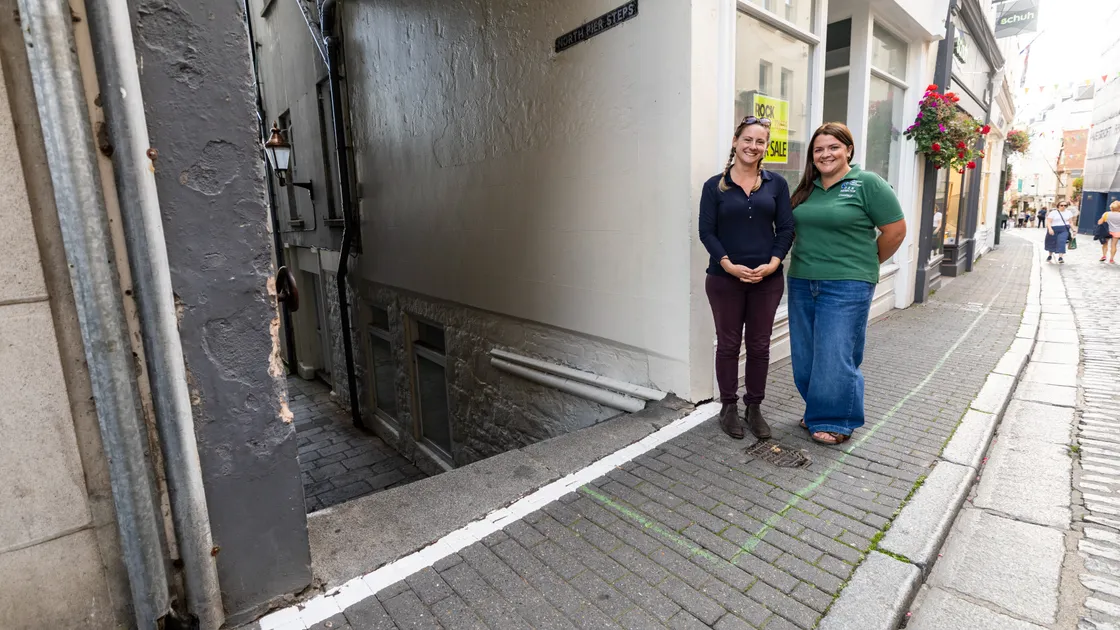
The line, which follows the diagonal edge where the old stone of the top step meets the pavement, rather than at its straight edge, has attracted criticism online over its positioning.
However, the association has welcomed the addition, explaining that its purpose is to provide a visual warning for people approaching the steps, rather than to highlight the steps themselves.
Chantelle Tucker, orientation and mobility instructor at the Guernsey Blind Association, said the charity had requested the improvement and worked closely with Traffic and Highway Services to find a suitable solution.
‘The main purpose of the new line is to create a strong visual contrast between the normal walking area and the entrance to the steps,’ she said.
‘This is particularly beneficial for people who are partially sighted or who retain some useful vision.’
She explained that people with remaining vision often relied on contrast, colour, light and edges to identify changes in level and navigate their surroundings.
The line would not provide the same benefit to someone who was totally blind, for whom tactile paving would be particularly useful.
However, the historic nature of the steps had presented challenges when considering accessibility improvements.
‘Guernsey has its own particular quirks when it comes to balancing accessibility with the historic environment, so we’ve worked constructively with Traffic & Highway Services to make the best of what could be achieved within the permitted parameters,’ said Miss Tucker.
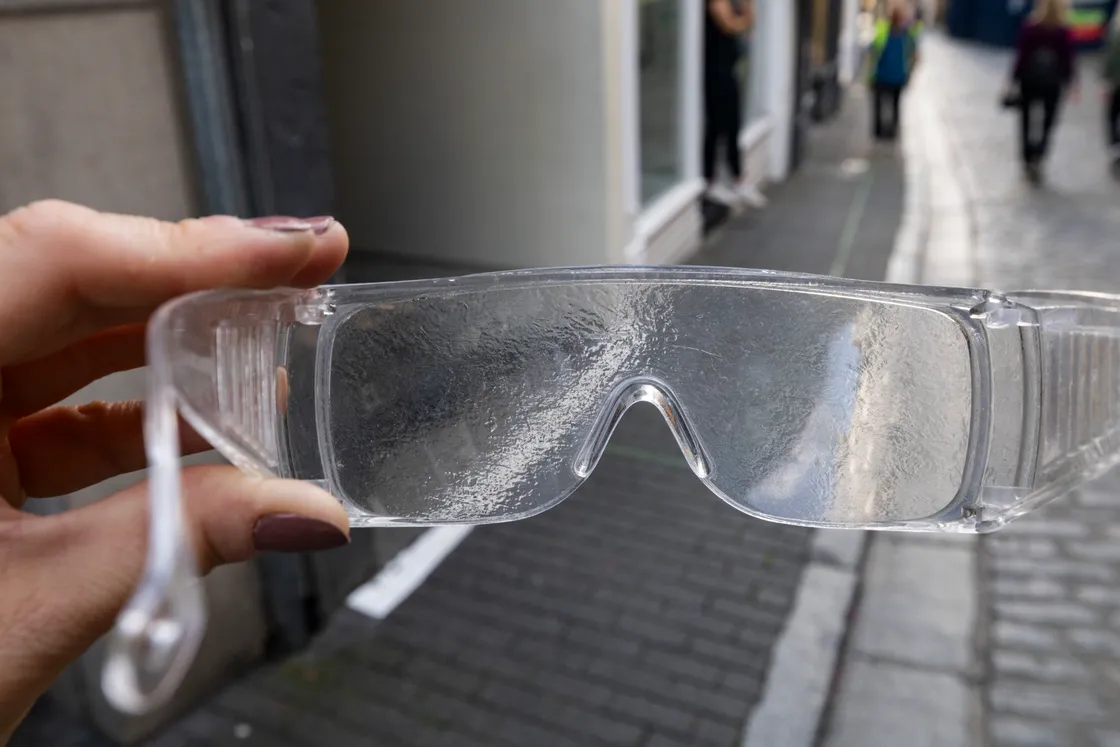
Holly Lindsay, transport strategy implementation officer at Traffic & Highway Services, confirmed that the charity had raised concerns about the location before the line was painted.
She said the marking was intended to highlight the edge of the pavement for people walking along it, rather than the edge of the historic steps.
‘With the stairs themselves, because they’re a historic feature, it’s difficult to retrofit anything,’ she said.
‘The amount of changes that we’d need to make them fully accessible is huge. This was a simple, easy fix.’
The work formed part of the States’ Integrated Transport Strategy, which aims to improve accessibility, convenience and safety across the island.
Miss Lindsay said the service would continue working with the charity to identify further improvements.
Despite criticism online, Miss Tucker said the response from the association’s service users and supporters had been positive.
‘After many years of campaigning, we’re pleased that there is now recognition of the need for a visual accessibility feature at this location,’ she said.
‘We don’t see this as the finished solution, but as a positive first step.’
She hoped the criticism online would not discourage other organisations from making small accessibility improvements.
‘If no one does anything, nothing’s ever going to change,’ she said.



You need to be logged in to comment.