

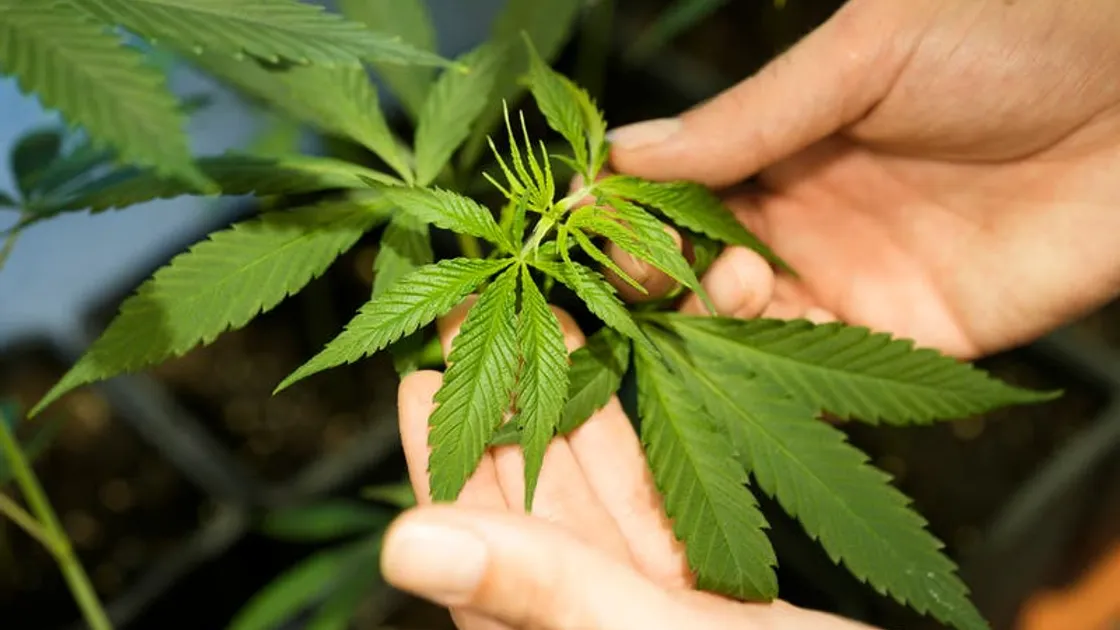
Three separate requests were submitted, two on prescriptions and one on hospital admissions.
Across all on-island medicinal cannabis clinics, 19,778 prescriptions were issued and dispensed in 2025.
This compares to 17,886 in 2024 and 16,085 in 2023.
The Emergency Department attendances are recorded by presenting condition or diagnoses.
Where attendance is recorded as ‘drug related’, it does not identify specific substances.
However, the Oberlands separately records mental health diagnoses and reasons for admission.
A total of 18% of admissions in 2025 were recorded as being linked or caused by cannabis use, up from 16% in 2024.
Medicann CEO Gary Whipp said that his company speaks with regulators ‘all the time’.
‘One minute people are saying that people are being admitted for cannabis-induced psychosis, but we’ve had very few reports of that, and none from any GPs,’ he said.
‘Then people talk about making it legal. They’re saying we have a problem, which we’re not seeing, while it’s regulated and prescribed through qualified doctors, then they’re talking about making it recreational so anyone can use it and expect that to be beneficial. It doesn’t make sense.’
Mr Whipp has said diversion of medicinal cannabis is something that is also raised as a concern, and something that has to be stopped.
‘Medicinal cannabis is for patients, not for anybody,’ he said.
I am the police liaison officer for all three islands and I’ve had less than a dozen cases in seven years. It’s not a massive issue.
‘If it is an issue, we need to get on top of it with the police, but from dealing with police, it’s not an issue.’
Answers to a separate FOI request enquiring about Cannabinoid Hyperemesis Syndrome stated that staff within the Emergency Department had observed patients presenting with CHS in recent years and some cases were ‘sufficiently severe’ to require admissions to higher levels of care.
It said the department routinely manages patients experiencing adverse effects associated with a range of substances including alcohol, prescribed medications and illicit drugs, some of whom present with serious or life-threatening conditions.
‘As with any substance which is used recreationally or therapeutically, cannabis has the potential to cause adverse health effects in some individuals,’ it said.
‘Consequently, it is expected that an increase in the prevalence of use within a population may be accompanied by a corresponding increase in the number of presentations related to adverse effects.’
It also revealed that referrals accepted by the Community Drug & Alcohol Team increased more than 48% between 2020 and 2025, from 84 to 125.
The total number of inpatient admissions to the Crevichon Ward related to psychosis decreased in 2025 to 27 from 36 in 2024.
The total number of psychosis-related admissions mentioning cannabis remained the same in both years at 18.
Psychosis-related admissions mentioning polysubstance including cannabis was less than five in both years.
The FOI also requested the number of arrests made for the diversion of opioid medications and medicinal cannabis.
The Committee for Home Affairs said it was unable to provide any specific statistics on the arrests made for the diversion of the named drugs due to the uncertainty of the circumstances of an individual’s arrest and whether any or all of the substances in their possession were prescribed regardless of them having a prescription.




You need to be logged in to comment.