

Deputies are set to be asked before the end of the year to authorise borrowing up to that much to fund the project.
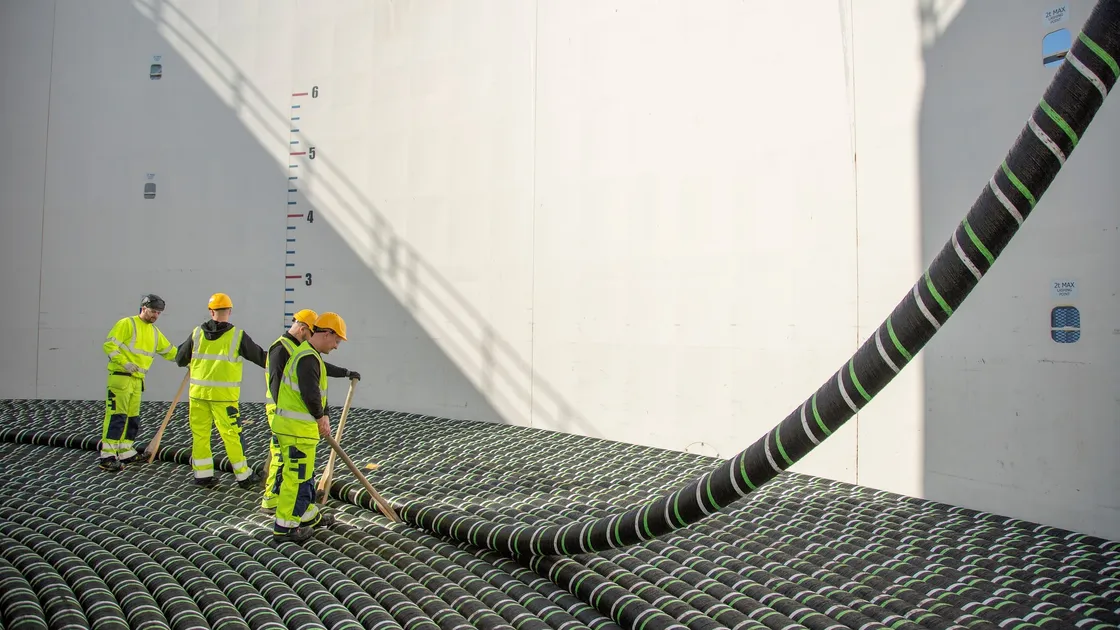
The additional interconnector could be up and running within four years, however, no final decision has been taken on whether the cable should go via Jersey or direct to France.
The route via Jersey has an estimated cost of £113m., whereas the direct route would be expected to cost more than £200m.
A joint policy letter, submitted by the Environment & Infrastructure Committee and the States Trading Supervisory Board, will recommend giving Policy & Resources the authority to sign off on Guernsey Electricity borrowing the required capital.
The loan would be provided either directly by the States, or by a third party, with the States acting as guarantor.
STSB president Mark Helyar said large-scale capital spending by the utility was unavoidable to keep the island powered over the decades ahead.
‘The choice we face is not whether to invest in the electricity system, but what form that investment should take. There is no credible do-nothing option,’ said Deputy Helyar.
‘Significant expenditure is required to maintain security of supply, replace ageing infrastructure and meet future demand. That needs to be done in a manner that meets the [States’] electricity strategy’s objectives, avoids unnecessary replacement expenditure and minimises pressure on customer tariffs.’
Without a second cable, several of Guernsey Electricity’s 10 thermal generators would have to be replaced soon. Eight of them are already more than 30 years old, with the oldest approaching 50.
Financial modelling showed that the loans would be fully repaid over 30 years – and electricity customers are being promised that the cost of the twin-connector approach would be no higher than continuing with the current arrangement.
However, the impact on tariffs and bills was expected to be far from straightforward, not least because the cost profile of the project was uneven.
While the committees said that charges would be kept within inflation over three decades, higher costs during the early years of that period would be likely to push up bills in real terms over the next 10 years, without intervention to prevent that.
Consideration was therefore being given to part-funding the project through a recapitalisation of Guernsey Electricity by the States, rather than meeting the whole cost of the project through borrowing.
The joint policy letter stressed the benefits of a second electricity link.
It stated that the new cable would double Guernsey’s current import capacity to improve the island’s energy resilience and security of supply.
It would put into effect a policy direction set in the electricity strategy, agreed by the States in 2023, which aimed to ‘reduce reliance on local fossil fuel generation through a combination of increased import capacity and local renewables, and meet increasing demand.’
E&I president Adrian Gabriel said that a second interconnector was the next logical step.
‘The electricity strategy concluded that the optimum long-term approach for Guernsey is to decarbonise the electricity sector further, through additional interconnection and more local renewables,’ said Deputy Gabriel.
‘This will improve the security and resilience of electricity supply, provide greater energy independence, deliver best value for customers, enable appropriate competition and consumer choice, and minimise environmental impact from on-island power generation.’
The policy letter will ask States members to give P&R the authority to agree borrowing arrangements for up to £136m. for a second cable via Jersey or £253m. for a direct French connection.
Although it was not anticipated that the costs would be that high, the proposed approach was described as prudent while further work was carried out to confirm final costs.



You need to be logged in to comment.