

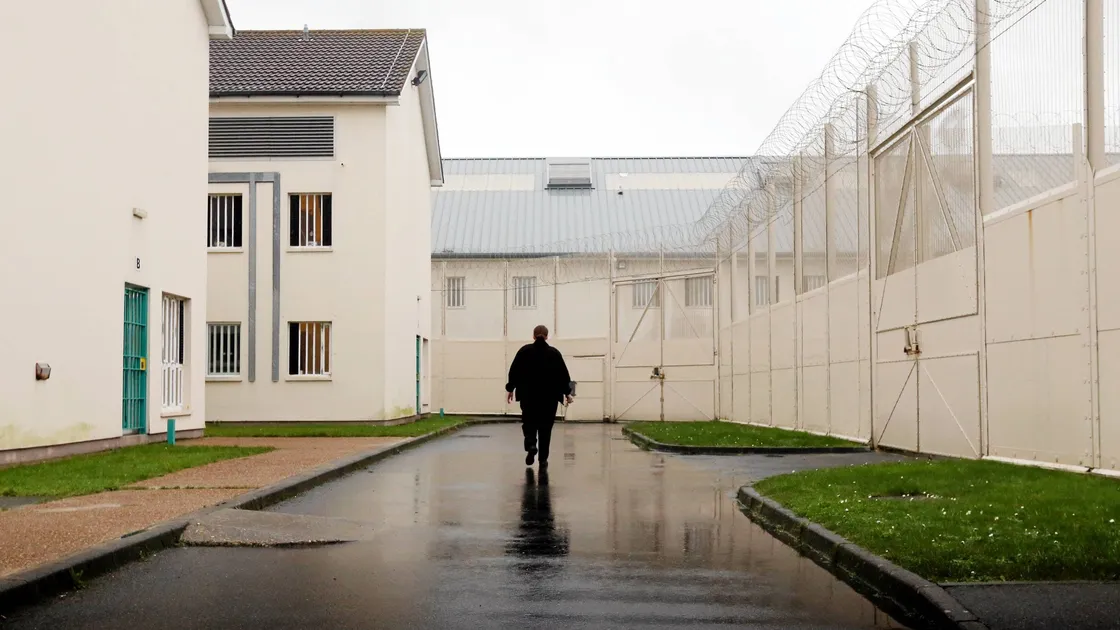
The States has confirmed recently that three of the island’s 95 prisoners could have been released on licence months ago had approved addresses been found for them.
The relative of one inmate, who asked not to be named, said some prisoners have found themselves caught in a ‘vicious circle’ with no way out.
Her family member, who has learning difficulties and is held on the prison’s vulnerable prisoner wing, was due to be released on licence in June.
‘They’ve done the sentence. They should have been out in June, and they’re still there because they’ve got nowhere to go,’ she said.
‘I’ve tried everything. I’ve tried estate agents, I’ve tried social media, I’ve tried the deputies.’
She said potential landlords ‘shut the door’ as soon as they hear it is a vulnerable prisoner looking for housing, because many assume that the vulnerable wing holds only sex offenders, but she said it also housed people who could not cope in the main prison population, including some with autism, ADHD and other learning difficulties.
‘They’re doing their education and they’re doing really well,’ she said. ‘But what’s the point when they come out and they’ve got nowhere to go?’
Because the prisoner has savings from an inheritance, they are unable to access social housing, but the money is not enough to enable them to purchase their own property.
Also, the bank has frozen the account while its holder is in custody and will only unfreeze it in person, which means the money cannot be used for a deposit or rent until release, and release cannot happen until a lease has been signed.
The Housing Committee confirmed that none of the island’s social housing stock was set aside for ex-prisoners and confirmed that eligibility criteria, including income thresholds and capital limits, still apply after release.
The relative, who lives in social housing herself, said no one in the family could afford to help with a deposit. She suggested the States could convert empty hotels or government buildings into bedsits for prisoners and homeless islanders.
She said her relative would struggle to live alone and would be suitable for assisted living such as La Nouvelle Maraitaine or Le Grand Courtil, but the family had been told they could not be assessed for eligibility until they were already out in the community.
Although the States manages the social housing waiting list, the Guernsey Housing Association is responsible for the island’s ‘extra care’ properties.
The GHA confirmed that there was no blanket approach to allocating such properties.
‘It would be assessed on a case-by-case basis,’ said a spokesman.
The relative praised the prison staff: ‘I cannot fault any of the officers or any of the staff’. But she said her relative was ‘so low’ and would spend calls to home in tears.
The Probation Service said a prison-based resettlement officer helped people to contact landlords, social housing providers and charities such as Guernsey Caring for Ex Offenders and At Home in Guernsey before release, but it acknowledged that there was a problem.
‘The reality is there is a significant shortage of affordable one bedroomed units in Guernsey for every sector of the population and those without criminal convictions are often given precedence by private accommodation providers. The Offender Management Unit is frequently reliant on last-minute availability in bedsit, multi-occupancy or lodging house-type accommodation as addresses cannot be secured in advance without substantial deposits or rent in advance to secure places ahead of release dates.’
A charitable scheme has been set up to help ex-offenders with deposits, but referrals have been few ‘as there simply aren’t the accommodation units to provide the deposits for’.
Some offenders also have licence conditions, such as exclusion zones and contact restrictions, which can affect whether an address is approved.
The Housing and Home Affairs Committees recently met Caring for Ex-Offenders, prison and probation officers and Housing’s homelessness lead to discuss the issue.
The charity said in its annual report in March that accommodation ‘continues to be one of the most challenging and difficult issues to resolve for people leaving prison’. It helped 22 people find or keep somewhere to live last year.
It also took part in Home Affairs workshops late last year on better accommodation planning, which it hoped would ‘develop into tangible solutions in the coming years’.
Housing said it had also endorsed improvements at St Julian’s House, which provides emergency accommodation including for ex-offenders. Refurbishment, which is due to be completed this autumn, is expected to increase the number of beds available.
‘Although it is too early to produce statistics, initial signs are very promising, with a number of longer-term residents being assisted into permanent accommodation,’ it said.