

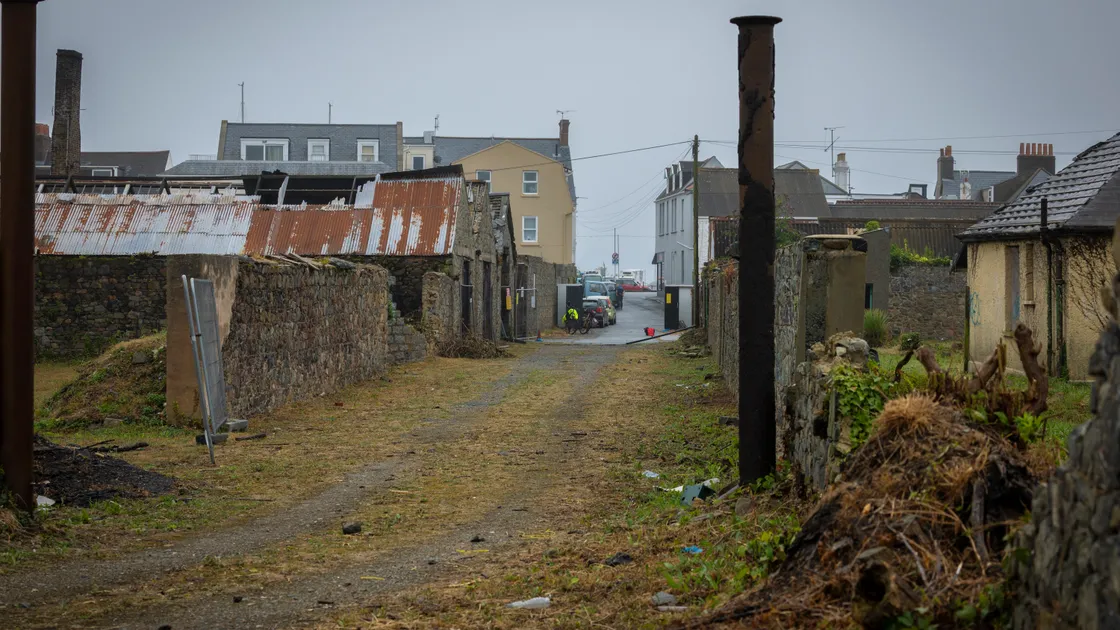
The States of Guernsey’s recent purchase of Leale’s Yard for £4.5m. may prove wise in the long run. Or it might not. That’s the thing with property, it can go either way. But this isn’t really about whether it was a good deal or a bad one. It’s about something more fundamental – how, and why, the deal happened in the first place.
Like many islanders, I didn’t hear about the purchase through any official communication or States debate. I read about it in the local news. There had been no public scrutiny, no open discussion in the Assembly, and certainly no clear explanation of what the States intended to do with the site. Five deputies on the Policy & Resources Committee made the decision behind closed doors, using powers delegated to them, but with very little democratic oversight.
To be fair, P&R did nothing unlawful. The committee has the authority to spend up to £10m. on property acquisitions without referring the matter to the Assembly. In that sense, the Leale’s Yard deal was entirely within the rules.
But just because you can do something doesn’t mean you should.
Leale’s Yard is a complicated site. It’s been sitting idle for decades, despite a string of failed development efforts. That alone should give us pause. It suggests that this is not an easy project and that those who’ve looked at it in the past have walked away for good reason.
One of those reasons is risk. The States hasn’t just bought a parcel of land, they may have taken on a long list of liabilities. There are concerns about asbestos, the potential for soil contamination from previous industrial use, and the well-known flood risks in the area. We can’t yet say for certain whether the site is contaminated, but it’s clearly a possibility. And dealing with that kind of risk can be extremely expensive. That £4.5m. could just be the starting figure.
On top of that, there are serious infrastructure shortcomings. The road layout isn’t fit for purpose. Utilities, drainage, and flood defences will all need to be reviewed and quite possibly rebuilt. This is not a site that can be turned around quickly. It could be years before the first home is built and that’s assuming the States is prepared to spend the additional millions required to make it viable.
And here we come to the issue of timing. We’re in the middle of a housing crisis. We need homes now, not in five years’ time after a dozen feasibility studies, environmental assessments, and planning inquiries. The States already owns other land that could have been used to deliver housing more quickly and more efficiently. Yet we’ve gone straight for the most complex and uncertain option on the table. Why?
If the aim was to tackle the housing shortage swiftly, this was not the obvious place to start. Leale’s Yard looks less like an emergency response and more like a legacy project, something designed to tick a strategic box or leave a mark, rather than to solve a pressing problem.
The timing of this move also raises questions. The new Housing Committee has only just been formed and may have met just once. It hasn’t had the time or mandate to develop an island-wide strategy. And yet, thanks to this purchase, its path is already constrained. Whatever ideas it might have explored, it is now committed to a plan that includes Leale’s Yard, with all the baggage that comes with it. It no longer starts with a blank piece of paper.
This decision also ties into the larger question of the East Coast Development Plan, in particular, the future of Black Rock. At present, there is no agreed policy for the regeneration of the Bridge and its surroundings. And yet by investing now in roads, utilities and supporting infrastructure, P&R is quietly locking us into a trajectory. Once the money is spent, the rest of the plan becomes inevitable. This is policy-making through back-door spending. It’s not illegal, but it skirts the very principle of open, democratic decision-making.
And this leads us to the deeper issue. It’s not about Leale’s Yard. It’s not even about housing. It’s about how Guernsey is governed.
P&R plays a central role in shaping strategy, proposing budgets, and overseeing spending. That’s nothing new. But it also controls the tax system, owns the purse strings, and increasingly acts as a sort of shadow executive. We like to say that Guernsey doesn’t have a cabinet, but in practice, P&R sometimes looks like one.
In any functioning democracy, you need checks and balances. You don’t let the same group of people write the plan, collect the money, and sign off the spending. That’s not healthy. It leads to decisions being made without proper challenge. It also opens the door to personal agendas and tactical moves that don’t always align with the island’s long-term interests.
The scrutiny committees do what they can, but they’re underpowered and too often ignored. By the time they review a decision like this one, the money is already gone, and the consequences are already unfolding.
There’s a simple fix. Guernsey needs a standalone Treasury Department. One with independence, authority, and responsibility for all things financial. It would manage taxation policy, budget forecasting, economic modelling, and, critically, review spending decisions across government.
That kind of separation would change the way decisions like this are made. Instead of P&R being able to nod through a major land deal, the Treasury would have to ask questions. What’s the full cost? What’s the risk profile? How does this align with housing policy, with regeneration strategy, with the budget?
And it would ask those questions before, not after, the money is spent.
Let P&R continue to propose strategy. That’s its job. But don’t let it be judge, jury, and banker as well. That’s too much power in too few hands.
We deserve a system where big decisions are made in public, tested against policy, and justified with numbers. We deserve governance that is transparent, accountable, and open to challenge. Good decisions can survive that. Bad ones can’t.
Guernsey urgently needs homes. But just as urgently, it needs reform. Because unless we change how decisions like this are made, we’ll keep ending up in the same place, wondering how we got here, and why it feels like nobody asked us first.





You need to be logged in to comment.