Guernsey is heading into another by-election and, having looked at the candidates who have declared so far, I have reached a slightly uncomfortable conclusion. At the moment I cannot see myself voting for any of them.
That is not because they are bad people. It is because they all seem to represent the same kind of politics. Because when you step back and look at the personalities that modern politics attracts, you start to notice something missing.
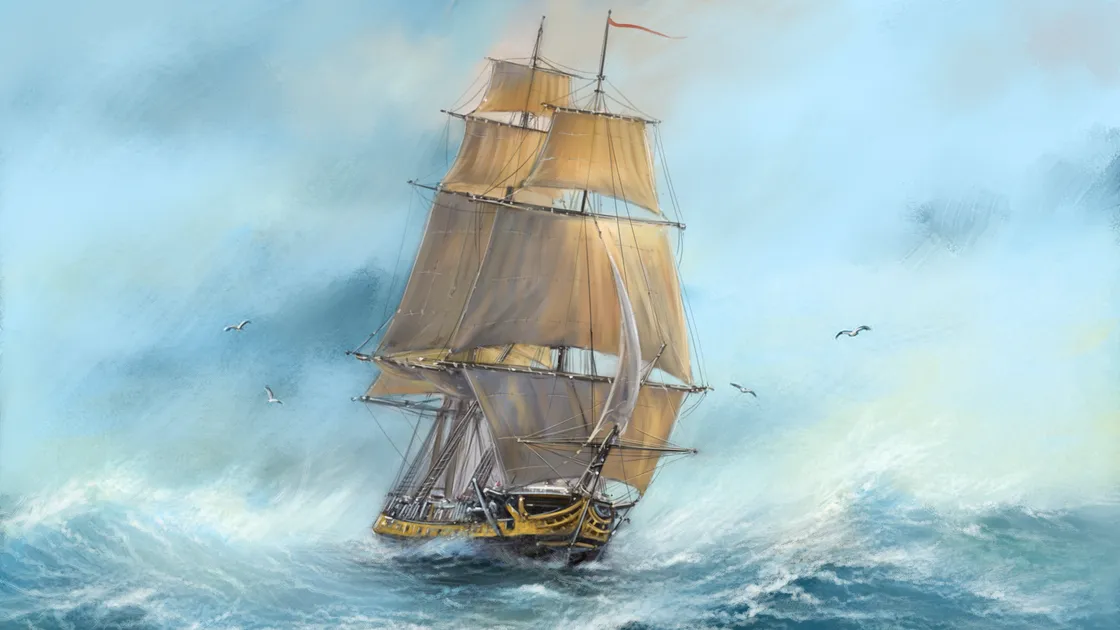
Guernsey has never prospered by sailing safely in the calm middle of the Channel. Our success has usually come from people who understood how to sail close to the wind.
Two centuries ago Guernsey privateers ranged across these waters under letters of marque issued by the Crown. To outsiders it must have looked uncomfortably close to piracy, yet it was perfectly legal and immensely profitable. Island skippers understood something important about life in a small jurisdiction. The trick was not to stay well clear of the wind. The trick was to sail as close to it as good seamanship and the rules allowed.
Long before economists gave it the name arbitrage, Guernsey people understood the principle instinctively. Small jurisdictions survive by spotting advantages in the rules and using them before larger places even notice they exist.
The coming by-election will bring the usual calls for ‘the right kind of candidates’. Every election does. We are told we must elect serious people, compassionate people, visionary people, people with the right values and the right commitment to public service.
All admirable qualities, and no argument there.
But it might be worth asking a slightly different question. Not what qualities sound good in an election leaflet, but what sort of personalities actually built the prosperity that allows Guernsey to debate these things in the first place.
The problem is that the island is not short of admirable types.
For example we already have plenty of people in public life who resemble Mother Teresa. Their instinct is always to help, to protect, to regulate, to ensure that nobody suffers hardship or unfairness. They campaign with sincerity and compassion and genuinely want to improve the world.
No sensible person could criticise that impulse.
Yet good intentions alone do not run an economy. Compassion spends money, it does not generate it.
We also have our share of candidates who present themselves as the island’s version of Elon Musk. They promise transformation, reinvention and bold change. They speak the language of disruption and innovation and the need to break old systems and build new ones.
Again there is nothing wrong with ambition.
The difficulty is that government is not a technology start-up. It is a slow moving machine built from committees, procedures and compromises. Vision alone rarely survives first contact with the machinery of government.
Then there are the candidates driven by a single crusade, the kind of political energy we see in Greta Thunberg. Passionate, determined and absolutely convinced that their issue must dominate the political agenda.
Such commitment can be admirable. Governing a community, however, requires a broader view than a single cause.
Every Assembly also acquires a few enthusiastic amateurs. People who mean well but quickly discover that government is a complicated machine with more levers than they expected. Watching them occasionally feels a little like observing Mr Bean wandering through a room full of unfamiliar equipment and pulling the wrong switch.
Then there is the comfortable centre ground of politics, the well-meaning operator represented so perfectly by Yes Minister’s Jim Hacker, always hoping to do the right thing while somehow keeping everyone reasonably happy at the same time.
And quietly ensuring that the machinery continues to run as it always has is the reassuring presence of someone rather like Sir Humphrey Appleby, explaining with impeccable courtesy why bold change might require another report or two.
Between the saints, the visionaries, the activists, the amateurs and the administrators, Guernsey’s political ecosystem is fairly well populated.
What it is increasingly short of is another kind of personality altogether.
The island that many of us grew up in was not built by saints or administrators. It was built by entrepreneurs, shipowners and opportunists, and by hard-headed island politicians like Daniel de Lisle Brock who understood how to use Guernsey’s constitutional position to the island’s advantage.
Older islanders will recognise the instinct I am describing. When I first encountered the finance industry many years ago it was full of people who thought like traders. They were not reckless and they certainly did not break the rules, but they understood that Guernsey’s advantage lay in moving quickly and confidently where larger jurisdictions hesitated.
That way of thinking required judgement and confidence. It also required a political culture comfortable with sailing close to the wind rather than nervously drifting away from it.
Guernsey’s history is full of people like that. At the height of the privateering era this small island put dozens of armed vessels to sea and hundreds of sailors into the Atlantic. For a community of barely 20,000 people that meant a remarkable share of the population heading off in search of opportunity. One historian suggested that something like one in 10 islanders may have been involved in privateering or maritime ventures. Today one sometimes suspects a similar proportion of the island works in compliance.
Merchants who owned ships trading around the world. Privateers who operated entirely legally under letters of marque. Later generations who built a finance industry by recognising opportunities that others had not yet noticed.
They were not saints or crusaders and they certainly were not authors of strategic frameworks or five-year delivery plans. They were opportunists in the best sense of the word, people who looked at a problem and immediately saw a deal hiding inside it.
Somewhere along the line our political culture seems to have become slightly suspicious of that type of personality.
The trader can appear too blunt, too commercially-minded, too impatient with procedure. They are inclined to ask awkward questions such as whether a policy will actually generate growth rather than simply sound virtuous.
In modern politics that sort of thinking can sometimes be mistaken for cynicism, yet without it something important disappears. An island economy cannot run indefinitely on consultations, strategies and reports that take longer to write than they do to implement. Anyone who has sat through enough States debates will know exactly what that feels like.
At some point someone has to create value. Someone has to identify opportunity. Someone has to take a calculated risk.
Historically that instinct ran deep in Guernsey. Guernsey people have always been perfectly willing to follow the rules, but we have never believed in tying one hand behind our backs while competing with much larger places.
Somewhere along the line we seem to have persuaded ourselves that success lies in exceeding every requirement placed upon us by the outside world. We tick every box carefully and sometimes add a few extra boxes of our own just to be safe.
I sometime get the impression our regulator believes the safest place to run an entrepreneurial jurisdiction is several steps behind the starting line. Admirable perhaps, but not exactly the mindset that built a trading island or a finance industry.
Which brings us back to the by-election.
I do not doubt that the candidates who have declared so far are sincere people. Some may well prove to be capable deputies. But sincerity and good intentions are not what built Guernsey.
Guernsey has produced politicians who understood that instinct before. My own political hero in that regard is Daniel de Lisle Brock. In the early 19th century he spent years defending the island’s constitutional privileges against pressure from London. On more than one occasion he travelled to London itself to remind ministers that Guernsey was not part of England and that acts of parliament did not automatically apply to the island. Brock believed that the island’s autonomy existed for a reason. As one contemporary put it, during his lifetime the history of Guernsey often seemed to be little more than the history of Brock himself. Again and again he insisted that the island should take every advantage its constitutional position allowed in order to benefit its people. In other words, he understood exactly how to keep Guernsey sailing as close to the wind as the rules allowed.
Guernsey was built less by saints and strategists than by people who carried a letter of marque in one hand and the commercial instincts of Arthur Daley and the optimism of Del Boy in the other, while keeping a weather eye on the wind.
Both characters could be cheeky operators, but they shared one important quality. Beneath the wheeling and dealing there was loyalty. They looked after their own. Family always came first.
That instinct is not a bad guide for politics. Deputies should remember that the people of Guernsey are their family. Their first duty is not to impress outside observers or to exceed every requirement imposed by larger jurisdictions. Their first duty is to look after the interests of the islanders who sent them there.
So when I eventually decide how to vote in this by-election, I will be looking less for saints, visionaries or professional politicians. I will be looking for someone who understands that Guernsey has always prospered by sailing close to the wind, and who has the confidence to keep a weather eye on it.