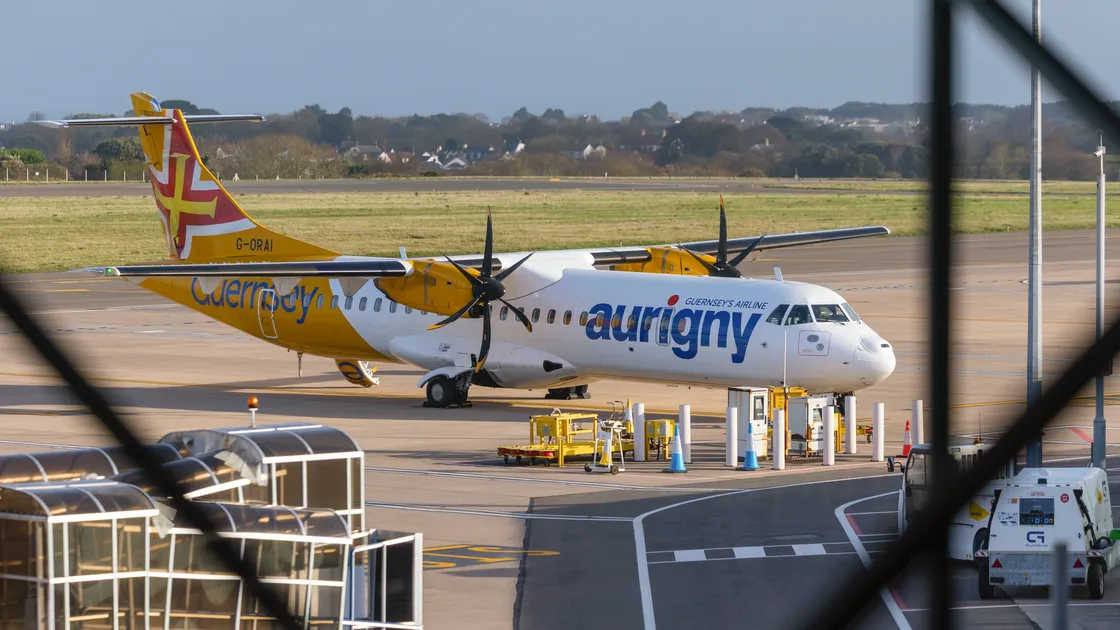
Regional aviation rarely attracts the glamour of long-haul intercontinental travel. Yet for island communities like Guernsey, and thousands of smaller cities worldwide, it is the invisible backbone of connectivity, commerce, and opportunity. While global aviation has rebounded strongly from the pandemic, the recovery and transformation of regional flying – short-haul routes served by smaller aircraft – has been uneven, misunderstood, and full of both risk and promise.
Today, regional aviation accounts for around 6,000 aircraft worldwide and roughly 9.3m. flights annually. Though these aircraft represent about one quarter of the global commercial fleet, they provide only around 11% of total seats. This reflects their unique mission – not mass transport between global hubs, but vital connections between smaller markets, remote regions, and major airline networks.
Far from being a single uniform sector, regional aviation encompasses a diverse mix of aircraft and operating models. Turboprops carrying fewer than 50 passengers serve short, thin routes where demand is limited. Larger regional jets carry between 70 and 110 passengers, while a newer generation of small narrow-body aircraft combines efficiency, range, and passenger comfort. These aircraft connect small communities to global hubs, operate direct point-to-point services, and serve public service routes deemed essential but not commercially viable without support.
For island economies, this role is indispensable. Without smaller aircraft, many routes simply would not exist. Larger jets would fly with too many empty seats to remain profitable, forcing airlines to withdraw service entirely.
A slower but uneven recovery
Although global aviation has now surpassed pre-pandemic traffic levels, regional aviation’s recovery has lagged – particularly among smaller aircraft. Pilot shortages, ageing fleets, and limited investment in new small aircraft have slowed the return of turboprop and small regional jet services.
However, the picture is more nuanced than headlines suggest. Newer small narrow-body aircraft have recovered strongly, operating 19% more flights in 2025 than in 2019. These aircraft offer airlines greater flexibility, allowing them to serve both regional and medium-distance routes economically.
In contrast, smaller regional aircraft remain below pre-pandemic levels, particularly in Europe and North America. This decline has contributed to reduced connectivity between smaller cities. In Germany, for example, domestic regional routes have fallen dramatically over the past two decades. Rising airport charges, competition from rail, and changing airline economics have all played a role.
Yet this decline also highlights opportunity. Many city pairs worldwide still generate enough passenger demand to sustain direct flights but currently lack non-stop connections. Airlines able to deploy the right aircraft at the right cost may find profitable niches in under-served markets.
Smaller aircraft, smarter economics
One of the most persistent misconceptions is that bigger aircraft are always more efficient. While larger planes do offer lower costs per seat when full, they also carry greater risk when demand fluctuates.
For airlines, smaller aircraft provide critical flexibility. They allow carriers to adjust capacity precisely to match demand, reducing the need to slash fares to fill empty seats. This helps maintain profitability and avoids overloading major hubs with unnecessary connections.
In many cases, smaller aircraft actually reduce overall costs per flight by nearly 50% compared with larger narrow-body jets. They also enable more frequent service, improving convenience and connectivity for passengers.
This flexibility is particularly valuable for regional communities, where demand may vary seasonally or fluctuate with economic conditions.
Passenger experience: not just about size
Another misconception is that regional aircraft offer an inferior passenger experience. While larger aircraft may provide more cabin space, regional flying often delivers advantages that passengers value highly.
Smaller airports typically offer faster security screening, shorter boarding times, and fewer delays. For many travellers, avoiding the congestion and complexity of major hubs improves the overall journey.
Newer regional aircraft have also narrowed the comfort gap significantly. Improved cabin insulation, modern seating, onboard Wi-Fi, and upgraded interiors have enhanced passenger comfort. Some travellers even prefer regional jets because they avoid middle seats and provide a quieter, less crowded experience.
Reliability and punctuality – critical factors for business travellers – are often strong in regional operations.
Stability amid uncertainty
From a financial perspective, regional aviation offers surprising resilience. More than half of regional aircraft operate under agreements with larger airlines, which pay regional operators to fly routes on their behalf. This arrangement reduces financial volatility by guaranteeing revenue regardless of passenger numbers.
Government-supported public service routes also provide stability. These subsidised flights ensure connectivity to remote communities that might otherwise lose access to air travel entirely.
However, regional airlines remain vulnerable to shocks. Smaller fleets and limited networks reduce flexibility, and many regional carriers operate on narrow margins. Industry consolidation, mergers, and occasional bankruptcies remain part of the landscape.
Sustainability: a testing ground for aviation’s future
Environmental concerns present both challenges and opportunities for regional aviation. Smaller aircraft generally produce higher emissions per seat than larger jets. However, because they are easier to fill, total emissions per flight may be lower.
More importantly, regional aviation is emerging as a proving ground for cleaner technologies. Sustainable aviation fuel can be introduced more easily on short-haul routes, with relatively small increases in ticket prices – sometimes less than £10 per passenger.
New propulsion technologies, including hybrid-electric and hydrogen-powered aircraft, are also likely to appear first in regional aviation. Smaller aircraft require less energy and are easier to certify, making them ideal platforms for innovation.
Manufacturers and airlines are already investing in these technologies, with the potential to transform short-haul flying over the next decade.
Innovation beyond aircraft
Innovation in regional aviation extends beyond engineering. New business models are redefining the passenger experience, offering faster boarding, simplified security, and more personalised service.
Some airlines are experimenting with ‘semi-private’ travel, allowing passengers to board quickly from smaller terminals while still paying commercial fares. These models blur the line between commercial and private aviation, offering convenience once reserved for the wealthy.
At the same time, digital technology is improving route planning, scheduling, and operational efficiency, helping airlines identify profitable opportunities in previously overlooked markets.
Electric aircraft: promise and limitations
Electric aircraft and air taxis have attracted enormous investment, but their impact on regional aviation will likely be gradual.
Battery-powered aircraft currently face limitations in range, payload, and weather performance. While electric aircraft may eventually transform short-distance travel, they are unlikely to replace conventional regional aircraft in the near future.
Instead, they may complement existing services by opening new ultra-short routes and improving efficiency in niche markets.
A vital role for island communities
For islands such as Guernsey, the future of regional aviation is not an abstract industry debate but a practical necessity. Regional flights enable tourism, support business travel, facilitate medical access, and maintain economic links with the wider world.
Without viable regional aviation, island economies would face increased isolation, reduced investment, and slower growth.
The evolving economics and technology of regional aviation offer hope. More efficient aircraft, new business models, and sustainable technologies could strengthen connectivity while reducing environmental impact.
The future: smaller aircraft, bigger importance
Regional aviation may lack the prestige of long-haul travel, but its strategic importance is growing. It provides essential connectivity, supports economic development, and serves as a testing ground for aviation innovation.
As the aviation industry adapts to changing economics, environmental pressures, and technological disruption, smaller aircraft will play an increasingly central role.
For communities like Guernsey, regional aviation is not merely a transport option. It is a lifeline – and its future evolution will shape the island’s economic and social connections for decades to come.
In aviation, it turns out, small planes are driving very big changes.
Based on material originally produced by global management consultancy McKinsey & Company.
Dr Bruce Lloyd was born in Guernsey in 1941 and was a student at Elizabeth College from 1949-1960, when he left the island.
After completing a degree in chemical engineering at the Battersea College of Advanced Technology he did a post-graduate evening course at the City Literary Institute, a diploma in international affairs. This was followed by a MSc in economics/ business studies/MBA at the London Graduate School of Business Studies.

He was first employed by BP between 1964 and 1966 and went on to have roles at stockbrokers Hoare & Co, the Commonwealth Development Finance Company and the Bank of Credit and Commerce SA, as well as undertaking a lot of freelance work.
Now emeritus professor of strategic management at London South Bank University, Bruce Lloyd has published over 200 articles on a wide range of strategy and futures-related issues, including leadership, organisational performance, wisdom, and knowledge management.
He spent over 20 years in industry and finance before joining the academic world to help establish the Management Centre at what is now London South Bank University. Bruce was the UK coordinator for the Millenium Project from 1999 to 2005.
He has a PhD (by published work) for The Future Of Offices And Office Work: Implications For Organisational Strategy. Bruce has undertaken over 30 interviews on leadership/management related issues for various journals.
The Old Elizabethan has been included in the Thinkers50 Hall of Fame for his contributions to the world of business ideas.