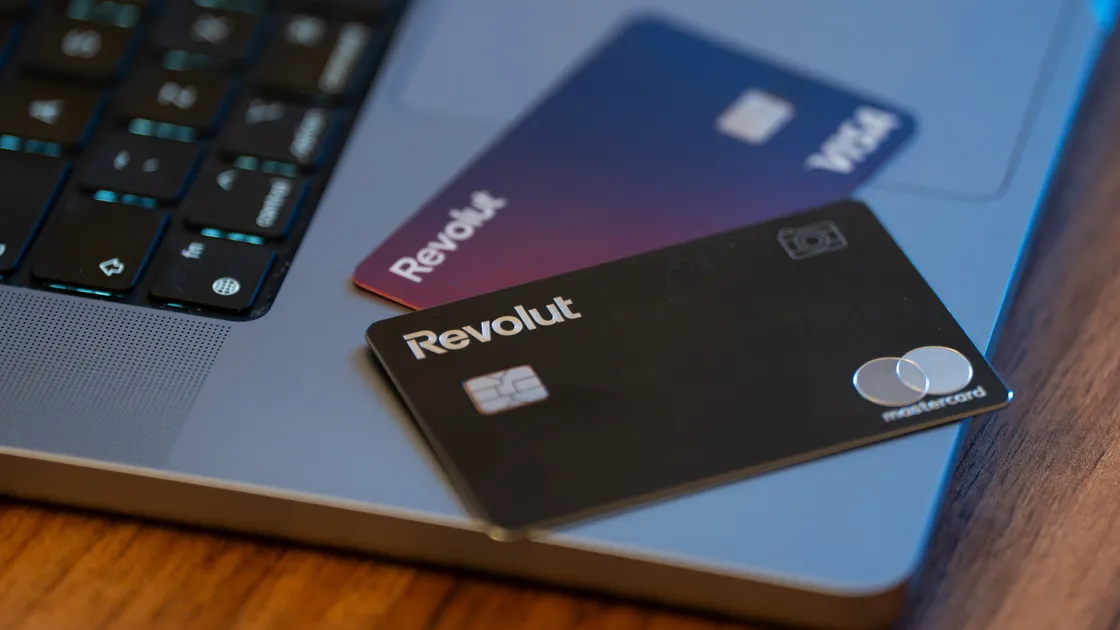
One of the worst bits of news I heard recently was that the fintech behemoth Revolut, with its 70+ million global users, had obtained a UK banking licence. That ended something like a five-year battle with regulators, meaning it has finally come of age as a fully-fledged financial services provider.
I know, I know. Even by my standards of spotting lurking catastrophe, worrying about a new bank seems a bit extreme. But bear with me on this, as it affects you and the island too.
The thing is, I pretty much live my life out of Revolut – holiday currency, ‘pockets’ for saving for routine expenditure and ‘round-ups’ that seamlessly get squirrelled away and pay for Mrs Digard’s Christmas extravagances. None of which my high street bank offers, especially cost-effective Euro exchange.
In short, I don’t want to lose it. And now that it is transferring all its 13m. UK customers into what has now become a UK bank could spell curtains for me and thousands of other island users. Just as it has for other fintech products that used to be available here – Chip and Plum spring to mind – and explains why you can’t easily get a credit card as a Guernsey resident.
Before we start, I’m not endorsing Revolut but I am a fan of fintech – the use of technology to provide financial products and services that people want and are based on today’s needs rather than being locked into the legacy systems of the high street banks that tell you what you can do.
So the reason you can’t hook up to so-called challenger banks like Monzo or Starling – much as I gather they wanted to be available here – is something called regulatory divergence, the growing gap between the UK and EU rapidly upgrading their payment regulation and the islands not keeping pace.
This is why I see Revolut as the canary in the coal mine. It might be a bank in the UK, but it isn’t here. Or in Jersey. Which would both need to license it if it was here. And both islands have different regulatory and enforcement systems. If you were Revolut, why would you bother to run this gauntlet? And this divergence, and associated extra costs, drove out the savings and investment apps Chip and Plum which I mentioned earlier. There are many others similarly affected.
An honourable exception is (or perhaps was, I haven’t checked recently) the digital wealth firm Wealthify. But that was only because its primary co-founder was Michelle Pearce-Burke, a former Grammar School girl who insisted their ground-breaking services be available in her home island too.
She done good too. That was back in 2015, when she was just 25, and a couple of years later Aviva snapped up a majority shareholding because it recognised a good thing when it saw it.
So why does this matter to you? Because Guernsey, Jersey and the Isle of Man are getting locked out of advances in fintech and that’s going to get worse as it accelerates. But don’t just take my word for it:
‘The [Crown Dependencies] have historically benefited from being able to use UK banking functionality due to factors such as a common currency and the same sort code/account number structure. However, there are already some jurisdictional differences and over time these have gone from minor to major,’ say Chris Hutley-Hurst of the international law firm Walkers, who’s a partner in Guernsey, and Paul Gorman, of Bank Aston, also Guernsey-based. In short, they’re in the know and worth listening to.
This is a technical area but in essence, you’re getting excluded from the latest developments in financial services and that’s to your detriment and that of the island.
Why? Because the UK has recognised that payments, historically a hidden component of financial services, is a strategic differentiator not just between banks but also between jurisdictions. So it is determined to capitalise on that. The EU recognises it has been left behind and is desperate to catch up – and these islands are caught in the fallout.
‘All across the [Crown Dependencies] we hear concerns about the risk of being left behind. Unhappily, the risks are far greater than that,’ they say.
I raised this with Economic Development back, I think, in 2023 when Chip dumped its CI customers. Yep, we’re on it, was the response. Hmm. Not visibly.
And this isn’t just about foreign holiday money and savings pots. ‘The CDs have a fantastic heritage as international financial centres. This heritage must not be held back or damaged by legacy infrastructure or legacy regulations. Unlike in other cases, this decision is in our own hands and we need to work together,’ says the Walkers’ article.
Publicly, at least, there’s no sign that’s happening. Yet failure to do so will impact all the islands and their residents through increasing exclusion from modern financial services (already happening), reduced competitiveness (just two credit card providers here I believe) and long-term economic impact.
Not only is this something both States should actively be seeking to avoid, doing so would provide a unique opportunity to work collaboratively and jointly on something where both islands are in complete agreement on the outcome. No repeat of the ‘anyone but Condor’ ferries debacle.
As the Walkers’ article states: ‘The islands must collaborate to deliver payment regulations and achieve good outcomes in a reasonable timeframe.’
So what’s needed is a CI fintech step-through to allow firms authorised by the UK regulators to ‘passport’ certain services
into the Channel Islands under a streamlined regime jointly overseen by the Guernsey Financial Services Commission and Jersey’s commission so that islanders have access to the same benefits as those living in the UK.
At its heart would be a system to ensure that UK Financial Conduct Authority approval for an app had equivalence here, was anti-money laundering, etc compliant and overcame the existing problems with identity verification, which I’m sure many you have experienced.
No, it’s not as straightforward as my summary suggests, but it’s do-able and the benefits include competition to the high street banks, islanders gaining access to modern financial products and perhaps the establishment of a regulated testbed for new fintech.
This isn’t academic, by the way. Content creators, a growing sector, especially in Jersey, but across the Crown Dependencies, are excluded from the YouTube Partner Program, which means they’re deprived of the money they’ve earned. Why remain here when that happens? Further reasons for the bright and tech-savvy to leave the islands.
The other thing to mention is this affects – or potentially so – a lot of folk. It’s a crude calculation admittedly, but on a pro-rata basis with the UK, there are possibly 12,000 Revolut users here, 19,000 in Jersey and 16,000 in the Isle of Man. Some 47,000 in all.
So if Revolut does switch from offering you, as it does now, an account as an electronic money institution (I said it was technical), to a UK bank account you’re blocked from opening, that’s a lot of inconvenienced islanders.
And unless the local authorities see this for the problem it is, it’s only going to get worse.