In August last year I weighed 25 stone 9 pounds. By Christmas I was down to 20 stone. I am now 17 stone 7 pounds and, to my own continuing surprise, still shrinking.
This did not happen because I suddenly discovered self-denial, a passion for lettuce, or any great enthusiasm for healthy living. It happened because the States, in one of its rarer moments of practical usefulness, empowered my doctor to prescribe Mounjaro for my type 2 diabetes. I feel no guilt about that whatsoever. In particular, my TRP this year has more than covered the cost of every jab I have had since August. And that is before you even start netting off the savings from the fact that some of my other medication has now stopped altogether and some has been reduced. In the long run, it may turn out to be a better bargain for the Treasury than leaving fat men to grow steadily more expensive.
I am also a little weary of this constant hint in modern politics that older people are basically a burden with a pulse. Even at my great age, I still pay income tax on pension income, on unearned income, and on earned income. My suspicion is that I am still paying in more than I am taking out, which is more than can be said for some of the arguments habitually deployed in favour of higher taxation.
Anyway, by Christmas I had begun to imagine one of those heart-warming little scenes of personal renewal. The family brought out the e-bike. I climbed on, full of optimism and seasonal goodwill, and almost immediately fell off.
I got on again because I am nothing if not persistent in matters of self-humiliation. This time I did at least make it move a little before falling off again.
Now picture the scene properly. Even at 20 stone I was not exactly a nimble reed, and once I was on the ground I discovered that I had become something like an overturned turtle with spectacles, a creature for whom rising unaided was no longer a realistic option, while my family, who might in other circumstances have been expected to rally nobly to the rescue, were so overwhelmed by laughter that they were nearly useless. I thank the Lord they had not brought their phones with them, because I am quite sure I would otherwise have gone globally viral on TikTok as the elderly Guernsey man who finally disproved the old saying that riding a bike is like riding a bike and you never forget how.
In the end I had to take matters into my own hands. I rolled myself across the lawn in slow stages until I reached a low wall, one of those ha ha arrangements that looks decorative until you need it for emergency engineering. By swinging my legs over and getting myself into a partly-seated position, I at last gave my still-laughing relatives enough leverage to pull me upright.
That was the moment I realised two things. First, whoever first said that riding a bike is like riding a bike and you never forget how was talking complete nonsense, at least in my case. Secondly, the real issue was no longer simply weight. It was balance, confidence, and the not entirely trivial question of what happens when a large elderly man hits the deck and cannot get up without looking like a public information film about rural accidents.
That could have been the end of it. I could have concluded that cycling belonged to the same chapter of life as sprinting for buses and pretending not to care what one looked like in shorts. But then something rather more hopeful happened.
My daughter is a deputy, and because Wheels for You had reached out to deputies and invited them to come along and understand what the charity does, my deputy daughter told me about it. Had that not happened, I would not have known these sessions even existed, which is worth saying because I was actively looking for exactly this sort of support. If I did not know about it, there will be others out there in the same position, quietly assuming that this sort of help does not exist because nobody has told them that it does.
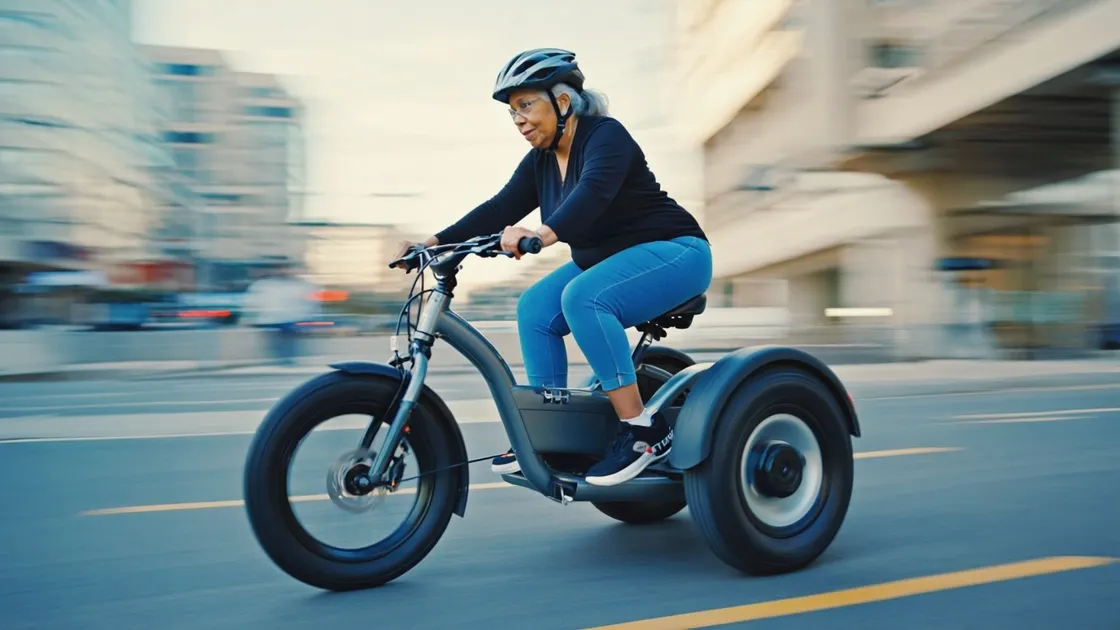
So I went along. There, to my surprise and delight, I discovered that my cycling future was not over after all. It simply required one more wheel, not one less, and a little more honesty about what my body and my confidence were prepared to do. I climbed onto a trike and, to my astonishment, managed to get round the whole track without falling over once, which at that point felt less like a small achievement and more like a rebirth. There was no family rescue mission, no lawn-based manoeuvring, no unplanned impression of livestock in difficulty, only the thoroughly heartening discovery that stability could restore confidence almost at once, and that freedom, having looked as though it had left me, had merely reappeared in a slightly different form.
I also had a very good conversation with our celebrity local bike man, Ian Brown. Ian has to be treated fairly because he is a nice man, his heart is plainly in the right place, and he is central to the success of this charity. He knows his subject, he gives his time, and he wants to get people moving. But it was in talking to Ian that I realised there is still a real conflict in the way we think about e-bikes.
The present rules rest on a respectable idea. They treat an e-bike as a bicycle first and an assisted machine second. In other words, the motor helps, but the rider is still meant to put in a decent share of the effort. That makes perfect sense if your main concern is exercise and if your rider is reasonably fit, steady, and confident. No doubt it is also wise if your fear is that without limits we shall end up with electric motorbikes in disguise hurtling about the island under cover of healthy living.
But that is not the whole story, especially not in Guernsey.
There is another group of people who sit awkwardly between the ordinary e-bike and the mobility scooter, older people, people with balance problems, people with accessibility issues, people recovering from illness, obese people who want to get moving again but sensibly do not fancy collapsing in a ditch on their first outing, and people whose main problem is not laziness but confidence. For them, the present legal e-bike can still demand too much, while the mobility scooter gives up entirely on the idea of cycling and effort and simply becomes a machine for being carried about.
The gap between those two things is where Guernsey needs to think harder.
Our problem is not simply that hills exist. Our problem is that people need the confidence to know they will finish the hill and not be trapped halfway up it. That is a much more serious deterrent than many fit people realise. If you are elderly, heavy, unsteady, or have mobility problems, the thought is not merely, can I start up Rectory Hill, or the Rue Sauvage, or the old bete noire of any e-rider, the Val des Terres. The thought is, what happens if I run out of oomph halfway up and cannot finish? What happens if I am stranded on a slope with a heavy machine, weak legs, traffic behind me, and no graceful way forward? For many, that fear will be enough to stop them going out at all.
That is the point which people who are naturally confident on a bike can easily miss. A hill is not just a hill. For some riders it is a trap. The real barrier is psychological before it is mechanical. It is the fear of committing yourself to something you may not be able to complete, and if you are older or less mobile that fear is not silly, it is rational. It is exactly why some people will stay in the car, or stay at home, rather than risk the indignity and danger of grinding to a halt halfway up a Guernsey bank with no way out except panic.
I put a version of this to Ian. I said, imagine I am riding an e-bike now, but imagine too that the 8 stone 2 pounds I have lost since August is riding pillion in the form of another human being on the back. Then point me at Rectory Hill and tell me, hand on heart, that a little more power and the reassurance of a proper throttle would not suddenly seem quite sensible. I think even he could see the point.
My own view is that Guernsey needs a middle category of e-vehicle, particularly for trikes and for people with accessibility issues, that allows more help than the present e-bike rules permit. I am thinking of something with more pulling power, perhaps 500 watts, and a throttle that does more than creep along at walking pace as you push the machine into a garage. I mean something that could genuinely get a rider to the top of the hill if their confidence, strength, or mobility gave out before the gradient did.
That is not an argument against exercise. It is an argument for realism. A machine that gives somebody enough confidence to set out at all will almost certainly do more for their health than a virtuous but underpowered machine that leaves them at home in an armchair. The issue here is not athletic purity. It is mobility, independence, dignity, and quality of life.
If Guernsey were serious about that, it would stop treating accessible e-bikes and trikes as a niche enthusiasm and start seeing them as part of transport policy, health policy, and ageing well. Get more older people and more mobility limited people out on suitable e-vehicles and you may take some short car journeys off the road. You may keep people active longer. You may ease loneliness. You may postpone decline. You may even save public money, though I appreciate that this is often the least persuasive argument in a system that prefers funding the consequences of immobility to encouraging movement in the first place.
That is why Wheels for You matters. It is not merely providing a pleasant afternoon and a worthy photograph. It is opening a door back into ordinary life for people who might otherwise conclude that movement, confidence, and participation belong to other people now. It is also, from what I gather, one of those charities that does not find money magically rolling in from the sky. If you know someone who could benefit, tell them about it. And if you have a few spare pounds and fancy helping, the charity can be supported online through its Giving.gg page, while bookings for sessions are being taken through Rebecca Silk at rebecca@wheelsforyou.org.gg.
So that is where I have got to. I began at 25 stone 9 pounds, I crashed my attempted Christmas comeback with comic efficiency, and I rolled across my own lawn in search of mechanical advantage while my family dissolved in laughter. I discovered that what I needed was not surrender, but one more wheel. I am now 17 stone 7 pounds, still shrinking, and the trike is ordered.
That does not feel like defeat. It feels like progress. And if one day it carries me up the Val des Terres without depositing me sideways in the nearest hedge, I shall count that not merely as transport, but as triumph.