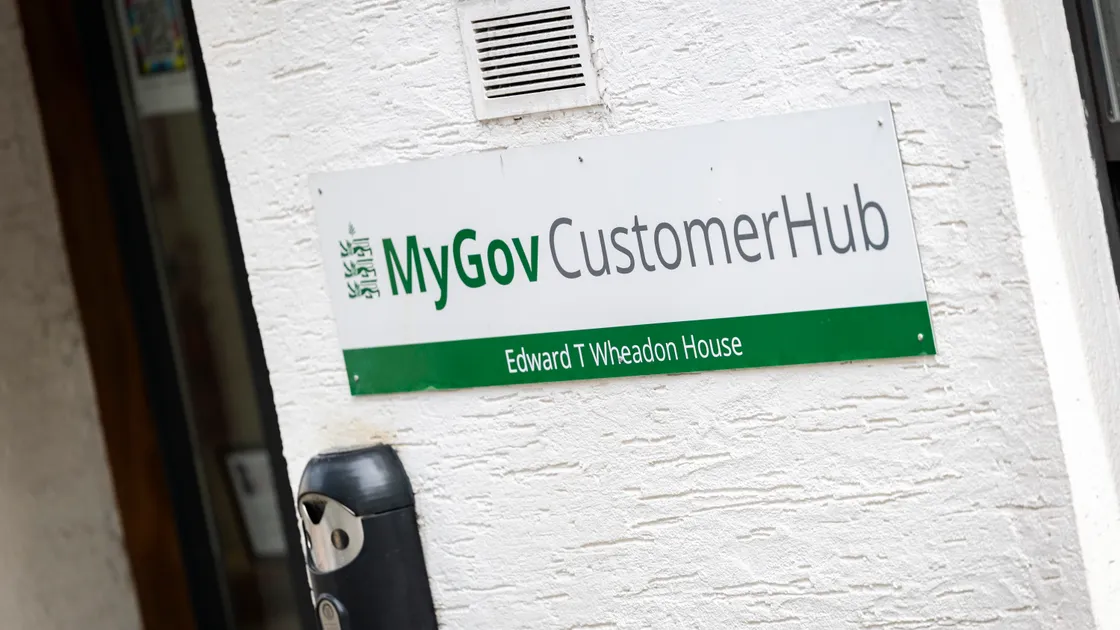
Most islanders will never read the MyGov report, and that is precisely why it matters. It is very easy for a fiasco like this to disappear into the background under a pile of official language, tidy formatting and those soothing little phrases governments love, such as lessons learned and moving forward. But once you cut through the wrapping, what emerges is not some dull administrative hiccup. It is the story of a public project launched with promises of modernisation, convenience and savings, then repeatedly reshaped as difficulties mounted, until it finally collapsed under the weight of weak leadership, blurred accountability, excessive supplier influence and a system in which career risk at the top appears strangely detached from failure on the ground. The programme was eventually stopped after Policy & Resources intervened in August 2023, by which point the review says it could not have been recovered.
The hard recorded bill came to £21.6m., with £16.2m. of that going to Agilisys, and even that figure is bad enough before anyone begins thinking about the true economic cost. Guernsey’s latest official population and employment bulletin says there were 32,067 people employed or self employed in June 2024, which means MyGov cost about £674 for every working person on the island. Put that into household terms and a home with two earners is looking at well over £1,300, not for a new hospital wing, a new school, or even fixing potholes in the roads, but for failure.
And even that may flatter the truth, because £21.6m. is only the visible spending total, the amount that can be traced in official records. No serious person can believe a programme of this scale consumed only what appeared on the invoices. It cannot neatly capture every officer hour swallowed by meetings, resets, re-drafts, fire fighting and damage limitation, nor every management distraction, delayed decision and opportunity cost elsewhere in government. That broader hidden cost is an inference rather than a stated figure in the report, and it is only fair to say so, but it points to a larger truth.
When a project becomes a black hole for time and attention in an already stretched public service, the taxpayer pays for that too, whether or not it appears as a neat line in a ledger. It also raises another awkward question. How many extra posts, temporary workarounds and bits of administrative scaffolding were created to keep the machine lurching along, and how many of those are still sitting there today? That is one reason Guernsey ought to think much harder about zero-based budgeting, instead of the lazy business-as-usual model that lets posts and budgets roll on by habit.
What makes the whole thing worse is that MyGov did not fail in one dramatic bang. It failed in the slow, familiar public sector way, with workstreams re-badged, services re-scoped and governance reset, while delivery was scaled back, the business case process was bypassed and decisions were at times taken outside formal governance arrangements. The review is explicit that there were opportunities to stop, or at least slow, the spending, but those opportunities were not taken. This was not one freak accident or one unforeseeable mishap. It was a long decline in plain sight.
The governance structure sounds less like control and more like camouflage. After the 2021 reset there were more than 20 boards, groups and teams beneath the programme board. In a healthy organisation governance is supposed to sharpen accountability. In a sick one it smothers accountability under so many layers of process that nobody can tell who really owns the disaster. Yet the review still says the programme board held overall responsibility for the entirety of MyGov and for the spending within it, so the old excuse that ownership was impossible to pin down does not wash. Ownership existed, but it sat inside a fog so thick that failure could wander around freely without ever quite bumping into personal consequence.
Then there is the grotesque question of supplier influence. The review says external suppliers were afforded excessive influence over areas that should have remained under strong States control, and the Scrutiny Management Committee’s report into the future digital services contract with Agilisys concluded that the States’ retained technical expertise was totally inadequate to monitor that contract properly in its early years. That is not some minor technical weakness. It means the people paying the bills were not in a strong enough position to challenge the people collecting them, which is an absurd way to run anything, let alone a contract of this scale. The Scrutiny report itself was published on 27 January 2025 and covered the review period from July 2022 to January 2025, which underlines another uncomfortable truth. By the time Scrutiny got properly into the contract, the damage was already largely done.
That point matters, because one of the obvious questions ordinary readers will ask is where Scrutiny was while all this was going on. The answer is not flattering. The Scrutiny work on Agilisys may well have uncovered useful facts, but it came late. It was post-mortem work, not early warning. By the time the previous Scrutiny Management Committee was hauling this into the daylight, MyGov was already badly wounded. The bigger question is why Scrutiny did not have its ear closer to the ground when concerns were first being raised about performance, spending and the widening gap between glossy reporting and grim operational reality. That is also why the current pressure for cosy explanations in private meetings should worry anyone who cares about proper scrutiny. Scrutiny cannot keep its teeth if it is invited in for coffee and expected to emerge reassured. It has to work in the bright light, on the record and with documents the public can test.
The financial case is humiliating enough on its own. The original funding request projected annual recurring savings of £7.4m. by 2021. In practice the review says only £1.3m. of savings was reported, and even those savings had limited evidence showing they were directly attributable to the programme. So the island spent £21.6m. chasing promised efficiencies and ended up with a fraction of the savings that had been advertised, with even that fraction resting on shaky ground. In a private business there would be consequences, your reputation would be damaged, and your post might just disappear into thin air. In the States, by contrast, the review points to something far more disturbing, namely a culture in which senior failure can be monumental, ruinously expensive and still somehow survivable.
That, for me, is the real scandal of MyGov. Not only that millions were lost, though they were, and not only that the system was weak, though it plainly was, but that there seems to be so little genuine jeopardy for the people at the top when things go badly wrong. The review says there was no clear framework to manage senior leadership conduct or capability, that performance management was not linked to MyGov delivery, and that there was limited evidence of individual accountability being identified or addressed where programmes had failed to deliver. Read that again and let it sink in. The people with power over huge budgets and major programmes were operating in a system where delivery outcomes did not clearly feed through into career consequences. In plain English, you could be near the top of a machine that burned through the equivalent of hundreds of pounds for every working person in Guernsey, and still not face anything like the level of professional risk that an ordinary worker, trader or small employer would face after a far smaller failure.
That is why public anger over things like this runs so deep. Ordinary islanders live in a world of jeopardy. Miss your tax bill and the Revenue Service will not pat you on the head and offer you an action plan. Run your own business badly and the market will punish you. Fail repeatedly in an ordinary job and you may well find yourself shown the door. Yet in the upper reaches of the public sector there seems to be a padded zone where losses are socialised, responsibility is spread so widely that it becomes vapour, and careers can carry on floating serenely above the wreckage. The public paid, staff morale paid, services paid, and trust paid. The people most closely associated with the failure, at least on the evidence set out in the review, appear to have operated in a system designed to cushion them from the full blast of the consequences.
The review says there was no evidence of intentional wrongdoing, that may be true, but the absence of corruption is not a defence. Public money can be lost just as effectively through complacency, optimism, cowardice, overcomplicated governance and a refusal to grasp hard truths when the evidence is staring everyone in the face. In some ways that is even more alarming, because it means the next fiasco does not require a villain. It only requires the same culture, the same smoothing over of bad news, the same over-reliance on advisers and contractors, and the same lack of personal jeopardy for those in command.
And the review gives us little comfort on that front either, because it says several of the issues seen in MyGov have been repeated across other transformational programmes, which means this was not a freak accident, it was a symptom of a serious illness which still has not been treated. That should chill every taxpayer on the island. MyGov was not merely an expensive embarrassment from the recent past. It was a warning about how the States does business when too much money, too little scepticism and too little accountability are allowed to mix together.
You can apparently be in charge of a function that loses millions of pounds of taxpayer money, fail to deliver the promised benefits, keep spending after warning signs appear, and still have every chance of emerging with your career more or less intact.
Until that changes, until senior failure carries real professional danger, until scrutiny is done in the bright light and not softened in private, and until every budget and every post is forced to justify itself instead of rolling on through habit, Guernsey will go on producing polished explanations for failures that should have been stopped much sooner. The real scandal of MyGov is not simply that it cost every working person on this island about £674. It is that the people who burned that money do not appear to live under the same law of consequences as the people who earned it.