I am trying very hard to be optimistic about Guernsey’s future. Three things in particular of late have been testing my capacity to remain positive about our local prospects. And it has been a struggle.
The MyGov debacle was clearly a complete mess, the post-mortem for which will go on and on. Also, the island-wide by-election has unfortunately appeared to have all of the energy of a damp fireworks night. And the conclusions of the Guernsey Quality of Life 2025 report by the Guernsey Community Foundation are still ringing in my ears, with its clear evidence of younger families struggling to sustain their lives here; significant housing challenges, people going without food or heating, in-work poverty, inequality.
All of these things might suggest cracks in the foundations of our island. But just because there is a crack in the wall does not mean that the whole house is falling down. It means that it is time to pick up a trowel.
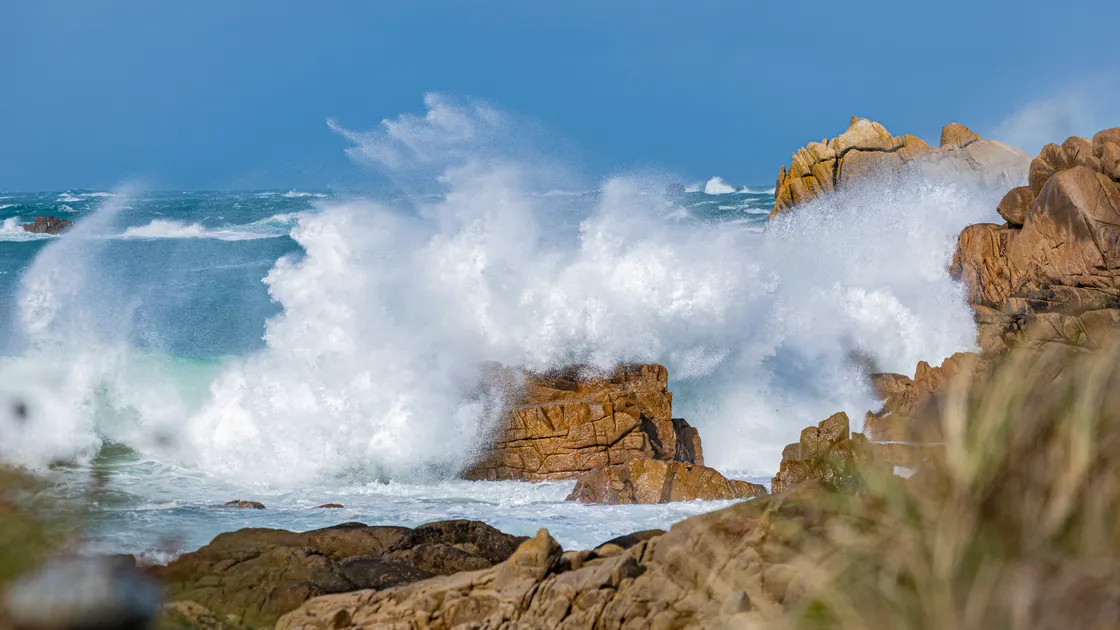
Guernsey has always been a rock in a restless sea. It has survived on its wits and its stubbornness. We have navigated the collapse of whole industries in the past as well as borne the weight of foreign occupation – more of that in a minute. We are a people who have repeatedly bounced back from the end of one industry and grown into the next.
If we can do that, we can surely find the wherewithal to build affordable homes that don’t cost the earth and create a cost-of-living buffer that ensures no islander feels abandoned in modern society. Our true wealth as a community is in our collective ability to solve our own problems without waiting for permission from Whitehall or a nod from some consultant.
Despite the gloomy headlines, we should still bet on Guernsey, I believe. The UK and Europe face significant upheaval, but we remain a safe harbour in comparison. We have a decent agency credit rating with S&P of A+/A-1 with a stable outlook and we have consistently low unemployment. Further, we remain agile and are small enough to mean that a good idea can potentially move from a kitchen table to a States meeting quickly if the will is there. And the Guernsey Quality of Life 2025 report showed the strains of modern life, but it also showed the resilience of our people. We do still look out for one another, don’t we? And we are of course a visually stunning location. We are so fortunate to live with the great beauty of our cliffs, our beaches, and the other islands of our bailiwick.
So I do not wish to succumb to the doom and gloom narrative that is all too common in some local parts. The thing about despair is that it is fundamentally lazy. It is the easy way out.
The island-wide by-election may have been a relatively quiet affair, a very low key and undramatic election in fact, somewhat like a rather lacklustre 0-0 draw at the end of the football season when both teams have nothing to play for, but the election of a new deputy is nonetheless a chance for a proper reset in the political world. What we need now in the States is a bit of Guernsey grit.
Optimism is, in the end, a choice politically and more generally. It is the conviction that we are small enough to be agile and smart enough to be successful. The MyGov report, the quality of life report; the problems are all mapped out well enough now; but now let’s stop the complaining and give support to our politicians and civil servants to get busy sorting things out. After all, nobody else is going to do it for us.
My other preoccupation at the moment is the key importance of collective remembrance of the island’s experiences during the Occupation.
The news that Saturday 9 May 2026 will pass without a day off in lieu is disappointing, if unsurprising. It is a cold confirmation of where our priorities lie. In Guernsey, it has been effectively decided that if freedom doesn’t fall on a Monday-Friday billing cycle, it is not worth the ‘cost’ of a substitute day.
There is a particular kind of modern cynicism in the way we handle our history. When Liberation Day, the most sacred date in the Guernsey calendar in my view, has the audacity to fall on a Saturday, the response from the powers-that-be is a shrug and a return to business as usual. By refusing to grant a bank holiday in lieu, we are sending a clear, crushing message – our collective heritage is only worth honouring when it does not interfere with the bottom line.
The argument against a substitute day is always a mixture of economic reasons and that the rest of the world is still open. We are sometimes told that the island cannot afford the loss of productivity; that the corporate machine must keep grinding. But what is the cost of a society that begins to forget why it is free to work in the first place?
When Liberation Day falls on a weekend and is not observed with a substitute holiday, it ceases to be a truly national day of reflection for us and becomes just another Saturday. It is the ultimate irony to me: we celebrate a day of ‘liberation’ on the Saturday while remaining shackled to the demands of the normal working week.
We often speak of history being rewritten – it has been known to happen in the local political world – but in the 21st century, it is more often that history is simply omitted. By not providing a dedicated day of rest, we deny the workforce, the very people whose ancestors endured the hunger and fear of the Occupation, the time to engage with their own story. We are perhaps unwittingly signalling to the younger generations that the struggles of 1940-1945 are only secondary to the quarterly earnings of the finance sector or professional services. But we owe it to the generation that was liberated to ensure that their precious story is not relegated to a weekend activity that competes with the household chores and everything else.
Every time we choose productivity over memory, we lose a bit of the island’s soul. People are generally happy to accept public holidays for a royal milestone or religious festivals; but our own unique moment of survival in overcoming Nazi occupation is treated as an optional extra.
If we truly believe – as I do – that forgetting the horrors of the world wars has led in no small way to the growing international instability that we see today, then we cannot afford to be too busy to remember. Have we forgotten the rather moving words of the preamble to the United Nations charter of June 1945? ‘We the peoples of the United Nations determined to save succeeding generations from the scourge of war, which twice in our lifetime has brought untold sorrow to mankind, and to reaffirm faith in fundamental human rights, in the dignity and worth of the human person, in the equal rights of men and women and of nations large and small…’
To the policy-makers and corporate leaders of today’s Guernsey, 9 May might just be a date on a spreadsheet, but to Guernsey people who had family here during those dark days of Occupation or living as evacuees elsewhere, it is the reason we are here. If we continue to sacrifice these moments on the altar of business, or because other jurisdictions expect us to be open, we should not be too surprised when the true traditional spirit of the island begins to flicker out for good.
A bank holiday in lieu is not a freebie or a perk – it is a necessary protection of our national identity. We have fewer bank holidays than many of our European neighbours. Would it really be the end of the world if we legislated to ensure that there always was a day off in lieu for when Liberation Day falls on a weekend?