We want it all. We want cheap fares for our holidays, endless choice of destinations, reliability when we need it, convenient timings that suit our lives, a States-owned airline that we can complain about when it loses money, and competition from big carriers that makes us feel like we’re getting a bargain.
We want protected connectivity for the finance industry, easy links for medical treatment in the UK, enough tourism to keep the hotels happy and the president of Economic Development in cheerful press releases, and all the while we grumble that Aurigny costs the taxpayer too much.
Come on, you know exactly what is going on here. You cannot have every sweet in the window and expect someone else to pay for the bus fare home. Let us be clear about one thing from the start. The whole reason Guernsey bought Aurigny in the first place was because British Airways pulled out and left us high and dry. That is not some dusty footnote from aviation history. It is the warning label stuck on this entire debate.
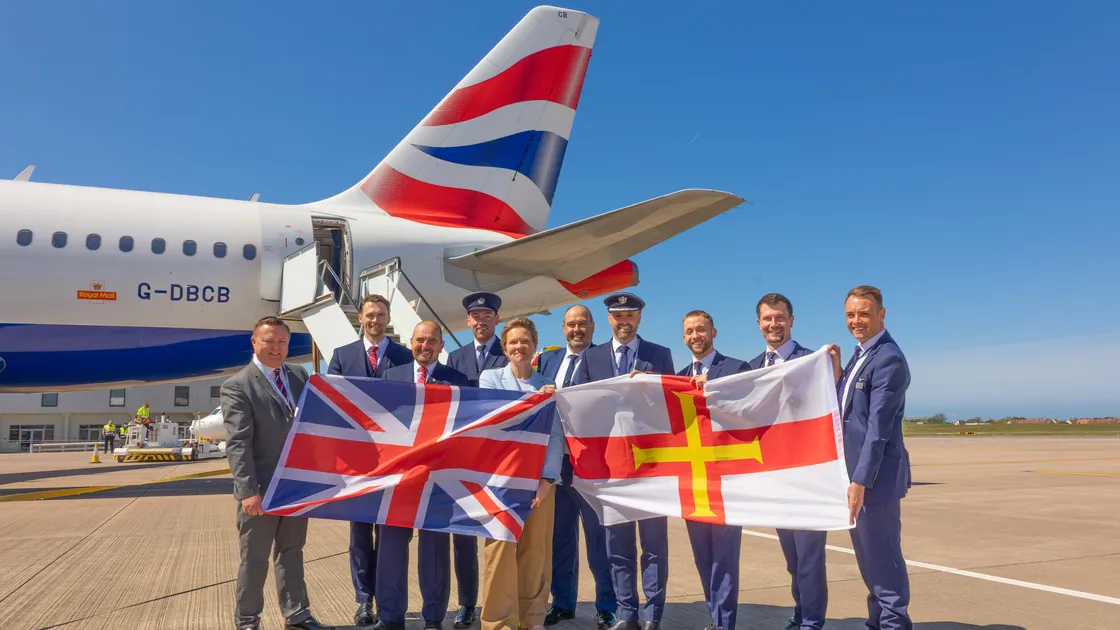
British Airways does not come or go because it loves or hates Guernsey. It comes when the route suits its commercial plans and it leaves when it does not. There is no sentiment, no loyalty, no special affection for our island. That is not wicked, it is just business. But we would be foolish to forget the lesson. Yet here we are again. British Airways has returned, this time to Heathrow, and we are all supposed to cheer because the fares look attractive.
The trouble is they only look cheap because the taxpayer and the airport are helping to subsidise them. Economic Development has tempted them with buckets of cash that Guernsey cannot really afford, and the airport is giving up income it would otherwise have earned. That foregone airport revenue is a subsidy too, just wearing a different coat. We are paying to create the illusion of cheapness, and then congratulating ourselves for spotting it.
This would be bad enough if Aurigny were a private operator we had no responsibility for. But Aurigny is owned by the States. We fund it. We repeatedly tell ourselves it is strategically vital. And yet the very same Economic Development that is meant to have a coherent plan has encouraged British Airways to come in and take passengers away from the airline we already own.
Aurigny is now predicted to lose something like £5m. this year because of it. Nobody should be allowed to act surprised. It is the entirely predictable result of using public money to help one airline compete with the airline we already own. Only government could do that and still try to make it sound like strategy.
And now, with the news that the UK government is relaxing the slot rules because of jet fuel shortages and rising prices, you have to wonder. Airlines will be allowed to cancel flights without losing their valuable slots. I wonder whether British Airways might look at our little rotation and think to themselves, well, that’s an easy one not to fly. When push comes to shove and they have to consolidate their schedule, a short hop to Guernsey might look like a very soft target indeed.
Of course Economic Development will justify the Heathrow route by talking about tourism. It always does. Tourism gives them something easy to photograph, nice press releases, and smiling pictures of Sasha. It is all very useful for the photo opportunities, but it is not going to prevent GST or materially grow our economy. Visitors are welcome, day trippers from France are welcome, tourism itself is welcome, but let us stop pretending it is the answer to our fiscal problems.
Let’s look at the numbers that simply do not support the hype. Accommodation and food service activities, the closest official measure we have to direct tourism spending, accounts for around 3% of our GVA. Even if you stretch the definition to include every knock-on effect, tourism and related activity might reach 4% at best. That modest contribution requires more than 2,000 people to produce it.
Finance, by contrast, generates around 40% of our GVA with fewer than 6,000 employees.
In a large country this might just be an interesting statistic. In Guernsey, where we are short of land, short of housing, and short of workers, it is the whole argument about what sort of economy we can actually afford to build. One sector uses large numbers of people to produce a small slice of value. The other produces nearly half the economy with a workforce only a few times larger.
This is not an insult to anyone working in tourism, it is an argument about priorities in a small island with limited resources. Even a 10% increase in tourism would only add about 0.4% to total GVA, while likely requiring more staff, more housing, more services, and more pressure on an island already feeling the strain. That is nickels and dimes dressed up as policy.
Finance may be unfashionable, folk resent it, misunderstand it, or simply dislike it. But finance pays for the island in a way tourism simply does not. If we want decent health services, education, care for the elderly, roads, pensions, and the rest of it, we should remember what actually funds the majority of them.
Tourism gives Economic Development something easy to photograph. Finance gives Guernsey something to live on. And finance needs reliable, convenient connectivity to London. It needs people to be able to leave Guernsey early, put in a full working day in the City, and get home again at a reasonable hour. It needs visiting directors, lawyers, advisers, fund managers and clients to be able to fly in for board meetings and fly out without feeling they have taken part in some island travel experiment.
Gatwick has always been central to that. Aurigny controls valuable slots there, and those slots are strategic. Aurigny should not be judged merely as a cheap holiday airline. It is an insurance policy with wings. Like all insurance, it looks expensive until the day you need it. If people really want cheap commercial flights for their holidays above everything else, then let us follow that logic properly instead of this muddled half-way house.
Strip Aurigny back to the job that actually matters. Protect the Gatwick slots. Protect the London route that keeps finance connected. Maintain the early flight out, the late return, and the first flight in from Gatwick, because those are the flights that let our finance people get a proper working day in London and let people coming here for business get in and out efficiently.
Make sure essential medical travel is properly covered, because sending patients to the UK is not a holiday luxury.
Everything else – the holiday routes, the leisure travel, the sunshine packages, the ski trips, the weekend breaks – can go to the market. If you are so sure the commercial market can do it better and cheaper, then take the market. But take it properly. Do not keep Aurigny sitting quietly in the background as the safety net you sneer at when it suits you, while expecting it to be there the moment the market loses interest. Do not demand that the taxpayer underwrites certainty while you cheer every subsidised competitor that weakens that certainty. Because commercial airlines come when the money is right, when the subsidy is attractive, when the airport deal is helpful, and when the route fits their network.
When those things change, they leave. British Airways has done it before and it can and will do it again. And if Aurigny has been quietly run down because the island decided cheap holiday fares mattered more than maintaining a broader safety net, who exactly do people imagine will be waiting at Guernsey Airport to fly them off on holiday? Another airline might appear, it might not.
The subsidy might have to get bigger, fares might not look so magical once the buckets of cash stop being poured in. Or quite a few people will become unexpectedly familiar with the boat.
Guernsey needs to grow up about air travel. If we want Aurigny as our strategic carrier, then define its role properly and accept that certainty costs money. If we want the market, then take the market and accept that the market owes us nothing.
What we cannot keep doing is this self-indulgent muddle. Tempting British Airways with public cash, letting the airport give up income, weakening Aurigny, paying twice over with taxpayer money, talking up tourism as though it can save us from GST, and then cheering because a holiday fare looks cheaper on a screen.
That is not strategy, it is pure self-indulgence with a boarding pass.