


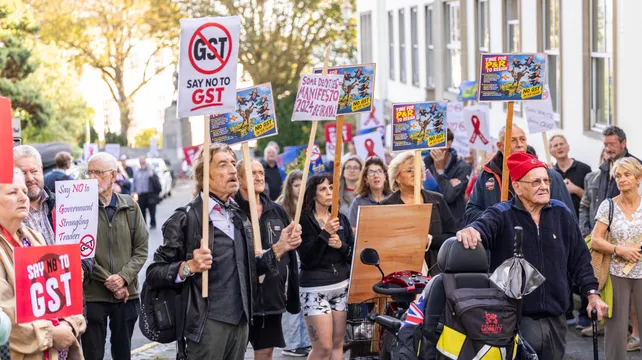
By the time you read this, the GST debate may already be over. It may have lasted two days, it may have lasted three, and the vote may already have been taken. As I write these words, though, not one word has yet been spoken in the Assembly. I have no idea what arguments will have been made, what amendments will have been accepted or rejected, or even whether the policy that eventually comes to the vote will bear much resemblance to the one that exists as I sit here writing.
That makes this a rather strange article to write. I could spend another 1,500 words arguing about GST. Heaven knows I’ve written enough about it over recent weeks. Somehow, though, that no longer feels like the right thing to do. By the time you read this, the arguments will have been made, the speeches will have been given and minds may already have been changed, or perhaps not. Instead, I want to tell you why I have cared so much.
I’ve often said that Guernsey is the centre of the universe. Before anyone reaches for their pen, yes, I know perfectly well it isn’t. But it has always been the centre of mine because every road I have ever travelled has led me back here.
When I was young, like so many young islanders, I was convinced the grass had to be greener somewhere else, so I went to find out. I found wonderful places and met wonderful people, but there was always something missing. Whenever I drove over a hill, I found myself expecting to see the sea and, every time it wasn’t there, there was a little disappointment that I couldn’t explain. It took me years to realise that I wasn’t really looking for the sea at all. I was looking for home, and whenever life became difficult, whenever I needed help, encouragement or simply the comfort of familiar faces, my thoughts always turned back to Guernsey.
As a child, I sang Sarnia Cherie because everyone did. As an old man, I think I finally understand what it was trying to tell me. It isn’t really a song about an island. It’s a song about home.
There is another reason why Guernsey means so much to me. There is a family grave in Candie Cemetery that goes back to the early 19th century. Generation after generation of my family lies there, including my mother and father. One day, if all goes according to plan, that will be my final journey too, and my ashes will be scattered there among them. I don’t find that thought sad. I find it comforting because it reminds me that I am only one generation in a much longer story. My parents inherited this island from those who came before them. My generation inherited it from them. Before very long, it will belong to those who come after us. None of us owns Guernsey. We simply look after it for a while before handing it on.
On my mother’s side, my family stretches back through the centuries in Guernsey. On my father’s side, the story could hardly be more different. My grandfather first stepped ashore here in 1899 with no money in his pocket, having deserted from the Royal Navy. For his first three winters he depended on poor relief. I often wonder what was going through his mind. Could he possibly have imagined that one day one of his descendants would sit in the States of Deliberation? Could he have imagined that another would spend so much of his later life writing about the future of the island that gave his family a second chance? I doubt it. But that is exactly what Guernsey made possible.
To me, that has always been one of this island’s greatest strengths. Some families have been here for centuries. Others arrived with little more than hope. In time those stories become one story, and that story is Guernsey.
I have been one of the lucky ones. My future is secure. I have the life I want to live. I have everything I need, and far more than I ever imagined as a young man setting out into the world. For that, I owe this island a debt I can never repay. Guernsey has given me opportunities, friendships, work, purpose and, above all, somewhere I have always belonged. It has given me a life for which I will always be grateful.
Perhaps that is why I have found this whole debate so disappointing. It isn’t because I expected everyone to agree with me. In a democracy they shouldn’t, and if there is one thing Guernsey has never lacked it is people with different opinions. It is because, after all these years, after all the reports, all the reviews, all the consultants, all the public money and all the political effort that has gone into trying to reform our tax system, I genuinely thought we would end up somewhere different.
I hoped we would first have stood back and asked ourselves the bigger questions. What do we actually want the States of Guernsey to do? What sort of island do we want to leave to those who come after us? What can we realistically afford? Which services should be paid for by general taxation, which by those who use them, and where should the balance lie between personal responsibility and collective responsibility? Once those questions had been answered, I always believed the right tax system would almost choose itself.
People sometimes assume that because I have opposed these proposals I must be against GST. I’m not. A well-designed consumption tax is one of the most efficient taxes ever devised. There is a reason why so many successful countries use one, and there may well come a day when Guernsey concludes that it too should have a GST. My argument has never been against the tax. It has been against introducing this particular package before we have answered the more important questions. Instead, I fear we have too often started with the tax and tried to make everything else fit around it. That, far more than GST itself, is what has troubled me throughout this debate.
We have seen before how decisions, made with the very best of intentions, can cast a long shadow. In my view, housing is one example. Successive Assemblies have made planning decisions, housing decisions and wider policy decisions that have left many local families wondering whether they will ever be able to afford a home in the island they love. I do not doubt the good intentions of those who made those decisions, but good intentions do not always produce good outcomes, and once those outcomes become embedded they can take decades to put right. I do not want this generation to leave another decision that future generations will spend years trying to undo.
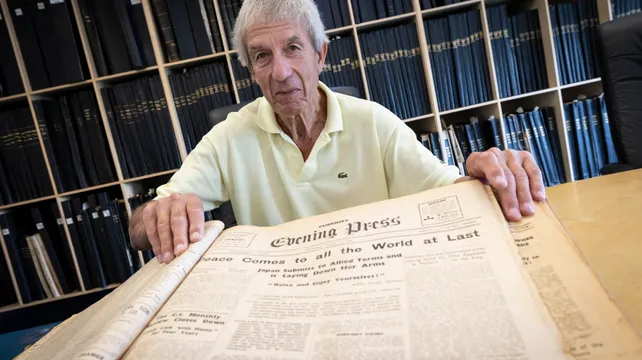
The decision taken this week, whether it was taken yesterday, taken just before you read this, or is still to be taken, will echo down through the generations. Long after today’s politicians have been forgotten, long after tomorrow's headlines have yellowed in library archives, Guernsey will still be living with the consequences.
If the Assembly has approved these proposals, I genuinely hope history proves my concerns completely unfounded. Nothing would make me happier than to discover that I was wrong. But I cannot honestly pretend that is what I believe. I fear that if we make a permanent change before we have properly decided what sort of States we want, what we expect the States to do and how the States should be funded, then we risk leaving behind another problem for future generations to solve. To me, that would be a chill wind blowing down through the generations.
Whatever happened in the Assembly this week, my hope is that every deputy cast their vote thinking not just about today’s politics, next year’s Budget or the next election, but about the Guernsey that will exist 50 years from now. By then, I will simply be another name at Candie Cemetery. My grandfather will have been gone for well over a century. The debates, the speeches and the personalities will all have faded into history, but Guernsey will still be here.
My only wish is that she remains the island that has given so much to my family and to me; an island that continues to reward hard work, welcomes those who commit themselves to her, gives young people the chance to build a life, and always remains, in every sense of the words we sang as children, our home. Because every road I have ever travelled has led me back here, and I hope that, for generations yet unborn, it always will.


You need to be logged in to comment.