
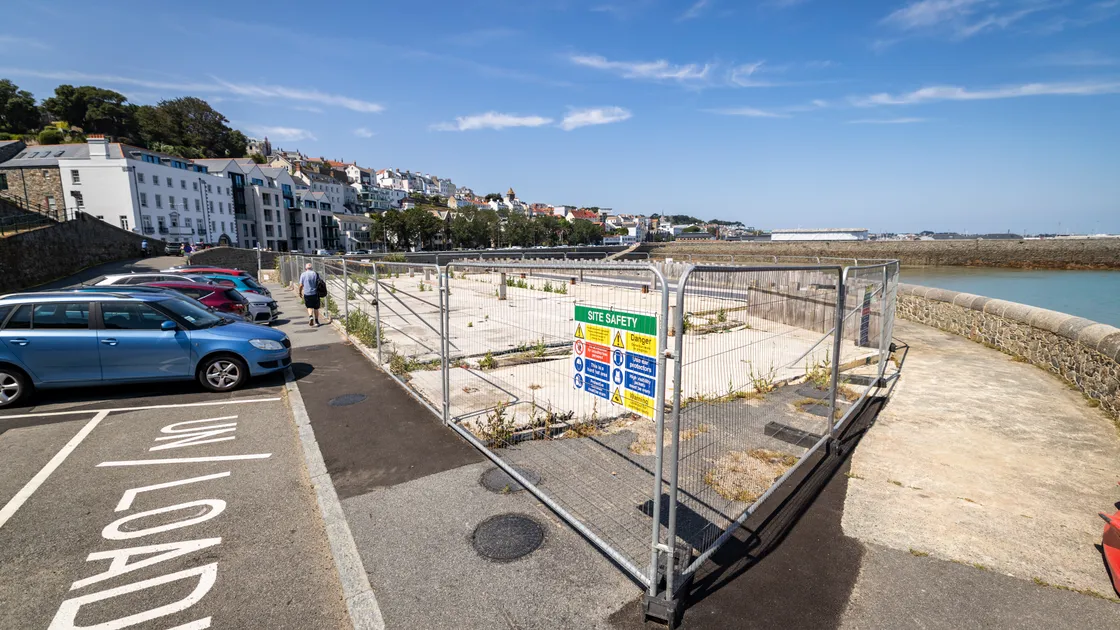
It looks like the Planning Department may soon be under some external pressure depending on how it handles the imminent proposal for a four-storey residential block on the seafront at Havelet.
In the report of the sale in the Guernsey Press [Saturday 18 July], it was mixed news, some good but mostly bad.
It’s good news that the site at Havelet, derelict since the well-loved Octopus restaurant burned down in February 2024 (I wonder why the delay) has not been forgotten by all. It is, however, bad news that the Octopus is not being resurrected for all of us to enjoy once again.
Instead, and this was the sting in the tail of the report, it was revealed that there had already been discussions with the planners, and those discussions included architects’ drawings of four-storey high buildings, presumably residential units and not offices, given the prime position of the site.
This is ominous since the planning officers must have been to a degree supportive of the idea of residential units (when they should have thrown the idea out without further ado because of the site’s zoning and permitted usage) otherwise the developers were hardly likely to pay £2.555m. to secure a site on which residential property had been absolutely ruled out.
If the proposed development of residential units flats are to be given planning permission, it would be a further loss of amenity to islanders, with a restaurant being replaced by private residential accommodation undoubtedly for high-net-worth individuals. One thing it won’t contain will be affordable housing or social rental housing.
Permission for residential units should not be given because the site is situated within the Havelet Bay touring and leisure zone (‘to support tourism, leisure, hospitality and complementary commercial uses’) and it has Class B permitted usage (Cafe/Restaurant).
If residential development is to be allowed on this site, both the zoning and permitted usage will have to be changed. This must not be allowed to happen as the site’s present planning status is there for the good of the island as a whole, whereas changing its status will be mainly to the benefit of those involved in the project to develop the site.
Scenarios like this have developed over the last decade or so. Popular restaurants (Class B properties) were bought and the permitted usage changed to ‘residential’. Consequent loss of amenity resulted to the rest of the population. The planning alterations to permit this were made with no apparent input from the general population, the decision being made entirely ‘in house’. As a result, in the eyes of some, the Planning Department may not be trusted to do what is best for the island’s population.
I would, therefore, urge that any decisions on change of usage or exceptions to the zoning of the Octopus site must not be devolved to the planning officers. The decision must remain with the politicians. The populace will then know just who made the decisions and, if relevant, who should be held to account if the populace is not allowed to express its views in the planning deliberations.
Hiding behind the planning officers must not be the politicians’ modus operandi.
Tony Lee




You need to be logged in to comment.