
The role of a deputy in Guernsey is unarguably to be principally inward focused on the needs of the island, bringing legislation to support this, scrutinising the provision of public services and helping constituents.
But, although we are a relatively small island, we are certainly not insulated from events and developments around the world, many of them unpredictable. And such events can have touch points with most committees of the States, often unsought and uninvited.
This is why the external relations team, which reports to the Policy & Resources Committee, is constantly monitoring outside influences that might impact on Guernsey, especially in Westminster and Brussels.
As external relations lead over the last 15 months, I have seen first-hand the breadth and complexity of this work. A great deal of effort is expended towards ensuring that Guernsey and its place in the world is recognised and that its long-standing and special constitutional links with the Crown, and through that the UK, are understood and respected.
Only recently it has been necessary to remind MPs that Westminster does not legislate for Guernsey on domestic matters without the island’s consent. Guernsey is a mature democracy and the States of Deliberation is the right and proper place to do that.
The annual round of UK party political conferences took place a few weeks ago. Regrettably, the carrying over of the tax reform debate in the Assembly prevented my attendance at the Labour party conference, although there was an officer presence there, and the weather disrupted travel to the Reform conference.
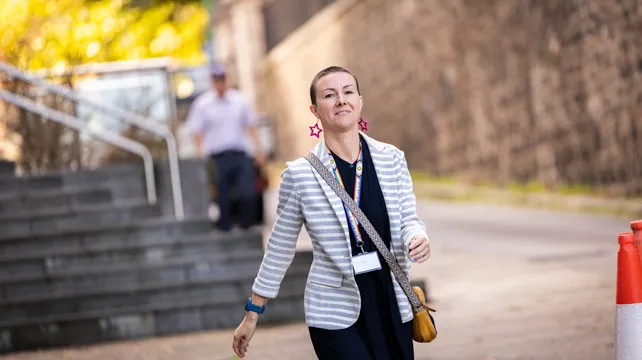
I did attend the Conservative party conference in Birmingham, however, where over a day and a half I had one-on-one interactions with more than 30 MPs, peers and ambassadors, ranging from a few minutes’ conversation to pre-arranged sit-down meetings. Topics raised in conversation included immigration, defence and the EU reset.
Over the coming weeks there are several opportunities to network with MPs and each of the exchanges with myself or officers at the recent conferences will be analysed so that, where valuable, follow-up meetings can be arranged through regular contact days.
High profile matters where we share an interest with the UK are the EU reset and any further potential revisit of the UK’s relationship with the EU.
The reset is in effect a rescue of some of the challenging outcomes of Brexit. Of course, Guernsey did not have a vote in the UK’s Brexit referendum and maintained strong links and communications with Brussels before, during and after Brexit, aided by the Channel Islands Brussels Office. We have remained a good neighbour to Europe throughout.
We are close to a critical summit where elements of the reset are likely to be agreed and Guernsey has lobbied the UK hard to ensure that we are specifically included in respect of several key areas. For example, the Sanitary and Phytosanitary (SPS) Agreement is designed to reduce or remove many of the checks, certificates and trade barriers that currently apply to the movement of animals, plants, food and agricultural products between the United Kingdom and the European Union following Brexit. One area of importance to Guernsey in this respect is the protection of our iconic Guernsey cows and goats by preventing importation of other breeds. The idea is that a common SPS area will make trade easier and, for Guernsey, would bring back the same access to the EU single market for trade in food as we enjoyed under Protocol 3.
The UK prime minister has announced the UK-EU summit for today[20 November] and much work has taken place to try to conclude the negotiations ahead of that deadline.
Similarly, there will be an easing of the rules surrounding the movement of young people, both students and workers, between countries through the Youth Experience Scheme, sometimes called the Youth Mobility Scheme, which replaces Erasmus+. This is important, both for our young people and sectors of our business community that would benefit from employing young Europeans and will bring back a small fraction the mobility for young people that we enjoyed when the UK was an EU member state.
Further weight has been added to the reset by Prime Minister Andy Burnham stating at this year’s Labour party conference that he was willing to explore options for the UK’s future relationship with the EU. Although stopping short of committing to the UK rejoining the EU, it signalled a softening of Labour’s previous reluctance to reopen the Brexit debate and to look at the future of the UK’s relationship with the EU through a new lens.
Should there be further developments in this area, Guernsey will again be proactive in ensuring that our best interests are represented in relevant discussions and engagement. We’ve done it before and we can do it again. Another key stakeholder for Guernsey’s external relations machine is France, with which we have increasingly close ties over business, tourism, culture and education, drawing a number of States committees into conversations and engagement with their French counterparts.
As a result Guernsey’s relationship with France has never been better, particularly in the light of 2027 being the Year of the Normans, our beneficial relationship with Brittany Ferries and the development of the Victor Hugo Centre.
The Committee for Economic Development is spearheading regular dialogue between the Guernsey Chamber of Commerce and its counterparts in Normandy and Brittany exploring the art of the possible when it comes to closer trade links. There are annual Normandy and Brittany summits with the Channel Islands and it will be Guernsey’s turn to host both in 2027.
Guernsey’s inclusion in all these things does not happen by accident. It is achieved through a proactive and concerted commitment on the part of external relations to ensure that engagement, diplomacy and dialogue, undertaken in the most cost effective and efficient way, are a constant focus.

You need to be logged in to comment.